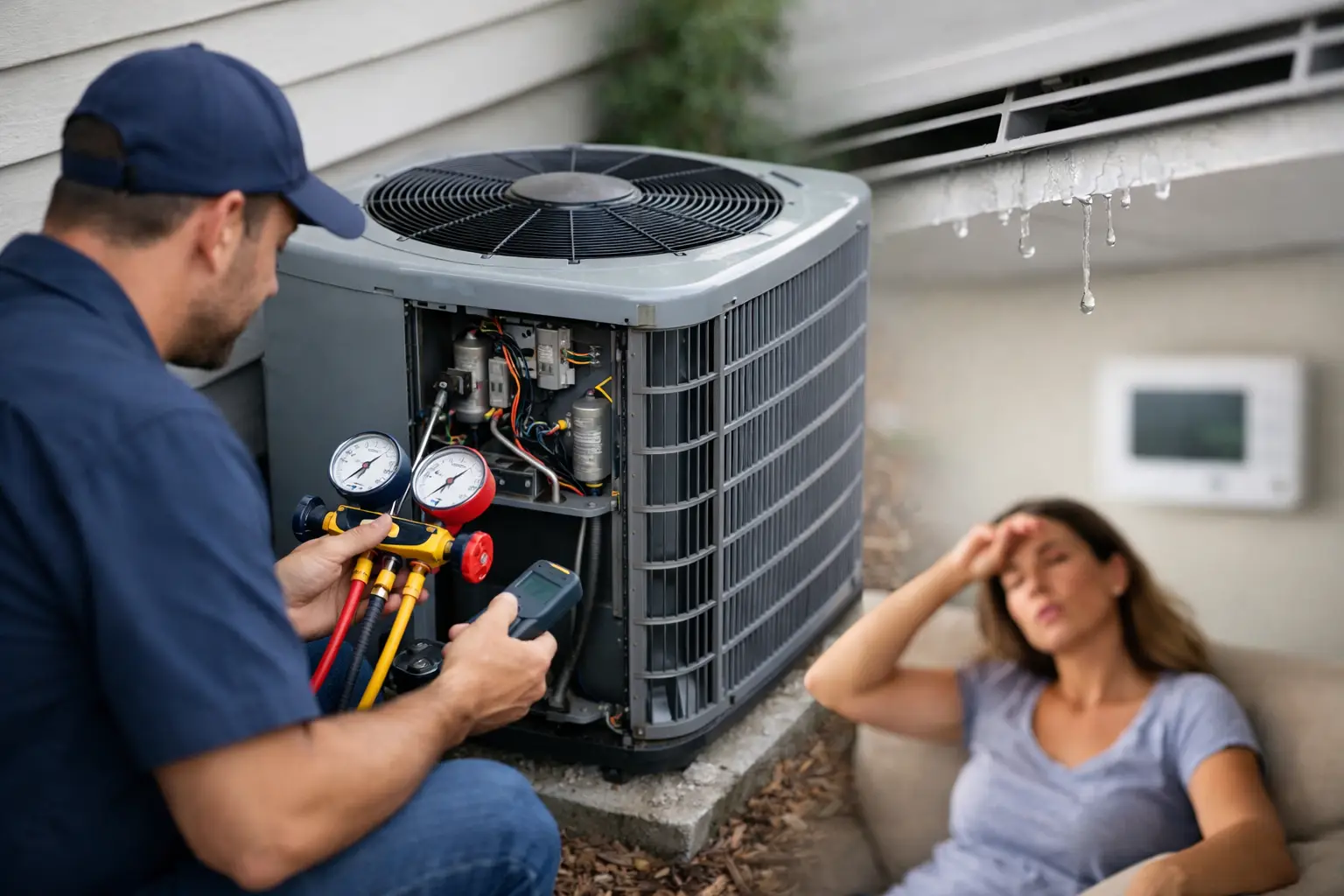
A Monroe summer afternoon can expose an air conditioner problem quickly. The system may run without stopping, rooms may feel sticky instead of cool, or the thermostat may show the right setting while the house never gets comfortable. When you need ac repair Monroe NC homeowners can depend on, recognizing the problem early can protect your comfort, reduce stress, and sometimes prevent a smaller repair from becoming a larger replacement decision.
Air conditioning issues do not always mean the entire system has failed. A clogged filter, thermostat setting, electrical component, refrigerant issue, drainage problem, or airflow restriction can all affect cooling performance. The key is getting a clear diagnosis from a qualified local HVAC professional rather than guessing at the cause.
AC Repair Monroe NC: Signs It Is Time to Call
An AC unit that will not turn on is an obvious reason to schedule service, but many cooling problems begin with less dramatic changes. Paying attention to how your system sounds, runs, and cools can help you act before a hot day turns into an urgent situation.
Call for professional AC repair if you notice four or more of these warning signs:
- Your home has warm spots, weak airflow, or rooms that do not reach the thermostat setting.
- The system cycles on and off frequently, runs constantly, or takes much longer than usual to cool the home.
- You hear grinding, rattling, buzzing, banging, or squealing from the indoor or outdoor equipment.
- Water is pooling around the indoor unit, or you see signs of a clogged condensate drain.
- Energy bills climb even though your household habits have not changed.
- The vents produce musty odors, burning smells, or unusually humid air.
Some issues need prompt attention. A burning odor, repeated breaker trips, ice on refrigerant lines, or water near electrical components should not be ignored. Turn the system off if you believe it may be unsafe, then arrange a professional inspection. Continuing to operate a struggling unit can put additional strain on the compressor, blower motor, and electrical parts.
What You Can Check Before Scheduling Repair
A few simple checks may rule out an easy problem. First, confirm that the thermostat is set to cool and that its temperature setting is below the current indoor temperature. If the thermostat uses batteries, replace them if the display is weak or unresponsive.
Next, check the air filter. A heavily clogged filter restricts airflow, makes the system work harder, and can contribute to frozen coils. Replace disposable filters according to the manufacturer’s recommendation and more often if you have pets, allergy concerns, construction dust, or a busy commercial environment.
You can also inspect the outdoor unit from a safe distance. Leaves, grass clippings, and other debris should be cleared away from the surrounding area so the condenser can release heat properly. Do not attempt to open the cabinet, handle electrical connections, or add refrigerant yourself. Those tasks require proper tools, training, and safety procedures.
If these basic checks do not restore normal cooling, it is time for a service visit. An accurate diagnosis matters because the same symptom can have several causes. For example, weak airflow may be related to a blower problem, a blocked filter, leaking ductwork, a frozen coil, or an incorrectly sized system. Treating only the visible symptom can leave the underlying issue unresolved.
Why Fast Repairs Can Save More Than Comfort
Delaying AC service often creates a trade-off that does not favor the property owner. Waiting may seem reasonable if the unit still produces some cool air, but reduced performance can increase energy use and wear down critical components. A system that runs all day to meet a modest thermostat setting is using more electricity while delivering less comfort.
For homeowners, that can mean uncomfortable bedrooms, excess humidity, and higher monthly bills. Humidity is more than a comfort issue in North Carolina. When indoor moisture remains high, the home can feel warmer even at a lower temperature, and moisture concerns may become more likely around vents, drain pans, and poorly insulated ductwork.
For commercial property operators, the consequences can be even more immediate. Uncomfortable customers may leave sooner, employees may lose productivity, and sensitive equipment can be affected by heat or humidity. Restaurants, offices, retail spaces, medical facilities, and other occupied buildings need HVAC systems that support daily operations, not systems that require constant workarounds.
Fast service does not mean rushing into an unnecessary repair. It means identifying the cause, explaining the options clearly, and recommending work that fits the condition of the equipment and the needs of the property. Honest pricing and straightforward communication give you the information needed to make a confident decision.
Repair or Replacement: How to Decide
A repair is often the right choice when the issue is isolated and the rest of the system is in good condition. Replacing a failed capacitor, repairing a drain line, correcting an electrical issue, or restoring proper airflow can extend useful equipment life and return the system to dependable operation.
Replacement becomes a more serious consideration when repairs are frequent, the unit is older, the compressor has failed, or the system cannot cool efficiently because of age, condition, or improper sizing. There is no single rule based only on years. A well-maintained unit may have useful life remaining, while a neglected system can develop major problems sooner.
It also depends on your goals. A homeowner planning to stay in the house for many years may prioritize higher efficiency, improved humidity control, and more consistent temperatures. A business owner may focus on reliability, operating cost, and minimizing disruption. In either case, a professional assessment should include the condition of the equipment, ductwork, thermostat controls, and the building’s comfort needs, not just the failed part.
If replacement is recommended, ask what problem the new system is intended to solve. The answer should go beyond “the old unit is broken.” Proper system selection considers capacity, efficiency, indoor airflow, duct condition, and installation quality. A high-quality unit cannot perform at its best if it is poorly sized or connected to leaky, restricted ductwork.
Maintenance Helps Prevent Surprise Breakdowns
No maintenance plan can prevent every repair, especially during periods of extreme heat. Still, routine service is one of the most practical ways to find wear before it causes a breakdown. During a maintenance visit, a technician can inspect electrical components, test system operation, check drainage, evaluate airflow, clean key areas, and identify concerns that deserve attention.
Homeowners can support that work by changing filters, keeping outdoor equipment clear, and reporting new noises or performance changes early. Commercial facilities benefit from planned service because maintenance can be coordinated around operating hours and seasonal demands rather than handled only after comfort problems interrupt business.
Regular maintenance also provides useful context when a repair is needed. A technician who understands the system’s history can better explain whether a current issue is isolated or part of a developing pattern. That makes it easier to plan repairs, budget for future work, and avoid avoidable downtime.
Clear Answers Matter During an AC Repair
A dependable HVAC visit should leave you with more than a working air conditioner. You should understand what caused the problem, what repair is being recommended, and what steps may help protect the system going forward. Technical details matter, but they should be explained in plain language.
PR Mechanical approaches cooling service with that practical focus: responsive local care, skilled workmanship, and clear communication from diagnosis through completion. Whether the problem is a residential unit struggling through a Monroe heat wave or a commercial system affecting daily operations, the goal is dependable comfort without unnecessary complexity.
If your AC is making new noises, failing to keep up, or causing your energy use to climb, do not wait for the hottest day of the season to see whether it improves. Addressing the change now can help keep your home or business comfortable when reliable cooling matters most.