A July afternoon in Monroe can feel sticky even when the thermostat says 72 degrees. If rooms feel clammy, towels take too long to dry, or you notice a musty smell after the air conditioner shuts off, a whole house dehumidifier may address a comfort problem your AC alone is not designed to solve.
Air conditioning removes some moisture as it cools your home, but cooling and humidity control are not the same job. North Carolina’s long warm season often brings high outdoor humidity, rain, and temperature swings that can leave indoor air damp even when the system is running properly. The right solution depends on the home, the HVAC equipment, and what is causing the moisture in the first place.
What a Whole House Dehumidifier Does
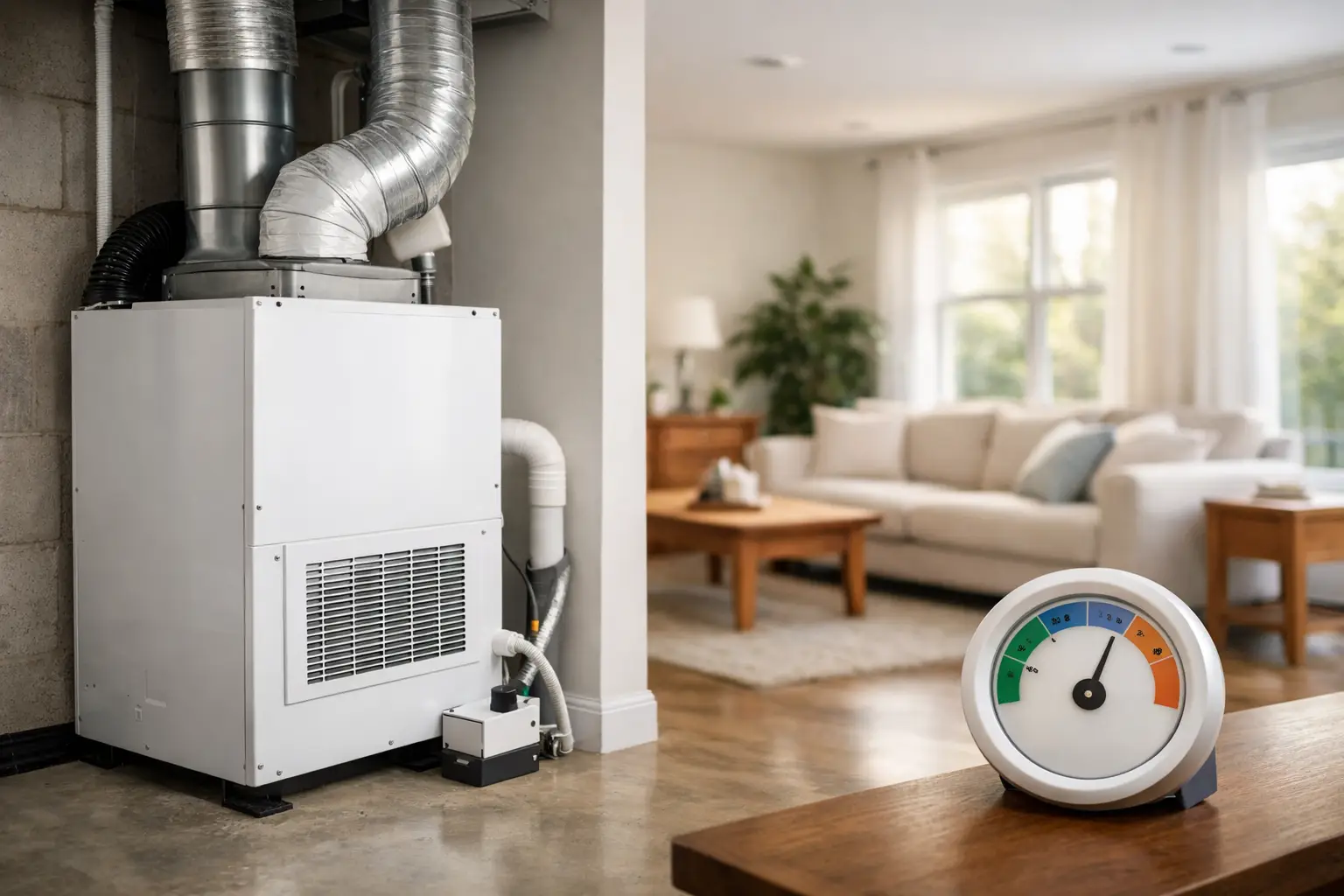
A whole house dehumidifier is installed as part of your home’s HVAC and ductwork system. It pulls humid indoor air through the unit, removes moisture, and sends drier air back through the home. Rather than emptying buckets or moving portable units from room to room, you can set a target humidity level and let the equipment manage conditions throughout the house.
For most homes, indoor relative humidity is generally most comfortable around 40% to 50%. Above that range, air can feel warmer and heavier. Moisture can also collect on cool surfaces, contribute to odors, and create better conditions for mold and mildew growth. A professionally sized unit gives you more consistent control than relying on the air conditioner to remove excess moisture during every cooling cycle.
This does not mean every home needs one. A properly operating AC system may provide adequate humidity control in a smaller, well-sealed home. But many households benefit when the AC meets the thermostat setting without running long enough to remove moisture, or when humidity remains high during mild but damp weather.
Signs Your Home May Have a Humidity Problem
Humidity is often mistaken for an air conditioning issue because the symptoms overlap. You may lower the thermostat repeatedly, yet the house still does not feel comfortable. Before assuming your system needs replacement, pay attention to the patterns inside your home.
Common signs include a persistent musty odor, condensation on windows, damp-feeling furniture or bedding, peeling paint, and visible mildew in bathrooms, closets, or around supply vents. Wood floors may cup or swell, doors may stick, and a basement or crawl space may feel noticeably cooler and damper than the rest of the home.
Allergy and asthma symptoms can also feel worse when indoor moisture is high, particularly if dampness supports mold or dust mites. Humidity is not always the only cause, so it is worth having the larger indoor air quality picture evaluated rather than treating one symptom in isolation.
For commercial properties, excess moisture can affect more than comfort. A humid office, retail area, or managed facility can produce odors, condensation, customer complaints, and concerns about stored materials or equipment. Consistent humidity control supports a more dependable environment for employees, visitors, and daily operations.
Why Your Air Conditioner May Not Be Enough
An air conditioner dehumidifies as warm air passes over its cold indoor coil. Water vapor condenses and drains away. That process works best when the system runs for a sufficiently long cycle.
Problems arise when an AC system is oversized, when a thermostat is set very low for short bursts of cooling, or when outdoor weather is humid but not hot enough to call for much cooling. In those situations, the system may satisfy the temperature setting quickly while leaving too much moisture behind. Newer, better-insulated homes can experience this as well because they hold conditioned air effectively but may need dedicated moisture management.
A whole-home unit can operate based on humidity rather than temperature. That distinction matters on rainy spring days, mild fall weather, and cool summer evenings when your home needs drier air but not much additional cooling.
There is a trade-off. Dehumidifiers use electricity and require proper installation, drainage, and maintenance. A poorly sized or poorly connected unit can create airflow issues or fail to deliver the expected results. The goal is not to add equipment automatically. It is to determine whether dedicated humidity control will solve a real comfort or building-protection concern.
Choosing the Right Whole House Dehumidifier
Capacity matters. Whole-home dehumidifiers are commonly rated by how many pints of moisture they can remove in a day, but the correct size is not based on square footage alone. A technician should consider your home’s layout, insulation, ductwork, number of occupants, crawl space or basement conditions, fresh-air ventilation, and the level of humidity being measured.
A home with a vented crawl space, frequent moisture intrusion, or a large open floor plan may need a different approach than a tightly sealed newer home. If you see standing water, plumbing leaks, roof leaks, or foundation drainage problems, those should be corrected first. Mechanical dehumidification can manage indoor moisture, but it should not be used to hide an active water problem.
Installation details are equally important. The unit needs a reliable condensate drain, correct duct connections, sufficient airflow, and controls that coordinate with your HVAC system. Depending on the equipment and layout, it may be tied into existing ductwork or installed with dedicated returns and supplies. A professional assessment helps avoid guessing about capacity and placement.
Installation, Maintenance, and Everyday Use
Once installed, a whole-home dehumidifier is designed to work quietly in the background. You may control it through a humidistat, a compatible smart thermostat, or an integrated HVAC control. Settings should be adjusted for season and household conditions rather than pushed as low as possible. Air that is too dry can be uncomfortable, especially during winter heating months.
Routine maintenance is straightforward but necessary. The air filter should be checked and replaced or cleaned as recommended by the manufacturer. The drain line should be inspected so water can leave the unit reliably, and the coil and cabinet should be kept clean during scheduled HVAC maintenance. If the unit begins running constantly, produces unusual noise, leaks water, or fails to lower humidity, it needs service.
Homeowners should also keep bathroom and kitchen exhaust fans working properly, use dryer venting that discharges outdoors, and address crawl space or attic moisture concerns. A dehumidifier performs best as part of a complete approach to indoor air quality and building maintenance.
When to Call a Local HVAC Professional
If your home feels sticky while the AC appears to be working, start with an evaluation instead of purchasing a portable unit as a permanent fix. A qualified technician can check cooling performance, airflow, duct leakage, drainage, thermostat operation, and indoor humidity readings. Sometimes an AC repair, ductwork improvement, or ventilation correction is the better answer. Other times, a dedicated dehumidifier is the practical long-term solution.
PR Mechanical helps Monroe-area homeowners and property operators understand what is happening in their systems before recommending a path forward. Clear measurements and an honest explanation make it easier to decide whether humidity control is a worthwhile investment.
Comfort should not depend on constantly lowering the thermostat or accepting that a damp house is normal for summer. When indoor air feels dry enough to relax in, your home can feel cooler, cleaner, and more comfortable at the temperature you actually want.