A North Carolina summer can expose a neglected air conditioner quickly. When the temperature and humidity climb, a system that seemed fine in spring may run constantly, cool unevenly, or stop altogether. The same is true when a winter cold snap arrives and a furnace or heat pump has not been checked in months. If you are asking how often should HVAC be serviced, the short answer is at least once a year – but most homes benefit from two seasonal visits.
Regular service is not just about preventing an inconvenient breakdown. It helps your equipment operate safely, control humidity, use energy more efficiently, and last longer. For businesses, planned HVAC maintenance also helps protect normal operations, employee comfort, customer experience, and temperature-sensitive equipment.
How Often Should HVAC Be Serviced?
For most residential systems, schedule professional HVAC service twice per year: once in the spring for air conditioning and once in the fall for heating. This schedule gives each side of a split system attention before its busiest season.
A spring AC tune-up prepares the cooling system for long periods of heat and humidity. A fall heating tune-up checks the furnace or heat pump before colder weather creates extra demand. Even if your system uses a heat pump for both heating and cooling, two visits are generally the smart choice because it works throughout the year.
At a minimum, a system should receive one thorough professional inspection every 12 months. However, annual service can be a compromise rather than the ideal schedule in the Charlotte-area climate. Our summers put real strain on cooling equipment, while cold spells can reveal heating issues that were not apparent during milder weather.
Commercial HVAC systems often need more frequent attention. Depending on occupancy, equipment type, operating hours, and the nature of the business, quarterly maintenance may be appropriate. A restaurant, medical office, retail store, server room, or facility with extended hours may place far more demand on its equipment than a typical household does.
Why Seasonal Service Makes a Difference
HVAC equipment rarely fails without warning, but many early warning signs are easy to miss. A technician can identify worn electrical components, refrigerant concerns, drainage problems, dirty coils, airflow restrictions, and declining performance before they turn into a no-cooling or no-heat call.
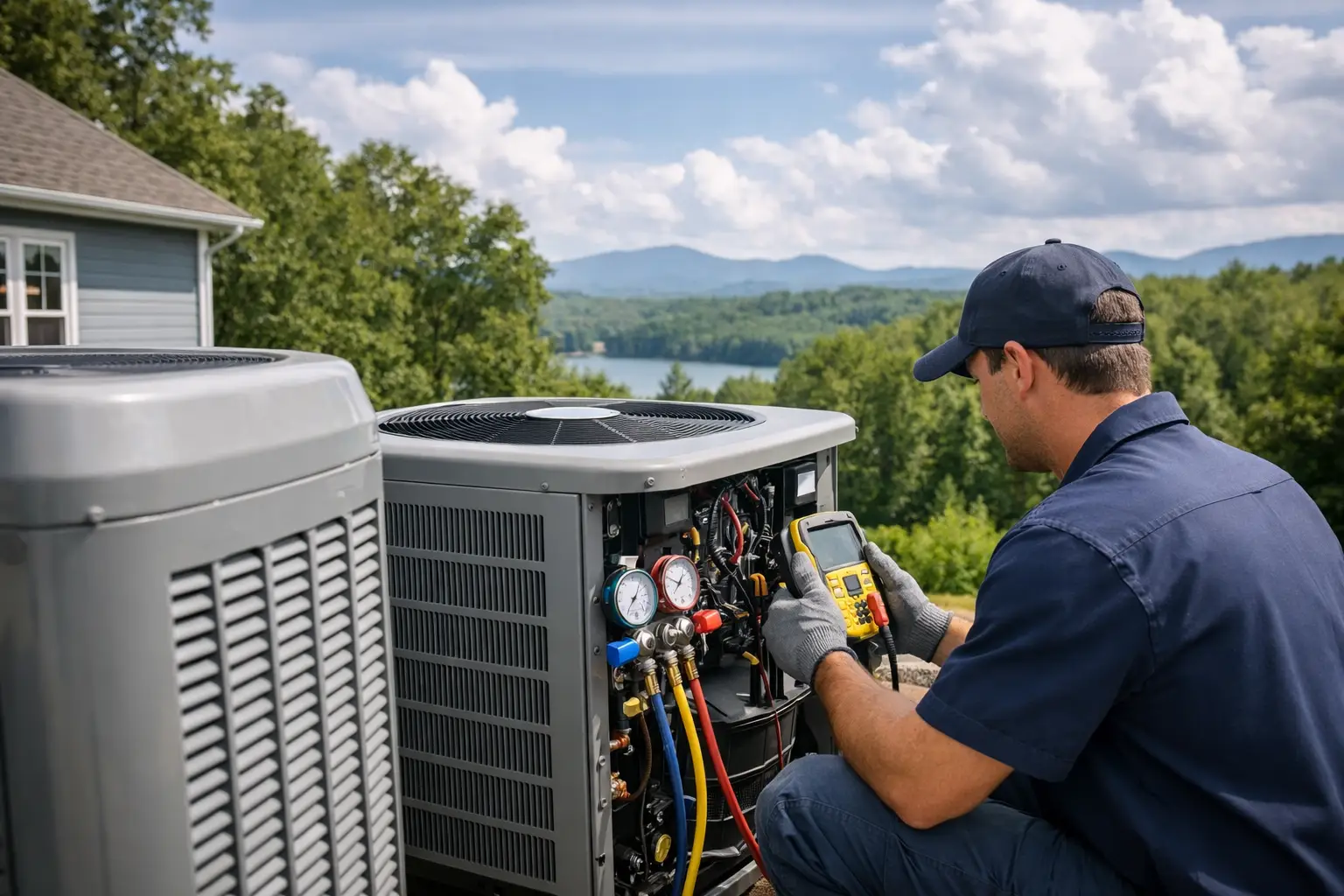
During an air conditioning visit, service may include checking refrigerant performance, inspecting electrical connections, cleaning components as needed, verifying thermostat operation, testing condensate drainage, and evaluating airflow. A clogged drain line, for example, can lead to water damage or a system shutdown during the hottest part of the season.
Heating maintenance has a different focus. For a gas furnace, technicians inspect critical safety components, burner operation, ventilation, and signs of carbon monoxide risk. For a heat pump, service includes checking heating performance, defrost operation, electrical components, and airflow. The details vary by system, which is why a professional inspection is more useful than a one-size-fits-all checklist.
Preventive maintenance also gives homeowners and facility managers a clearer picture of their equipment. You can plan for a repair or replacement on your timeline instead of making a rushed decision after a complete failure.
When Your System May Need More Frequent Service
Twice-yearly maintenance works well for many properties, but it is not a rule without exceptions. Some systems need additional attention because of how they are used or the conditions around them.
Consider scheduling service more often if your HVAC system is older than 10 years, runs nearly all day, serves a large household, or struggles to keep temperatures consistent. Homes with pets may need more frequent filter changes and airflow checks because pet hair and dander can collect quickly. Renovation work can also fill filters and equipment areas with dust, even when contractors make an effort to contain it.
Indoor air quality concerns are another reason to take a closer look. If occupants notice persistent dust, musty odors, humidity problems, allergy symptoms, or rooms that feel stuffy, the issue may involve more than the HVAC unit itself. Ductwork, filtration, thermostat settings, drainage, and ventilation can all affect comfort.
For commercial properties, more frequent service is often worthwhile when a system supports customer-facing spaces or essential operations. A single rooftop unit that fails in a busy office, store, or restaurant can affect far more than the temperature. Planned inspections help identify concerns before they disrupt staff, customers, inventory, or daily revenue.
What You Can Handle Between Professional Visits
Homeowners and property operators play an important role in system care, but routine tasks do not replace professional maintenance. The most useful step is checking the air filter regularly. Many households should inspect it monthly and replace it every one to three months, depending on filter type, pets, dust levels, and system use.
A dirty filter restricts airflow. That can make the system work harder, reduce comfort, increase energy use, and contribute to frozen coils or overheating. If your filter looks gray, clogged, or visibly coated with debris, replace it rather than waiting for a calendar reminder.
Keep the outdoor unit clear of leaves, grass clippings, mulch, and stored items. It needs open space to release heat effectively. Avoid mowing directly toward the unit, and do not cover it tightly during the cooling season. Indoors, keep supply vents and return grilles open and unobstructed by furniture, rugs, or boxes.
You should also pay attention to changes in performance. Unusual noises, short cycling, weak airflow, new odors, water around the indoor unit, or a sudden jump in utility costs are all good reasons to call for service. Waiting for the next scheduled tune-up can turn a manageable repair into a larger problem.
Maintenance Helps, but It Cannot Fix Every Issue
Regular service can extend equipment life and reduce avoidable wear, but it cannot make aging equipment new again. An older unit with repeated compressor problems, major refrigerant leaks, failing heat exchangers, or costly electrical repairs may be nearing replacement time.
The right decision depends on the repair, the age and condition of the system, energy costs, and your comfort needs. In some cases, repairing a well-maintained system is the most practical choice. In others, replacement can offer better reliability, lower operating costs, improved humidity control, and fewer unexpected service calls.
A trustworthy HVAC professional should explain the condition of your system in clear terms, outline your options, and provide honest pricing before work begins. You should not have to guess whether a recommendation is urgent or simply helpful for future planning.
A Simple Service Schedule for Local Homes and Businesses
For a home, plan AC service in early spring and heating service in early fall. Booking before the busiest weather arrives gives you more flexibility and reduces the chance that a small issue becomes an emergency. If you have a heat pump, keep both appointments because the equipment carries your comfort through every season.
For a commercial facility, begin with a maintenance plan based on equipment count, occupancy, operating hours, and the consequences of downtime. A smaller office may need semiannual service, while a higher-demand location may need quarterly inspections. The goal is not to over-service equipment. It is to give it the level of attention its workload requires.
PR Mechanical helps homeowners and businesses in Monroe and the greater Charlotte area keep their comfort systems prepared for the season ahead. A scheduled visit offers more than a quick look at the equipment – it gives you a chance to ask questions, address small concerns, and make informed decisions before comfort is on the line.
The best time to schedule HVAC service is before you need it urgently. A spring or fall appointment can help your system meet the next stretch of demanding weather with fewer surprises and more dependable comfort.