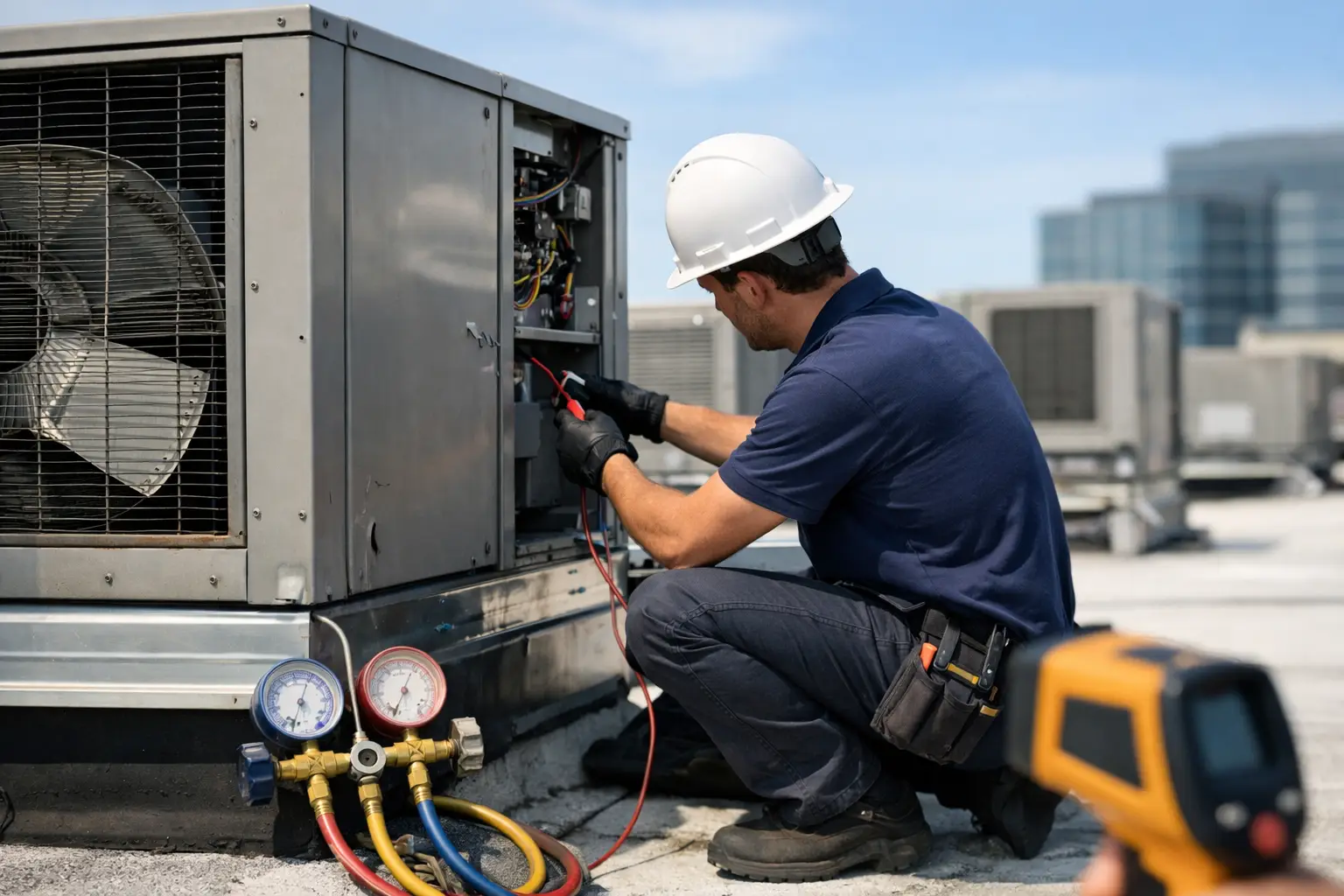
When a rooftop unit not cooling turns a comfortable building into a hot, frustrating space, the problem can affect much more than the thermostat reading. Employees lose focus, customers may leave sooner, temperature-sensitive equipment can be at risk, and business operations can suffer. In North Carolina heat, a commercial cooling problem deserves prompt attention.
Rooftop HVAC units are designed to handle demanding workloads, but they depend on many components working together: thermostat controls, electrical connections, filters, blower motors, refrigerant circuits, condenser coils, and drainage systems. A problem in any one of those areas can reduce cooling capacity or stop it altogether.
Some basic checks can help identify an obvious issue and give your HVAC technician useful information. However, rooftop equipment involves high-voltage electricity, moving components, and refrigerant. Building owners and facility managers should avoid opening electrical panels, bypassing safety controls, or attempting refrigerant repairs.
Why Is Your Rooftop Unit Not Cooling?
A rooftop unit may still run without actually delivering enough cool air. You might hear the system operating, see the fan turning, or feel a small amount of airflow at supply vents, yet indoor temperatures continue rising. That distinction matters because the cause may be airflow-related, electrical, mechanical, or refrigerant-related.
Thermostat or Control Problems
Start with the thermostat or building control. Confirm that it is set to cool and that the set temperature is below the current indoor temperature. If the thermostat screen is blank, displays an error code, or does not respond to adjustments, the issue may be a failed thermostat, dead batteries on certain models, a wiring issue, or a problem with the unit’s low-voltage controls.
For buildings with multiple zones, check whether the problem is isolated to one area or affecting the entire facility. One uncomfortable office may point to a zone control, damper, thermostat, or ductwork issue. Widespread cooling loss is more likely connected to the rooftop unit itself or its power supply.
Dirty Filters and Restricted Airflow
A clogged air filter is one of the most common and preventable reasons for weak cooling. Filters collect dust, pollen, construction debris, and other airborne particles. As they become blocked, the blower has to work harder to move air through the system.
Restricted airflow can leave rooms feeling warm even when the equipment is operating. It can also contribute to an evaporator coil freezing, which further reduces cooling and may lead to water problems when the ice melts. If your maintenance team can safely access the designated filter compartment, inspect the filter and replace it with the correct size and type if it is visibly loaded with debris.
Do not assume a clean filter rules out airflow trouble. A damaged blower belt, failing blower motor, closed dampers, collapsed ductwork, or a dirty indoor coil can create similar symptoms and should be evaluated by a qualified technician.
Dirty Condenser Coils
The outdoor portion of a rooftop unit releases heat pulled from inside the building. Its condenser coil needs open airflow to do that job efficiently. Leaves, lint, cottonwood, dust, grease, and airborne debris can coat the coil fins and trap heat around the system.
When the coil cannot release heat, the unit may run longer, use more energy, and deliver warmer air. In severe cases, the compressor can overheat and shut down on a safety control. Professional coil cleaning is the right solution because aggressive cleaning methods or incorrect chemicals can bend fins, damage components, or push debris deeper into the coil.
Refrigerant Loss or a Frozen Coil
Refrigerant does not get used up during normal operation. If a system is low, there is usually a leak that needs to be found and repaired. Low refrigerant may cause reduced cooling, long run times, ice on refrigerant lines, or a frozen evaporator coil.
A frozen coil can also result from airflow restrictions, so visible ice does not automatically mean the unit needs refrigerant. Turn the cooling call off if ice is present and contact a professional. Continuing to run a frozen system can strain the compressor and turn a manageable repair into a larger expense.
Electrical and Component Failures
Rooftop units rely on capacitors, contactors, relays, motors, circuit boards, disconnects, breakers, and safety switches. A single failed component can prevent the compressor or condenser fan from starting. The blower may operate while the cooling section does not, making it appear that the unit is working even though it is only circulating warm air.
Check for an obvious tripped breaker only if it is safe and accessible to your authorized staff. If it trips again, leave it off and schedule service. Repeated breaker trips are a warning sign, not something to reset until the problem disappears. They can indicate a shorted component, motor issue, compressor problem, or another electrical fault.
Drainage and Safety Switch Issues
Cooling removes humidity from indoor air, creating condensate that must drain away from the unit. A clogged drain line or pan can trigger a float switch that shuts off cooling to prevent overflow and water damage. This is especially common during humid weather or when drain maintenance has been overlooked.
Water around ceiling vents, staining near equipment areas, or a drain pan that repeatedly fills should be addressed quickly. The immediate issue may be a blockage, but recurring drainage trouble can point to improper slope, damaged piping, an oversized humidity load, or maintenance needs elsewhere in the system.
Safe Checks Before Calling for Rooftop Unit Repair
Before requesting service, document what you see without taking risks. Note the thermostat setting and room temperature, when the problem began, whether every area is affected, and whether the unit is making unusual sounds. A banging, buzzing, grinding, or repeated clicking sound can help narrow the diagnosis.
Look for simple operating issues as well. Verify that the building has power, that accessible breakers are not tripped, and that supply vents are open and unobstructed. If your building follows a maintenance schedule, check when filters were last changed and whether recent landscaping, storms, construction, or roofing work could have left debris around the unit.
Avoid climbing onto the roof unless you are trained and authorized to do so. Commercial rooftops introduce fall hazards, and HVAC equipment should only be accessed with the proper safety practices. Never remove panels while the unit is energized or try to reset internal switches without knowing why they tripped.
When the Cooling Problem Needs Immediate Service
A rooftop cooling issue should move to the top of the priority list when it threatens people, operations, or property. That may include a restaurant dining area becoming too warm for guests, an office with poor indoor conditions, a retail space losing customer traffic, or equipment rooms exceeding safe temperatures.
Call for professional service promptly if you notice burning odors, smoke, a breaker that repeatedly trips, ice on refrigerant lines, water leaking into the building, loud mechanical noises, or no airflow at all. These signs can indicate conditions that worsen with continued operation.
There is also a practical financial reason to act early. A unit that runs constantly without cooling efficiently can raise utility costs while putting extra stress on motors and compressors. Addressing airflow restrictions, electrical problems, or control failures early is often less disruptive than waiting for a complete shutdown during the hottest part of the season.
Preventing Future Rooftop Cooling Failures
Regular commercial HVAC maintenance is the most dependable way to reduce unexpected cooling interruptions. During a professional visit, a technician can inspect filters, belts, motors, electrical connections, refrigerant performance, condensate drainage, coils, controls, and safety devices. The goal is not simply to keep the unit running. It is to catch declining performance before occupants feel the impact.
Maintenance frequency depends on the building and its use. A small office may have different needs than a restaurant, warehouse, medical practice, or retail location with high foot traffic and extended operating hours. Buildings near construction activity, heavy pollen, or areas with more dust and debris may need closer filter and coil attention.
PR Mechanical helps Monroe-area businesses identify the cause of rooftop HVAC problems clearly, explain repair options honestly, and restore dependable comfort with skilled workmanship. If your system is struggling to keep up, a timely inspection can protect your people, your equipment, and your workday before the heat becomes a bigger problem.