When your AC runs for hours but the house still feels warm and sticky, low refrigerant may be part of the problem. Understanding what causes refrigerant leaks can help homeowners and business operators respond early, protect their equipment, and avoid losing cooling when North Carolina heat is at its worst.
Refrigerant is not like gasoline in a car. Your air conditioner is designed to circulate the same refrigerant through a sealed system for years. If the level is low, it usually means refrigerant has escaped through a leak. Adding more without finding and repairing the leak may provide short-term cooling, but it does not solve the underlying issue.
Why Refrigerant Leaks Matter
Refrigerant carries heat out of your home or business. Inside the building, the evaporator coil absorbs heat from indoor air. Outside, the condenser coil releases that heat. When refrigerant is low, the system cannot move heat effectively, even if the thermostat, blower, and outdoor unit appear to be operating.
The result is often higher energy use, uneven temperatures, longer cooling cycles, and reduced humidity control. A leak can also put added strain on the compressor, one of the most expensive components in an AC system. For a commercial property, declining cooling can affect customers, employees, sensitive equipment, and normal operations.
A refrigerant leak is not always dramatic. Many are small and develop gradually, which is why annual maintenance and a prompt professional diagnosis matter.
What Causes Refrigerant Leaks?
Corrosion on Copper Refrigerant Lines
Copper tubing connects key parts of an air conditioning system. Over time, certain indoor air conditions can contribute to corrosion on these lines and coils. One common example is formicary corrosion, which creates tiny pinholes in copper. Household chemicals, cleaning products, building materials, and airborne organic compounds can all play a role.
Because these openings can be extremely small, the system may lose refrigerant slowly over several months or seasons. You may notice that cooling is less effective each summer, rather than experiencing a complete failure overnight.
Outdoor conditions can also contribute. Exposure to moisture, salt in some environments, lawn chemicals, or physical wear around the outdoor condenser can affect refrigerant components. Proper installation, equipment placement, and regular inspection help identify early signs before a small issue becomes a larger repair.
Vibration and Normal System Wear
An air conditioner has moving parts, and it naturally vibrates while running. Over many years, that vibration can stress joints, connections, and refrigerant lines. A loose mounting point or line that rubs against another surface may eventually wear thin.
This does not mean every older system will leak. It does mean age is a factor when diagnosing a system that repeatedly needs refrigerant. Older units may have worn service valves, weakened braze joints, or deteriorating coil sections that deserve a close inspection.
Damaged Coils or Refrigerant Lines
The evaporator coil inside the home and the condenser coil outside are both potential leak locations. Coils can be damaged by corrosion, debris, accidental impact, or years of service. Refrigerant lines may also be bent, punctured, crushed, or rubbed through during renovations, landscaping, pest activity, or other work near the equipment.
Damage around an outdoor unit can be easy to overlook. Trimmers, garden tools, and pressure washers used too aggressively can harm delicate coil fins and nearby components. Keep the area around the condenser clear, but leave coil cleaning and repairs to a qualified technician. Improper cleaning can create a bigger problem than the dirt you intended to remove.
Poor Installation or Previous Repair Work
Some refrigerant leaks trace back to installation or earlier repair work. Connections must be properly brazed, pressure-tested, evacuated, and sealed. If a joint was not completed correctly or a line set was not supported well, a leak may develop later.
This is one reason the lowest upfront quote is not always the best value for an AC installation. Correct sizing, careful line-set work, and thorough commissioning affect comfort and reliability long after the installation day. The same applies to repairs: locating the actual leak is more valuable than repeatedly topping off refrigerant.
Loose Fittings, Valves, and Schrader Cores
Not every leak is in a coil. Service ports, fittings, caps, and valve cores can leak as parts age or after service work. These are often smaller, more accessible repairs than a leaking coil, but they still require professional testing to confirm the source.
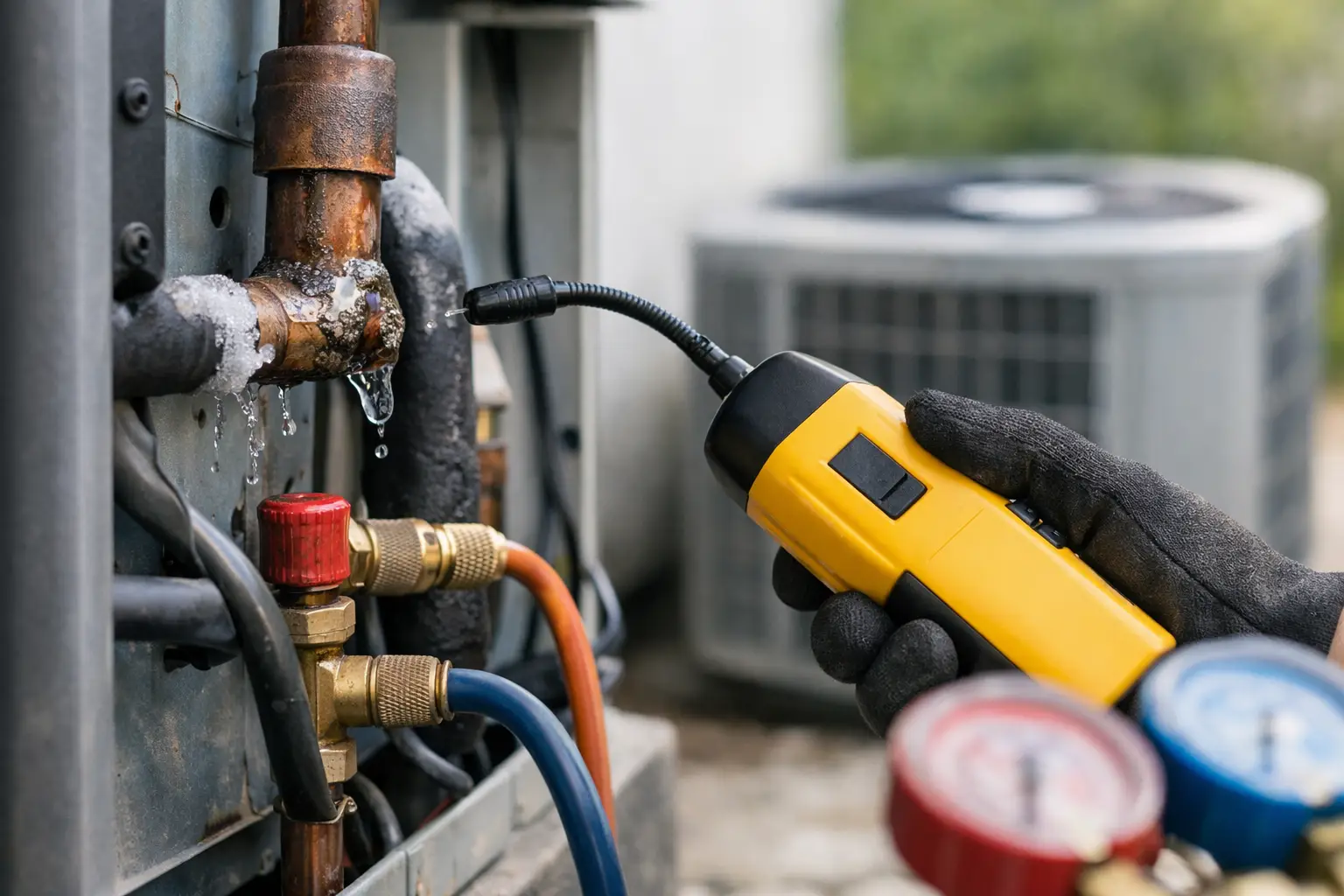
A technician may use electronic leak detection equipment, pressure testing, ultraviolet dye where appropriate, and visual inspection to locate the issue. The best method depends on the system, the suspected leak location, and whether the leak is large or very gradual.
Signs Your System May Have a Refrigerant Leak
Warm air from the supply vents is a common warning sign, but it is not the only one. A clogged filter, thermostat issue, dirty coil, failing capacitor, or compressor problem can also reduce cooling. That is why diagnosis matters.
Watch for several symptoms happening together:
- Your AC runs longer than usual or cannot reach the thermostat setting.
- Indoor air feels humid even while the system is operating.
- Utility bills rise without a clear change in usage.
- You hear hissing or bubbling sounds near refrigerant lines or equipment.
- Ice forms on the indoor evaporator coil, refrigerant line, or outdoor unit.
- Cooling performance declines again soon after refrigerant has been added.
Frozen components deserve quick attention. Low refrigerant can cause the evaporator coil to become too cold and freeze, restricting airflow even further. Continuing to run a frozen system can increase the risk of water damage when it thaws and may place unnecessary stress on the compressor.
Why Adding Refrigerant Is Not a Complete Repair
If refrigerant is low, it may be necessary to recharge the system after the leak is repaired. But refrigerant is not a routine maintenance item that should need frequent refilling. A proper repair starts with identifying why the level dropped.
The right solution depends on the location and severity of the leak. A leaking valve core or accessible fitting may be repaired relatively simply. A damaged line may be repairable or replaceable. A leaking evaporator coil can be a more significant decision, particularly on an older system.
For an aging AC unit, it may make sense to compare the cost of a major coil repair with replacement options. The decision depends on the equipment’s age, condition, refrigerant type, repair history, efficiency, and the needs of the property. A trustworthy technician should explain those options clearly rather than pushing a one-size-fits-all answer.
How to Reduce the Risk of Refrigerant Leaks
You cannot prevent every leak, especially one caused by age-related corrosion, but routine care can reduce avoidable damage and catch issues sooner. Change filters on schedule to support proper airflow, keep vegetation and debris away from the outdoor unit, and avoid striking or leaning items against refrigerant lines.
Scheduled HVAC maintenance is especially valuable before the cooling season. During a professional visit, technicians can inspect refrigerant lines and connections, look for oil residue that may indicate a leak, check system pressures, verify airflow, and assess whether your equipment is operating within expected ranges.
For commercial facilities, planned maintenance helps reduce disruption. Cooling problems rarely arrive at a convenient time, and early detection can help facility managers plan repairs before a small loss of capacity turns into an uncomfortable or operationally disruptive breakdown.
When to Call for AC Service
Call for professional service if your AC is blowing warm air, icing up, cycling for unusually long periods, or needing repeated refrigerant additions. Turn the system off if you see significant ice buildup or water leaking around the indoor equipment, then let a technician evaluate it. Do not attempt to handle refrigerant, open sealed components, or use store-bought sealants. These can create safety, equipment, and warranty concerns.
A refrigerant leak does not automatically mean you need a new air conditioner. What matters is an accurate diagnosis and an honest explanation of the repair options. PR Mechanical helps homeowners and commercial customers in Monroe and the greater Charlotte area get clear answers, dependable repairs, and comfort they can count on when the heat is working against them.