
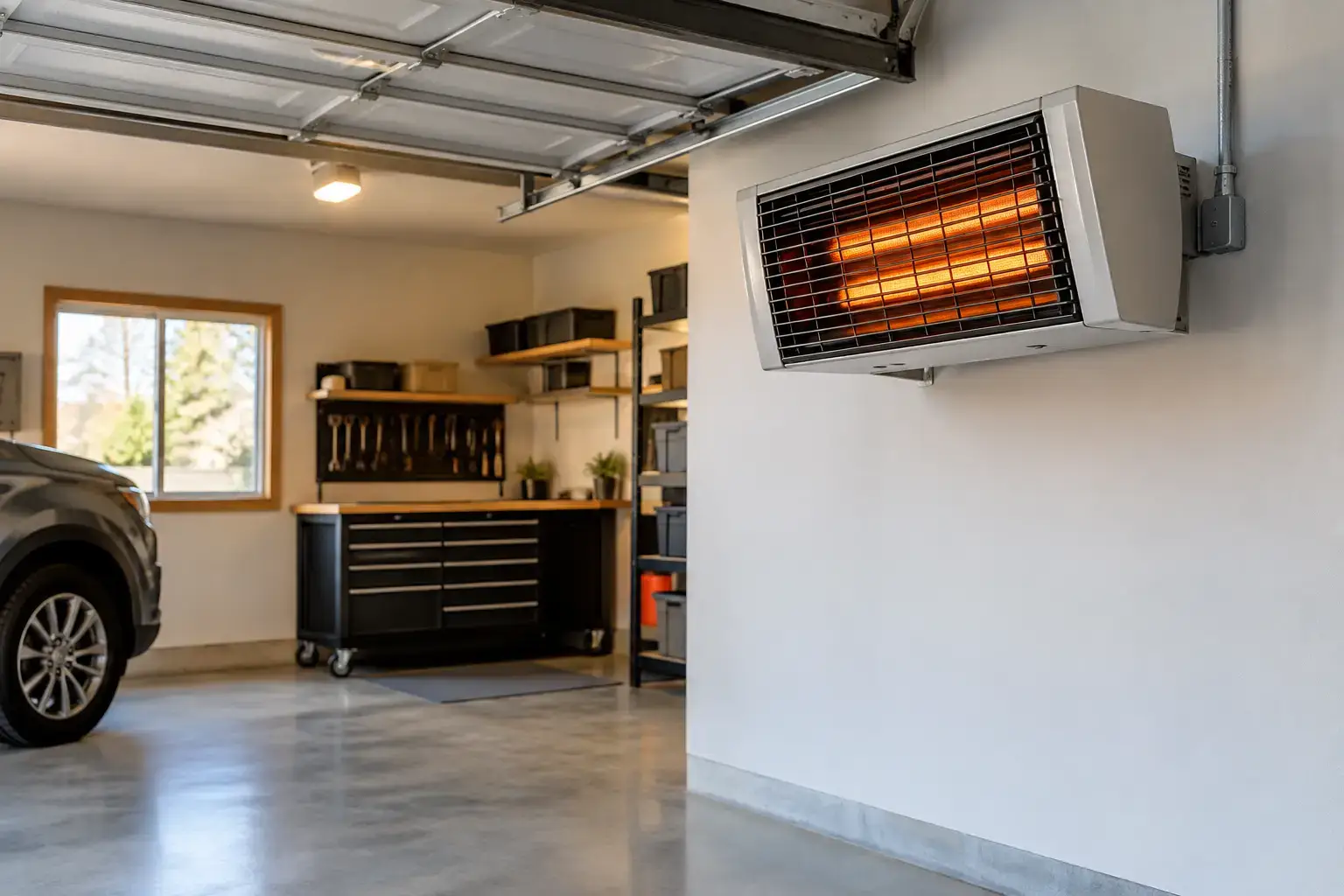
A garage that feels usable in October can become the coldest room on the property during a North Carolina cold snap. That matters when it is your workshop, home gym, hobby space, storage area, or a place where employees need to work comfortably. The best garage heating options depend less on one “best” unit and more on how often you use the space, how well it is insulated, and what utilities are available.
For a homeowner who only needs warmth during an occasional weekend project, a simple electric solution may make sense. For a finished garage used every day, a permanent system can provide better comfort and lower operating costs over time. The right answer starts with the garage itself.
Start With the Garage, Not the Heater
Heating equipment cannot overcome major heat loss efficiently. Before choosing a system, look at the garage door, exterior walls, ceiling, windows, and air leaks around doors. An uninsulated metal garage door and open gaps at the bottom can let out heat as quickly as a small heater produces it.
Insulating the garage door, weatherstripping exterior doors, sealing penetrations, and adding ceiling or wall insulation can dramatically improve results. If there is living space above the garage, insulation is especially important for comfort in both areas. These improvements may also allow you to install a smaller, less expensive heating system.
Sizing matters as well. A two-car garage is not automatically the same heating load as another two-car garage. Ceiling height, insulation level, sun exposure, the number of exterior walls, and how often the overhead door opens all affect the equipment capacity required. An oversized heater can cycle too quickly and waste energy, while an undersized unit may run constantly without making the room comfortable.
Best Garage Heating Options by How You Use the Space
Electric space heaters for occasional use
Portable electric space heaters are often the simplest option for a small garage or a workbench area. They do not require fuel lines, venting, or a permanent installation. For someone spending a few hours on a Saturday morning repairing equipment or building a project, a quality electric heater can deliver focused warmth where it is needed.
The trade-off is operating cost and coverage. Portable heaters are usually not the most economical choice for heating a full two- or three-car garage every day. They also require careful use. Plug the heater directly into an appropriate wall outlet, keep it clear of cardboard boxes, paint, gasoline, sawdust, and other combustibles, and never leave it running unattended. Extension cords are not a safe long-term solution for high-wattage heaters.
Electric unit heaters for dedicated workspaces
A ceiling- or wall-mounted electric unit heater is a stronger choice when the garage is used regularly but does not need all-day, whole-home comfort. These units can heat a larger area than a portable model, stay out of the way, and are generally straightforward to operate with a wall thermostat.
Many electric unit heaters require a dedicated 240-volt circuit. That means the electrical capacity should be reviewed before installation. Although the equipment can be relatively affordable, electricity costs can add up in a poorly insulated garage. This option tends to work best for a moderately sized, well-sealed space that is used several times a week.
Ductless mini-splits for year-round comfort
For a finished garage, home gym, studio, workshop, or converted space used throughout the year, a ductless mini-split is often one of the best garage heating options. It provides efficient electric heat in winter and air conditioning during North Carolina’s long warm season. That year-round capability is a major advantage over heat-only equipment.
Mini-splits use heat pump technology, which moves heat rather than generating it through electric resistance. As a result, they can be much more efficient than standard electric heaters in the right conditions. They also offer quiet operation, thermostat control, and better comfort consistency.
The upfront investment is higher, and proper sizing and installation are essential. The indoor unit needs a suitable location with good air circulation, while the outdoor unit needs clear space and a stable mounting location. If the garage has significant air leakage or no insulation, address those issues first so the system is not asked to compensate for avoidable heat loss.
Gas unit heaters for large or heavily used garages
A natural gas or propane unit heater can be a practical solution for a larger garage, commercial shop, or space that needs fast, powerful heat. These heaters are commonly mounted overhead, keeping floor space open for vehicles, tools, and storage. Where natural gas is available, operating costs may be favorable compared with electric resistance heat.
Gas heating requires more planning than an electric unit. Proper venting, gas piping, combustion air, clearances, and code-compliant installation are not optional. A professional should evaluate the building layout and fuel supply before recommending equipment. This is particularly important in garages where vehicles, flammable liquids, and chemical products may be present.
Avoid treating unvented combustion heaters as a permanent garage solution. They can add moisture and combustion byproducts to the space, and they create safety concerns in enclosed areas. A properly installed, vented system is the safer long-term approach.
Extending existing ductwork: possible, but not automatic
It may seem logical to extend the home’s existing furnace ducts into the garage. In many cases, however, that is not the best approach. Garages are typically separated from living areas for safety reasons, and ductwork changes must account for local codes, air quality, pressure balance, and the capacity of the existing HVAC system.
Adding a garage to a system that was sized only for the home can reduce comfort elsewhere. Garage fumes and dust should also never be allowed to migrate into the house through poorly designed ductwork. If you are considering this route, have an HVAC professional assess the system rather than assuming one additional supply vent will solve the problem.
What to Consider Before You Buy
A heating decision should balance initial cost with how the garage will function over the next several years. Ask whether you need heat only or heating and cooling, whether the space will be occupied daily, and whether you plan to finish or convert the garage later.
Also consider these practical factors:
- Available power or fuel source, including whether a 240-volt circuit or gas line is already in place.
- Insulation and air sealing, especially at the overhead door and ceiling.
- Required clearances around vehicles, shelving, chemicals, and stored materials.
- Thermostat control and zoning, so you are not heating the space when no one is using it.
- Installation requirements, permits, and safety standards for permanent equipment.
For many Monroe and Charlotte-area homeowners, the best long-term value is not the cheapest heater on the shelf. It is the system that matches the garage’s condition and avoids costly changes later. A mini-split may make sense for a conditioned workspace, while a mounted electric heater may be the better fit for occasional projects. A larger commercial-style garage may justify a professionally installed gas unit heater.
Safe Installation Protects More Than Comfort
Garages place special demands on heating systems. Cars bring in moisture, exhaust residue, and temperature swings when the overhead door opens. Workshops may contain sawdust, solvents, fuels, paints, and power tools. Those conditions make correct placement, electrical work, venting, and clearances especially important.
Never install a heater directly where it can be blocked by storage or struck by a vehicle. Keep manufacturer-recommended clearance around the unit, and make sure carbon monoxide alarms are installed where appropriate, particularly when fuel-burning equipment is nearby. Routine maintenance also matters. Dirty filters, blocked vents, loose electrical connections, and neglected burners can all affect performance and safety.
PR Mechanical can help homeowners and property operators evaluate garage heating needs without turning a straightforward decision into a confusing sales pitch. A professional assessment can identify heat loss concerns, confirm proper equipment sizing, and provide a clear plan for safe installation.
A comfortable garage should support the way you use your property, not become another room you avoid for half the year. Start with insulation and safety, choose equipment based on real usage, and invest in a solution that will still make sense when the next cold morning arrives.