A Charlotte restaurant can lose a busy lunch rush when its dining room turns humid. An office can see productivity slip when one floor stays too warm. A warehouse may face damaged inventory or unsafe working conditions when ventilation fails. Commercial HVAC repair Charlotte businesses need is not simply about getting cold or warm air back. It is about protecting the people, equipment, revenue, and routines that keep a facility moving.
Commercial systems work harder and serve more people than most residential units. When performance changes, a small issue can become an expensive interruption quickly. Knowing what to watch for and when to call for professional service helps facility managers and business owners make calm, informed decisions.
When Commercial HVAC Repair in Charlotte Cannot Wait
Some HVAC concerns can be planned around business hours. Others call for a prompt response, particularly during Charlotte’s hot, humid summers or sudden winter cold spells. If your system stops cooling or heating altogether, keeps tripping breakers, leaks water near electrical equipment, or produces a burning smell, the situation needs professional attention right away.
Uneven temperatures are another serious operational signal. One hot office or cold retail area may sound minor, but it can point to airflow restrictions, thermostat problems, refrigerant concerns, failing zone controls, or ductwork issues. Left alone, uneven performance often forces the system to run longer, raising utility costs while comfort continues to decline.
Do not ignore unusually loud operation either. Grinding, screeching, rattling, and repeated clicking can indicate loose components, motor trouble, belt wear, or electrical issues. The right repair depends on the equipment and the cause. Continuing to operate a struggling unit can turn a manageable repair into a larger replacement decision.
Warning signs your building is losing efficiency
A system does not have to shut down completely to create a costly problem. Rising energy bills without a matching increase in operating hours often mean the equipment is working harder than it should. Dirty coils, clogged filters, worn parts, leaking ductwork, and controls that are out of calibration can all reduce efficiency.
Pay attention to comfort complaints from employees, tenants, or customers. Frequent complaints about stuffy air, humidity, odors, or rooms that never reach the thermostat setting provide useful clues. They can also affect customer impressions, employee morale, and indoor air quality.
Water around an indoor unit, ceiling stains near ductwork, and excess condensation deserve attention as well. In Charlotte’s humid climate, drainage problems and moisture issues can grow quickly. A technician can identify whether the source is a clogged condensate line, frozen coil, insulation problem, or another system concern.
What a Professional Commercial HVAC Repair Visit Should Include
A good repair visit begins with questions, not guesses. A qualified technician should ask when the issue began, whether it affects the entire building or one area, what changes have occurred in the facility, and whether the equipment has received recent maintenance. That context makes diagnosis more accurate.
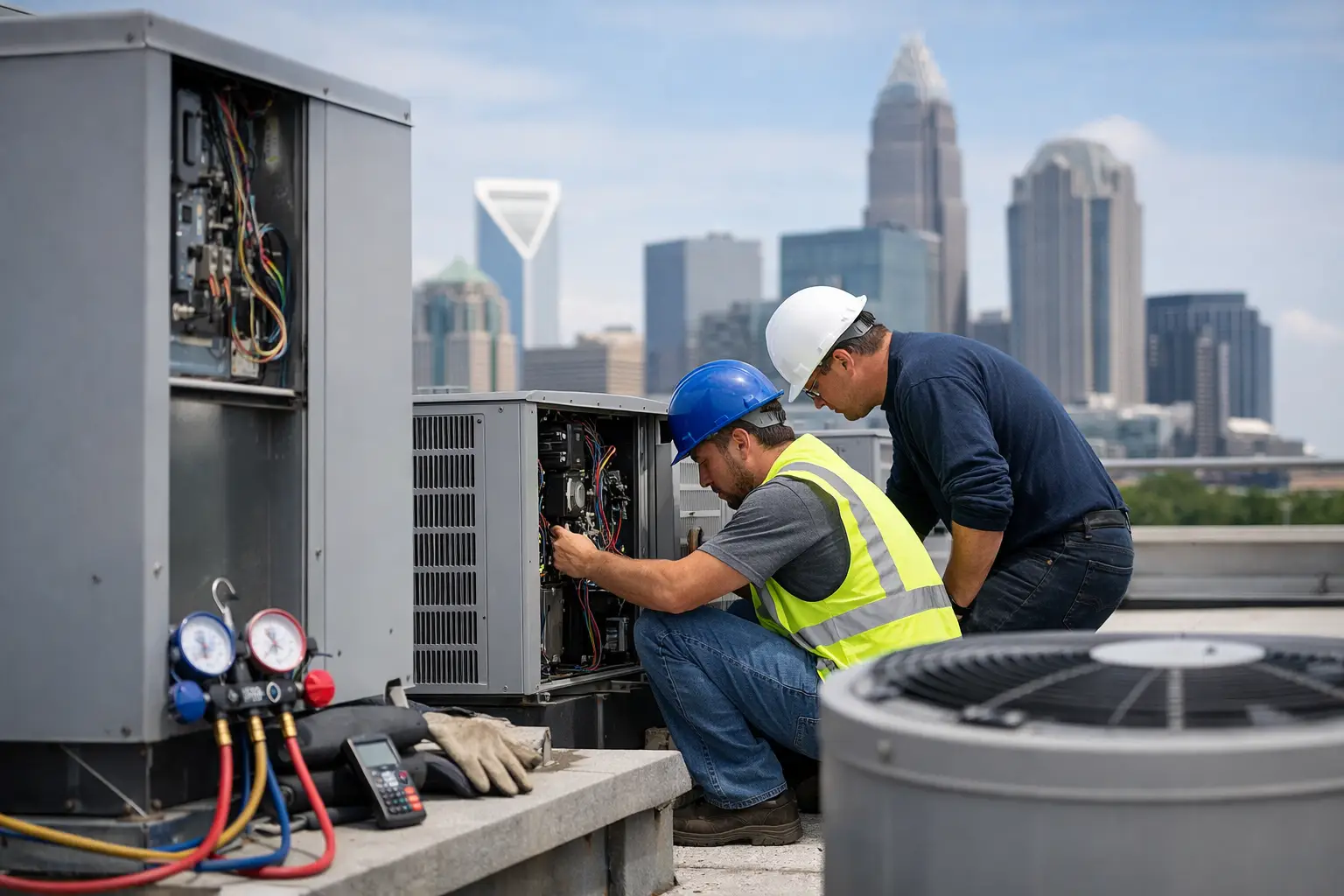
From there, the technician should inspect the system’s major components and operating conditions. This may include checking thermostats and control settings, electrical connections, airflow, filters, belts, motors, coils, drains, refrigerant performance, and safety controls. The specific process varies by equipment type, from rooftop units and split systems to heat pumps and multi-zone systems.
Clear communication matters just as much as technical skill. Business owners and facility teams should understand what failed, what needs to be done now, and what may need monitoring later. Honest pricing and practical recommendations make it easier to choose the repair that fits the building’s needs and budget.
In some cases, a repair is the clear choice. A worn contactor, damaged capacitor, failed thermostat, clogged drain, or aging belt can often be corrected without major disruption. In other cases, repeated breakdowns, outdated equipment, poor efficiency, or expensive compressor-related repairs may justify discussing replacement options. There is no one-size-fits-all answer. The best decision depends on the unit’s age, maintenance history, repair cost, energy use, and the role the system plays in your daily operations.
Common Causes of Commercial HVAC Failures
Many commercial breakdowns begin with overlooked maintenance. Filters that remain in place too long restrict airflow and put extra strain on blowers and compressors. Dirty outdoor coils make it harder for the system to release heat. Loose electrical connections can lead to intermittent operation or component failure.
Controls are another frequent source of trouble. A thermostat may be improperly programmed, a sensor may be inaccurate, or a zone damper may fail to open and close correctly. These issues can make a healthy piece of equipment appear to be failing, which is why a full diagnosis is more valuable than replacing parts based on symptoms alone.
Charlotte-area businesses also contend with heavy summer cooling demand, pollen, humidity, and storm-related power interruptions. Rooftop equipment is exposed to weather and debris year-round. Regular inspections help catch blocked drains, coil buildup, damaged panels, and worn components before they affect occupied spaces.
How Maintenance Helps Prevent Emergency Calls
Planned maintenance cannot prevent every equipment failure, but it significantly reduces avoidable surprises. It gives technicians an opportunity to clean key components, verify electrical performance, check airflow, test safety controls, and identify parts approaching the end of their useful life.
For many businesses, scheduling maintenance before peak cooling and heating seasons is a practical approach. A spring visit helps prepare equipment for summer heat, while a fall visit can identify heating concerns before cold weather arrives. Facilities with long operating hours, sensitive inventory, high occupancy, or multiple units may benefit from a more customized schedule.
Maintenance also creates a service history. When a future issue occurs, that record helps a technician see patterns, such as recurring airflow restrictions or a component that has been repaired several times. That information supports better repair-versus-replacement planning and fewer unexpected expenses.
Steps your team can take between service visits
Your staff does not need to perform technical repairs to support HVAC reliability. Keep mechanical areas accessible and free of stored materials, and make sure outdoor units or rooftop access points are not blocked by debris. Report unusual sounds, odors, leaks, or temperature changes early rather than waiting for a complete shutdown.
It also helps to document comfort complaints by location and time of day. If a conference room is consistently warm every afternoon, or a retail entrance feels humid whenever doors are busy, those details can help isolate the cause faster. Facility managers should also review thermostat access so settings are not being changed repeatedly without a clear plan.
Choosing a Commercial HVAC Partner for Your Facility
Commercial service requires more than a quick fix. Your HVAC contractor should be able to explain findings in plain language, respect your operating schedule, and consider the full comfort system. That can include heating and cooling equipment, thermostats, ductwork, ventilation, and indoor air quality concerns.
Look for a local team that responds promptly, provides straightforward recommendations, and does not treat every problem as a reason to replace equipment. The goal should be dependable operation and a clear path forward, whether that means a targeted repair, preventive maintenance, system upgrades, or planning for a future replacement.
PR Mechanical serves commercial customers across the greater Charlotte area with skilled workmanship, honest pricing, and communication that keeps decisions clear. When comfort affects your business, you deserve service that respects both your equipment and your time.
If your building is showing early signs of HVAC trouble, schedule service before the next busy day turns a small performance issue into a disruption. A timely inspection can protect comfort now and give you a clearer plan for the seasons ahead.