A furnace can seem fine right up until the first cold night when it runs nonstop, blows cool air, or refuses to start. When you need furnace repair Monroe NC homeowners can depend on, recognizing the early warning signs can help you protect your comfort, avoid a larger breakdown, and make a clear decision about when to call a professional.
In Monroe and throughout the Charlotte area, heating systems may sit unused for long stretches before winter weather arrives. That makes the first few heating cycles especially revealing. A small issue with ignition, airflow, a thermostat, or a worn component can become much more noticeable when the system is suddenly asked to keep your home or business warm around the clock.
Furnace Repair Monroe NC: Signs You Should Not Ignore
Some furnace concerns are obvious, such as no heat at all. Others are easier to dismiss because the system still turns on. Paying attention to changes in performance gives you a better chance to schedule a repair before you are left without dependable heat.
Here are warning signs that deserve professional attention:
- Cool air from supply vents. If the thermostat is set to heat but the vents deliver cool or lukewarm air, the cause could involve ignition, fuel delivery, a flame sensor, ductwork, or airflow restrictions.
- Frequent cycling. A furnace that starts and stops every few minutes may be overheating, receiving incorrect thermostat signals, or struggling with restricted airflow. Short cycling adds wear and can drive up energy use.
- New or loud noises. Banging, squealing, rattling, scraping, or repeated clicking are not normal background sounds. They may point to a loose part, blower issue, ignition problem, or failing motor component.
- Uneven temperatures. One room that stays cold while another feels overheated can be related to furnace capacity, duct leakage, dirty filters, poor airflow, or thermostat placement. The furnace may not be the only part of the system involved, which is why a complete diagnosis matters.
- Higher heating bills without a clear reason. A utility bill can rise during a cold spell, but a significant increase while your normal habits stay the same may mean the furnace is running inefficiently or longer than it should.
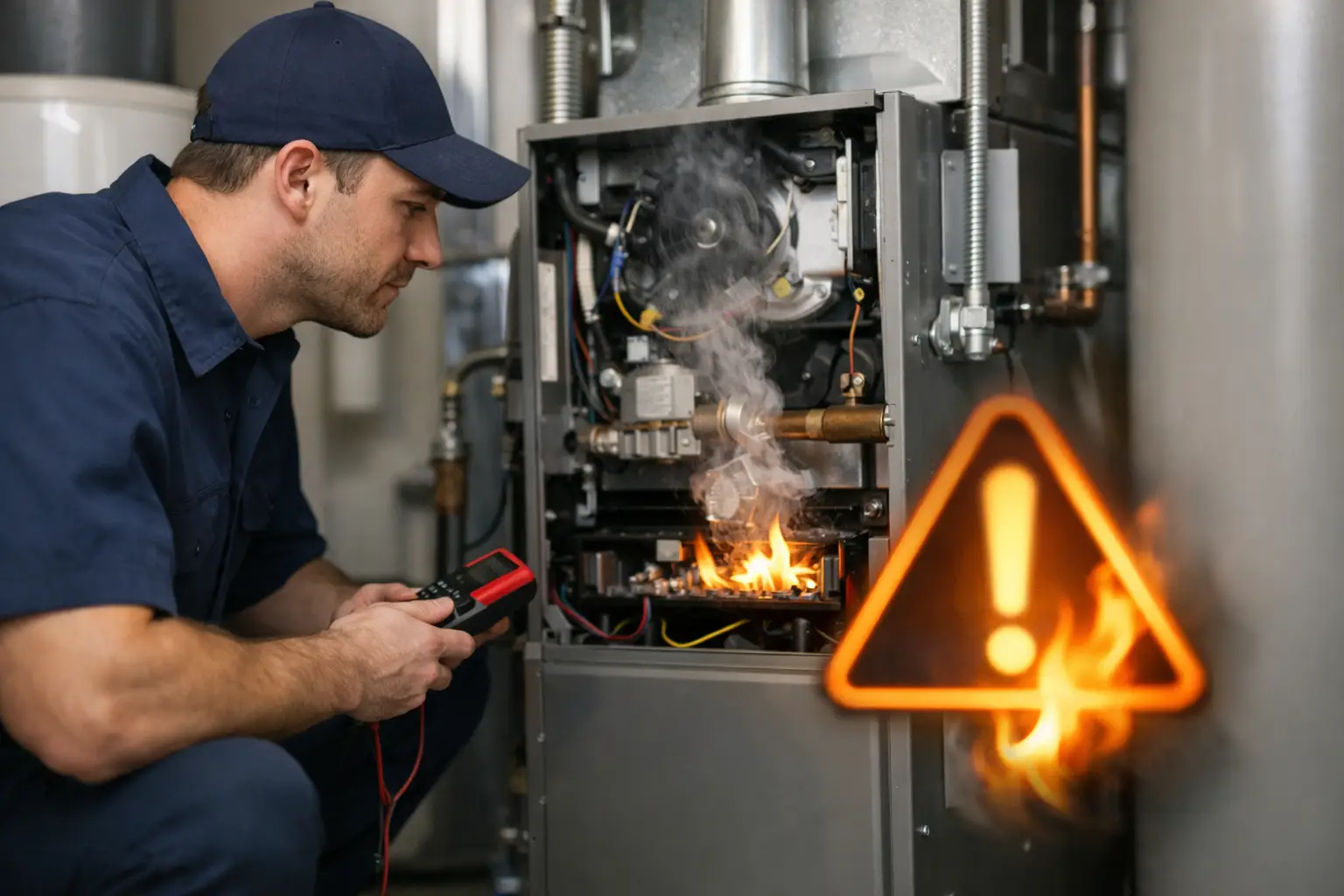
- A yellow burner flame or unusual odors. Gas furnace burner flames should generally appear blue. A yellow or flickering flame, soot around the unit, or a persistent burning smell needs prompt professional evaluation.
A brief dusty smell can be normal the first time a furnace runs after a long off-season. It should fade quickly. Electrical, metallic, rotten-egg, or burning-plastic odors are different. If you smell gas, leave the building, avoid switches and open flames, and contact your gas utility or emergency services from a safe location.
Why a Furnace May Run but Still Fail to Heat Well
A running furnace is not necessarily a healthy furnace. The thermostat may signal for heat, the blower may turn on, and yet the heating cycle may not complete correctly. Homeowners often assume the equipment simply needs to be replaced, but the right solution depends on the diagnosis.
A clogged filter is one of the simplest possibilities. A heavily loaded filter limits airflow, which can cause the furnace to overheat and shut down on a safety limit. Replacing a filter on the schedule recommended for your household and filter type helps protect airflow, but it will not correct a failing igniter, damaged blower motor, cracked component, or control issue.
Thermostat settings can also create confusion. Confirm that the system is set to Heat, the fan is set to Auto, and the target temperature is above the current room temperature. If the thermostat screen is blank, replace batteries if applicable. Smart and programmable thermostats can add another layer of scheduling or connectivity issues, but they should still be assessed as part of the whole comfort system.
For commercial facilities, weak heating can affect more than comfort. Employees, customers, tenants, temperature-sensitive inventory, and daily operations may all be affected. A system that is cycling, noisy, or unable to maintain set temperatures should be addressed before a minor mechanical issue becomes an interruption to business.
What You Can Check Before Scheduling Service
There are a few safe, practical checks that can help rule out simple causes. Start with the thermostat and make sure the furnace power switch and breaker are on. Then inspect the air filter. If it is visibly dirty or past its service interval, replace it with the correct size and type.
Make sure supply vents and return grilles are open and not blocked by furniture, rugs, boxes, or equipment. Restricted returns can reduce airflow throughout the system. Outside, keep the area around your equipment and vent terminations clear of leaves, debris, and other obstructions as appropriate for your system.
Beyond those basic steps, it is best not to take apart furnace panels, reset safety switches repeatedly, or attempt to clean burners yourself. Modern furnaces contain electrical components, combustion controls, and safety devices that require proper testing. Repeatedly restarting a furnace that is shutting down can mask an issue without fixing it.
Repair or Replacement: How to Make the Better Call
A repair is often the right choice when the furnace is relatively young, the problem is isolated, and the equipment has been maintained. Replacing a worn igniter, sensor, capacitor, control, or blower-related part may restore dependable heating without the cost of a full system replacement.
Replacement becomes more worth considering when repairs are becoming frequent, the furnace is near the end of its expected service life, efficiency is poor, or a major component has failed. The decision should not be based on age alone. A well-maintained system may have useful life remaining, while a neglected unit can develop costly issues earlier.
Your home or building also matters. An oversized or undersized furnace, leaky ductwork, poor return-air design, and inadequate insulation can all affect comfort and operating costs. Installing new equipment without considering these conditions can leave the underlying problem in place. A qualified technician should explain what failed, why it failed, what repair will accomplish, and whether replacement offers a better long-term value.
Honest pricing and clear communication are especially important here. You should understand the recommended work before authorizing it, including whether the repair is intended to solve the immediate issue or whether additional system concerns should be planned for.
Preventing Midseason Furnace Problems
Annual heating maintenance is one of the most practical ways to reduce surprise repairs. During a professional visit, a technician can inspect critical components, check electrical connections, test safety controls, evaluate airflow, examine the burner and ignition process, and identify wear before it becomes a no-heat call.
Maintenance does not guarantee that a part will never fail. It does, however, give you a clearer picture of system condition and can help your furnace operate more safely and efficiently. For property managers and business owners, scheduled maintenance also supports more predictable budgeting and fewer disruptions during the heating season.
Between visits, change filters as needed, keep vents clear, listen for new noises, and avoid ignoring rooms that consistently feel too cold. Those small observations give a service technician useful clues and can speed up the diagnostic process.
When your furnace is not keeping up, the goal is not simply to get heat back for the moment. It is to restore safe, reliable comfort with a repair plan that makes sense for your property. PR Mechanical can help Monroe-area homeowners and businesses understand what their system needs, so the next cold morning feels routine instead of stressful.