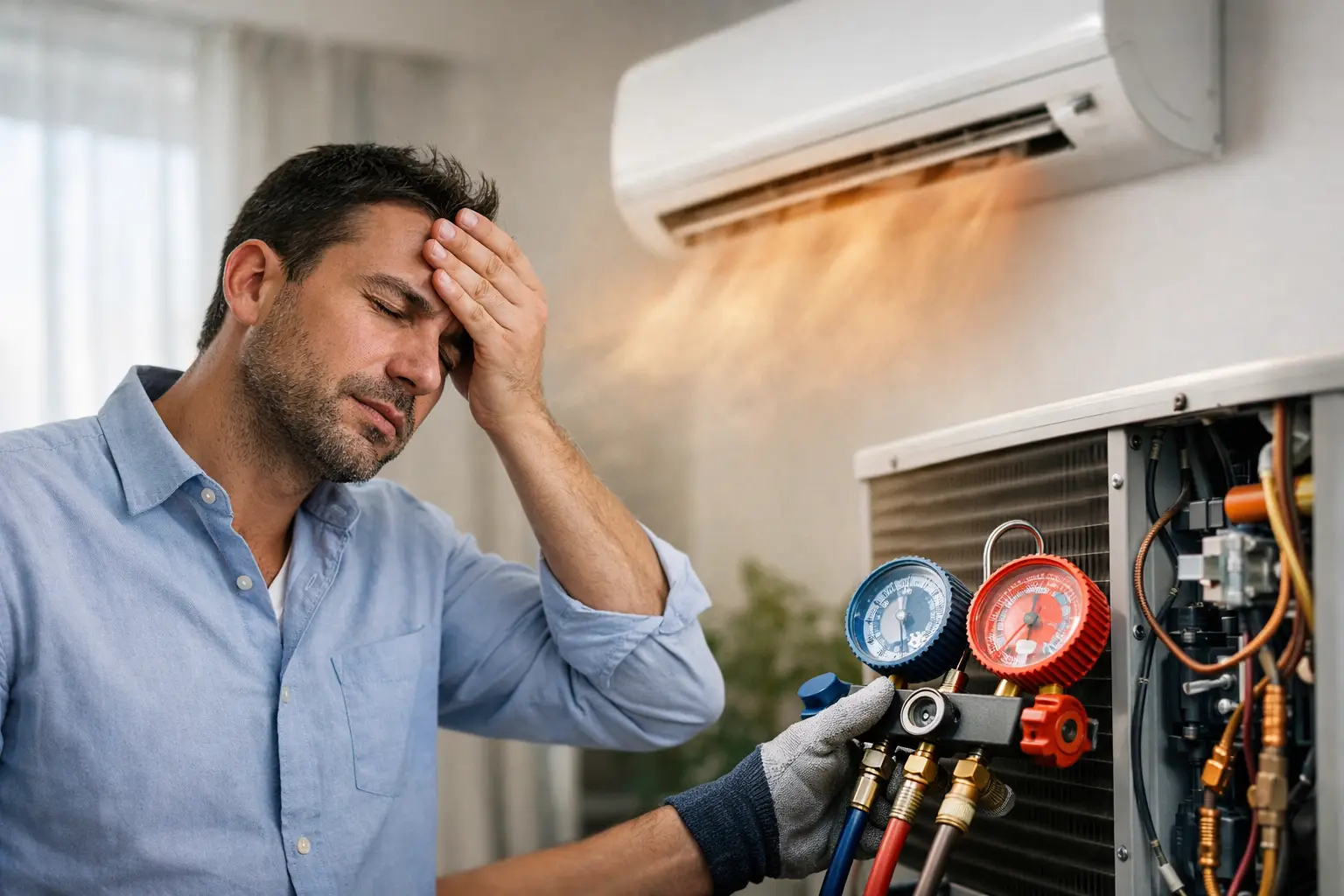
A North Carolina summer afternoon is a bad time to discover that the air coming from your vents feels more like room temperature than relief. If you are asking, why is my AC blowing warm, the cause may be as simple as a thermostat setting or as urgent as a failing compressor. The key is knowing what you can check safely, what the symptoms mean, and when to call for service before a small problem becomes a full system shutdown.
Why Is My AC Blowing Warm Instead of Cooling?
Your air conditioner does more than move air through the house or building. It removes heat from indoor air and releases that heat outside. When any part of that process is interrupted, the blower can still run while the system stops producing cold air.
That distinction matters. A system that is running but not cooling is different from a system that will not turn on at all. Warm airflow can point to an airflow restriction, a thermostat issue, low refrigerant, a frozen coil, or a mechanical problem in the outdoor unit. In commercial spaces, it can also result from high cooling demand, zoning issues, or equipment that has not been maintained for the building’s current use.
The air may feel mildly cool in the morning but turn warm in the afternoon, or it may be warm from the moment the system starts. Those details help narrow down the diagnosis.
The Thermostat Is Set Incorrectly
Start with the simplest possibility. Confirm that the thermostat is set to Cool, not Heat, Fan, or Auto with an unexpectedly high temperature setting. Set the temperature several degrees below the current indoor temperature and wait a few minutes.
Also check the fan setting. When the fan is set to On, it runs continuously, even when the compressor is not actively cooling. During the off portion of a cooling cycle, that fan will circulate room-temperature air through the vents. Setting the fan to Auto allows it to run only when the system is calling for cooling.
If your thermostat has a blank screen, delayed response, or incorrect indoor temperature reading, weak batteries, wiring trouble, or a thermostat malfunction may be involved. Smart and programmable thermostats are useful, but scheduling errors and mode changes can happen after a power outage or seasonal adjustment.
A Dirty Air Filter Is Restricting Airflow
A clogged filter is one of the most common and preventable reasons an AC struggles to cool. As dust, pet hair, and debris build up, the system cannot pull enough air across the indoor evaporator coil. The coil can become too cold and freeze, which blocks cooling even further.
Check your filter if it has been more than one to three months since replacement. Homes with pets, construction dust, allergies, or heavy system use may need more frequent changes. Commercial filters should be inspected on a regular maintenance schedule based on occupancy, equipment type, and indoor air quality needs.
A fresh filter may restore airflow, but it will not immediately solve every frozen-coil problem. If you see ice on refrigerant lines or the indoor unit, turn the cooling system off and set the fan to Auto. Do not chip at the ice. Let the equipment thaw and arrange professional service to determine why it froze.
The Outdoor Unit Cannot Release Heat
The outdoor condenser is where your AC releases the heat removed from indoors. If that unit is blocked, dirty, or not operating correctly, the system cannot complete the cooling cycle.
Walk outside and look for obvious issues. Leaves, grass clippings, mulch, or stored items should not crowd the unit. Maintain clear space around it so air can move freely. You may hear the outdoor fan running, notice that it is completely silent, or hear repeated clicking or humming without a full start. Each symptom points to a different potential issue.
A dirty condenser coil, damaged fan motor, failed capacitor, electrical problem, or compressor issue requires a trained technician. Do not remove electrical panels or attempt to repair wiring yourself. HVAC equipment uses high voltage, and a quick-looking fix can create a safety risk or cause more damage.
Low Refrigerant May Be Affecting Cooling
Refrigerant carries heat from inside your property to the outside unit. Your AC does not normally use up refrigerant. If the level is low, there is usually a leak that needs to be located and repaired.
Common signs include warm air, weak cooling, ice on the refrigerant line, hissing sounds, longer run times, and rising utility costs. Because refrigerant handling requires proper equipment and certification, this is not a do-it-yourself repair. Simply adding refrigerant without finding the leak may provide temporary relief, but the problem will return and can put added strain on the compressor.
For older systems, a technician can also explain the trade-off between repairing a leak and considering replacement. The right decision depends on the unit’s age, condition, refrigerant type, repair cost, and expected efficiency after the work is completed.
Other Reasons Your AC May Blow Warm Air
Some warm-air problems are less obvious because the cooling equipment may be working, just not effectively reaching the areas that need it.
Leaky, disconnected, or poorly insulated ductwork can allow cooled air to escape into an attic, crawlspace, or unconditioned area before it reaches the rooms you use. You may notice one side of the home is hot while another is comfortable, or certain offices never cool properly. Closed or blocked supply vents, damaged return ducts, and unbalanced airflow can create similar symptoms.
In a heat pump system, a malfunctioning reversing valve can leave the equipment stuck in heating mode or unable to switch modes correctly. This is one reason it helps to tell your technician whether you have a traditional air conditioner or a heat pump.
In larger homes and commercial facilities, the system may be undersized for the space, especially after an addition, renovation, occupancy change, or new heat-producing equipment. An AC that was adequate years ago may no longer match the building’s cooling load. Oversizing is not the answer either, because an oversized system can cool too quickly, short cycle, and remove less humidity. A proper evaluation considers the property, ductwork, insulation, windows, occupancy, and equipment performance.
Safe Checks to Make Before Calling for AC Repair
Before scheduling service, there are a few checks that can provide useful information without putting you at risk:
- Confirm the thermostat is on Cool, set below room temperature, with the fan set to Auto.
- Replace a visibly dirty air filter and make sure return vents and supply vents are not blocked.
- Check the electrical panel for a tripped breaker. If it trips again after resetting once, leave it off and call a professional.
- Clear loose leaves and debris from around the outdoor unit, without opening the unit or spraying electrical components.
Pay attention to what you observe. Is the outdoor unit running? Is there ice on the line? Did the issue begin after a storm, power outage, thermostat change, or filter replacement? Does the system cool at night but fail during peak afternoon heat? Clear details help a technician diagnose the problem efficiently and communicate repair options honestly.
When Warm AC Air Needs Immediate Attention
Do not wait if the system is making burning smells, loud grinding noises, repeated clicking, or if you see smoke, damaged wiring, or water near electrical components. Turn the system off at the thermostat and, if it is safe to do so, at the breaker. These signs can indicate electrical or mechanical failures that should be handled promptly.
A complete loss of cooling also deserves fast attention during hot weather, particularly for homes with infants, older adults, pets, or people with health concerns. For businesses, warm indoor conditions can disrupt employees, customers, computer equipment, inventory, and daily operations. Restaurants, medical offices, retail spaces, and server rooms may face consequences well beyond discomfort.
If your AC is still producing some cool air but runs nearly nonstop, do not assume it is simply working hard. Long run times can signal dirty coils, refrigerant problems, duct leakage, or a system that cannot keep up with demand. Addressing the cause early can protect comfort and prevent avoidable wear on expensive components.
Preventing Another Warm-Air Surprise
Routine maintenance is the most reliable way to catch many of these issues before the first major heat wave. A professional AC tune-up can include checking refrigerant performance, electrical connections, condensate drainage, coil condition, blower operation, thermostat accuracy, and overall system efficiency.
Maintenance does not guarantee that a part will never fail, but it gives you a clearer picture of your system’s condition. It also helps identify decisions that may be coming, such as duct repairs, thermostat upgrades, indoor air quality improvements, or planning for equipment replacement before an emergency forces the timeline.
When cool air matters, a prompt diagnosis is worth more than guesswork. PR Mechanical helps Monroe-area homeowners and businesses find the cause, understand the options, and restore dependable comfort with clear communication and skilled service.