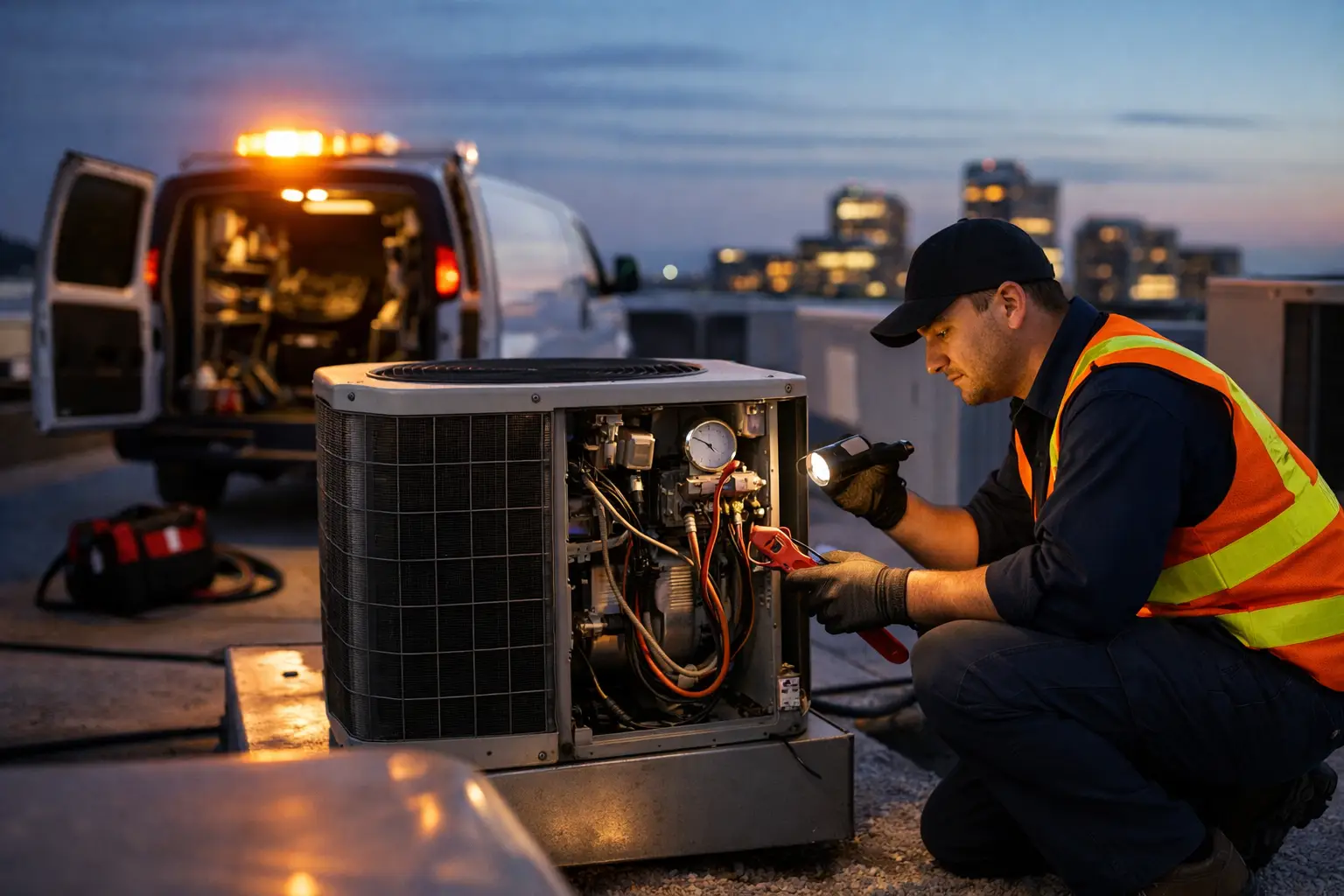
A failed rooftop unit at 2 p.m. on a July afternoon can turn a comfortable workplace into a customer-service problem before the day is over. Emergency commercial HVAC service gives Monroe-area businesses a clear path forward when heating, cooling, ventilation, or controls fail without warning. The goal is not simply to get air moving again. It is to protect people, inventory, equipment, and normal business operations with a fast, informed repair.
When a Commercial HVAC Problem Is an Emergency
Not every HVAC concern requires an immediate after-hours call. A unit that is slightly noisier than usual or an office that feels warmer near one window can often be scheduled for prompt service during regular business hours. Waiting may be reasonable when the system is still operating safely and the issue is not affecting critical areas.
An emergency is different. It is a problem that creates a safety concern, puts valuable assets at risk, or makes it difficult to keep your facility open and productive. For a restaurant, that may mean heat building in a kitchen or dining area. For a medical office, it may mean inconsistent temperatures in treatment rooms. For a server room, warehouse, retail space, or multi-tenant property, a temperature or ventilation failure can quickly affect equipment, employees, customers, and lease obligations.
Call for emergency help when you notice a complete loss of heating or cooling during extreme weather, burning odors, smoke, electrical arcing, water leaking near electrical components, repeated breaker trips, or a system that will not shut off. Excessive humidity, no airflow in occupied areas, and a sudden failure of multiple zones can also demand quick attention.
If you smell gas or suspect a carbon monoxide issue, leave the affected area, follow your facility’s safety procedures, and contact the appropriate emergency utility or public safety resource first. HVAC repair should begin only after the immediate hazard has been addressed.
What to Do Before the Technician Arrives
The first few minutes after an HVAC failure matter. Facility managers and business owners do not need to diagnose the equipment, but a few practical steps can help protect the building and speed up the service visit.
Start by checking the thermostat or building controls. Confirm that the setting has not been changed, the schedule has not switched modes, and the system has power. If a breaker has tripped once, you may reset it only if there are no signs of burning, overheating, or electrical damage. Do not continue resetting a breaker that trips again. That can worsen the underlying problem and create a safety risk.
Next, protect the people and assets most affected by the failure. Move employees away from unsafe or overheated areas. Relocate heat-sensitive products, computers, or temperature-critical inventory if possible. In a restaurant, limit heat-producing equipment when it is safe to do so. In a tenant building, communicate early with occupants about the issue and any temporary measures being taken.
It also helps to gather basic information for the service team: the time the issue started, which areas are affected, any error codes on the thermostat or unit display, recent maintenance or repair history, and whether the system has been making unusual sounds. Clear details help the technician arrive prepared and reduce time spent narrowing down the problem.
Avoid removing access panels, working around electrical components, or adding refrigerant. Commercial HVAC systems involve high voltage, moving parts, pressurized refrigerant, and complex controls. A quick-looking fix can become a larger repair if the wrong component is handled.
What Emergency Commercial HVAC Service Should Include
A reliable emergency response begins with communication. You should know when help is on the way, what information the technician needs, and what the next steps will look like. Once on site, the technician should evaluate the full situation rather than replacing a part based only on the most obvious symptom.
Commercial failures can originate in several places. A cooling complaint might be caused by a failed capacitor, contactor, blower motor, belt, thermostat, economizer, drain safety switch, electrical connection, refrigerant issue, or a control problem. The same symptom can have very different causes, which is why professional diagnosis matters.
A thorough visit typically includes checking electrical supply and controls, inspecting motors and moving parts, confirming airflow, examining filters and belts, testing safety switches, and looking for leaks or drainage problems. On larger systems, the technician may also assess rooftop unit components, zoning controls, ventilation performance, or equipment staging.
The right repair depends on the condition of the equipment and the part that failed. In some cases, restoring safe operation is possible during the initial visit. In others, a specialized part, more extensive repair, or a planned replacement may be necessary. Honest communication is especially important here. You need to understand what has failed, what can be done immediately, what costs are involved, and whether a temporary repair is appropriate for your operation.
The Cost of Waiting Too Long
Commercial HVAC issues rarely stay isolated. A clogged condensate drain can lead to water damage. A slipping belt can reduce airflow and strain other components. Dirty filters may force a system to work harder, raising energy use and accelerating wear. A minor electrical issue can become a total shutdown at the least convenient time.
The business impact can be even greater than the repair itself. Employees lose focus in uncomfortable spaces. Customers may leave sooner or choose not to return. Inventory can be damaged by heat or humidity. Sensitive equipment may overheat. For property managers, one equipment failure can generate calls from several tenants at once.
That does not mean every older unit should be replaced after one breakdown. Repair can be the sensible choice when the equipment is otherwise in good condition and the failed component is straightforward. Replacement may make more sense when repairs are frequent, efficiency is poor, comfort complaints continue, or critical parts are becoming difficult to source. A trusted HVAC professional should explain those trade-offs in plain language, not pressure you into a decision during a stressful moment.
Preventing the Next Emergency
The best emergency commercial HVAC service is still the call you never have to make. Planned maintenance cannot prevent every failure, but it catches many problems before they interrupt business.
A commercial maintenance plan should be based on your equipment, operating hours, occupancy, and the demands of your facility. A lightly used office may need a different service approach than a busy restaurant, retail store, church, medical practice, warehouse, or multi-tenant building. Systems that run longer hours, operate in dusty conditions, or serve critical spaces deserve closer attention.
During routine visits, technicians can clean coils, replace or recommend filters, inspect belts, test electrical components, clear drains, verify refrigerant performance, check thermostats and controls, and identify worn parts before they fail. These tasks support better efficiency, but their real value is operational continuity. A system that receives regular care is less likely to surprise you during a heat wave, cold snap, weekend event, or peak business hours.
It is also wise to keep a simple facility record. Note equipment ages, model numbers, filter sizes, service dates, recurring concerns, and the areas each unit serves. If a failure happens, this information gives your HVAC provider useful context. It can also help you plan for replacement before an aging unit becomes an urgent decision.
A Local Response Makes a Difference
When your business is losing cooling in Charlotte or heating in Monroe, waiting on unclear answers adds to the pressure. A local commercial HVAC partner understands the weather patterns, building needs, and urgency behind a service call. PR Mechanical focuses on clear communication, skilled workmanship, honest pricing, and practical solutions that support your facility beyond a single repair.
Before an emergency occurs, know who to call, make sure key staff can access mechanical rooms and rooftop equipment, and keep service records available. When the unexpected happens, a calm response and qualified help can keep a system failure from becoming a business shutdown.