A carbon monoxide problem rarely announces itself with a smell, smoke, or obvious equipment failure. It can develop when a furnace, water heater, fireplace, or generator is not burning fuel correctly or cannot vent exhaust safely outside. This carbon monoxide safety guide gives North Carolina homeowners and property operators clear steps to reduce that risk, recognize a possible emergency, and know when to call for professional help.
What Carbon Monoxide Is and Why It Is Dangerous
Carbon monoxide, often called CO, is a colorless, odorless gas created when fuel does not burn completely. Natural gas, propane, oil, wood, charcoal, gasoline, and kerosene can all produce it. Because people cannot see or smell CO, a working detector is the only reliable way to receive an early warning inside a building.
When inhaled, carbon monoxide interferes with the blood’s ability to carry oxygen. Exposure can cause headache, dizziness, weakness, nausea, confusion, chest pain, and unusual tiredness. At higher levels, it can lead to loss of consciousness or death. Symptoms can resemble the flu, but CO exposure usually does not cause a fever.
The risk increases during cold snaps, when heating equipment runs longer and homes are closed tightly. That does not mean air conditioning systems are exempt from attention. A property with gas-fired equipment, an attached garage, a fireplace, or portable fuel-burning equipment needs a year-round prevention plan.
Common Carbon Monoxide Sources in Homes and Businesses
A properly installed, properly vented gas appliance is not automatically dangerous. The concern is equipment that is damaged, poorly maintained, incorrectly installed, blocked from venting, or operating in the wrong environment. Age alone is not the deciding factor, but older equipment often deserves closer attention.
In homes, common sources include gas furnaces, boilers, water heaters, fireplaces, gas ranges, clothes dryers, and vehicles left running in attached garages. A cracked heat exchanger, blocked flue pipe, failing draft inducer, or vent connection that has come loose can create a serious situation.
Commercial properties may have those same risks along with rooftop units, unit heaters, commercial water heaters, loading areas, kitchens, warehouses, and backup generators. A business should not assume an occupied space is safe simply because the HVAC system is still heating. Changes in ventilation, remodeling, roof work, or equipment replacement can affect how combustion gases move through a building.
Portable equipment deserves special attention. Never operate a generator, charcoal grill, camp stove, propane heater not rated for indoor use, or gasoline-powered tool indoors, in a garage, crawlspace, basement, or partially enclosed area. Opening a garage door is not enough. Generators need to remain outdoors and well away from doors, windows, and vents where exhaust can enter the building.
Carbon Monoxide Safety Guide: Start With Detectors
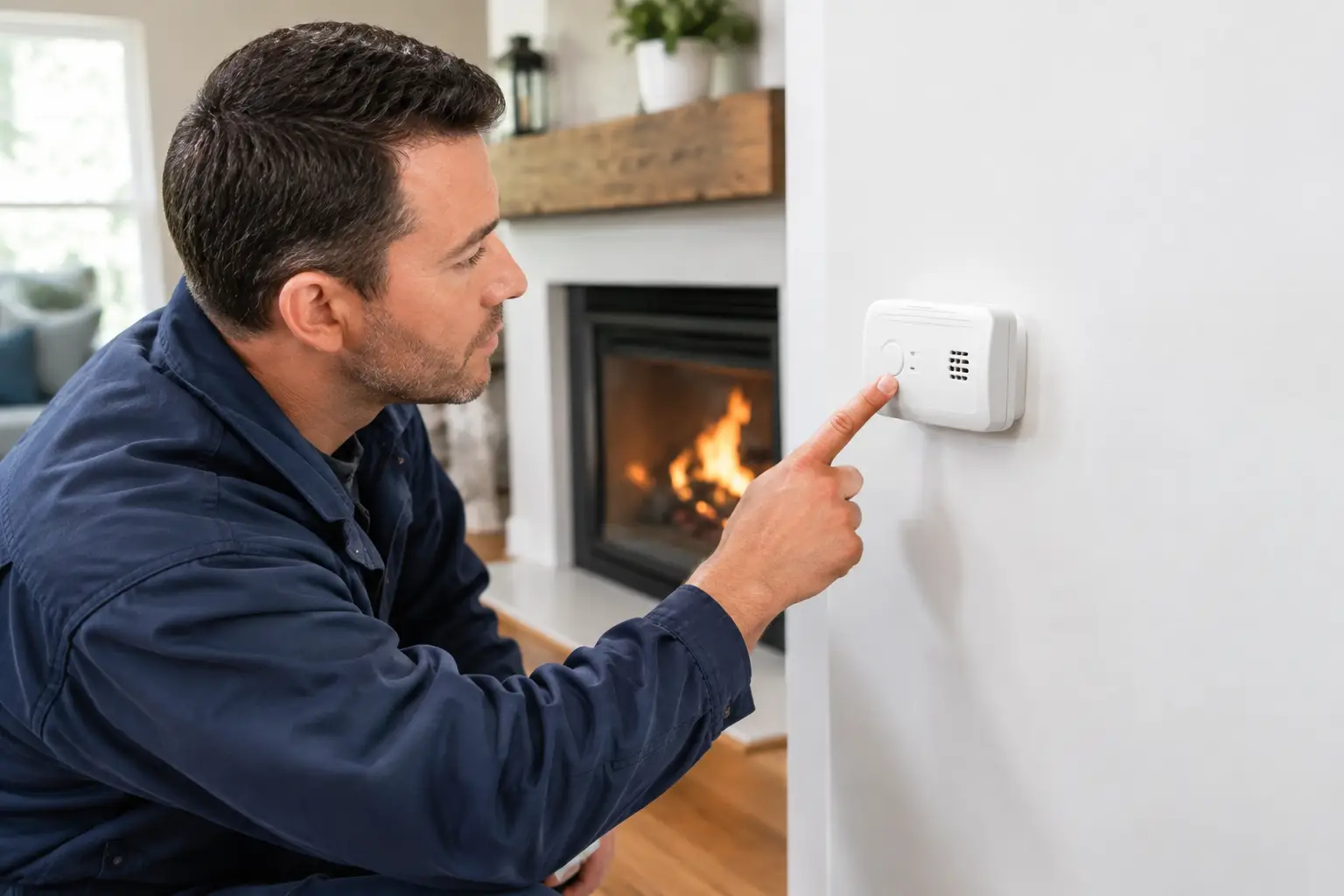
Carbon monoxide detectors are a first line of defense, not a replacement for safe equipment operation. Install them on every level of a home, outside each sleeping area, and in locations recommended by the detector manufacturer. For a business, detectors should be placed based on the building layout, sleeping accommodations if any, fuel-burning equipment, and applicable local code requirements.
Do not place a detector directly beside a fuel-burning appliance unless its instructions specifically allow it. Nearby placement can lead to nuisance alarms or poor readings. Avoid locations affected by high humidity, direct sun, cooking steam, or strong airflow from supply vents. Detectors need to be heard, so choose locations where an alarm will be noticeable, especially overnight.
Test every detector monthly using its test button. Replace batteries according to the manufacturer’s instructions, and replace the entire unit by its listed expiration date. Many detectors have a service life of five to 10 years, depending on the model. A detector that chirps, shows an end-of-life message, or has been painted over should be addressed promptly.
Smoke alarms and carbon monoxide alarms serve different purposes. Combination units can be practical, but make sure the device provides both types of protection and that every required location is covered. Do not rely on a smoke alarm alone to detect carbon monoxide.
If a CO Alarm Sounds, Treat It as an Emergency
Do not try to locate the source, reset the alarm, or air out the building before people are safe. If a carbon monoxide alarm sounds, move everyone outside to fresh air immediately. This includes employees, customers, children, pets, and anyone who may be sleeping.
Once outside, call 911 or your local emergency services from a safe location. If anyone has symptoms of carbon monoxide exposure, seek medical attention right away. Do not reenter the building until emergency responders say it is safe to do so.
After the immediate emergency is resolved, the cause still needs to be identified and corrected. A detector is doing its job when it alarms. Removing batteries, silencing it without investigating, or assuming it is a false alarm can put occupants at risk. A qualified HVAC professional can inspect fuel-burning heating equipment and venting, while other professionals may be needed for fireplaces, gas piping, appliances, or vehicle-related sources.
Prevention Begins With Heating Maintenance
Furnace maintenance is one of the most practical ways to reduce CO risk in a home or commercial building. Before heating season, a trained technician should inspect the system’s combustion process, heat exchanger, burners, electrical components, safety controls, condensate drainage where applicable, and venting path. They should also look for signs of corrosion, loose connections, restricted airflow, and improper draft.
Changing air filters on schedule matters as well. A clogged filter does not directly create carbon monoxide, but it can contribute to overheating and unnecessary strain on heating equipment. Use the correct filter size and type for the system, and avoid blocking return vents or supply registers.
Keep the area around a furnace, water heater, or boiler clear. Stored boxes, paint, cleaners, and other household items can restrict access, introduce flammable vapors, or make it harder to spot a developing issue. Combustion equipment needs adequate air and a clear service area.
Fireplaces require their own routine. Have chimneys and vents inspected and cleaned as needed, especially if you use wood-burning or gas fireplaces regularly. Use the damper correctly, and never burn materials that are not intended for the appliance. If you notice soot, staining, rust, moisture around vent piping, unusual burner flames, or persistent odors near heating equipment, schedule an inspection rather than waiting for a breakdown.
Special Considerations for Attached Garages and Generators
Attached garages are a common pathway for exhaust fumes. Never warm up a vehicle inside the garage, even with the door open, and do not leave a car running while unloading groceries or waiting for someone. Exhaust can move into living areas through gaps, ductwork, doors, and shared walls.
During storm outages, generators can protect comfort and business continuity, but placement is nonnegotiable. Keep a portable generator outside, on a dry and stable surface, with exhaust directed away from the building. Never plug a generator directly into a wall outlet. Use properly rated cords for individual equipment or have a qualified electrician install an approved transfer switch for a whole-home or facility connection.
For commercial properties, make generator procedures part of the emergency plan. Staff should know who is authorized to operate the equipment, where it can be placed, how fuel is handled, and what to do if a CO alarm activates. A plan that exists only in a binder is not enough when the power is out and conditions are stressful.
When to Schedule Professional Service
Arrange service promptly if your furnace cycles oddly, produces soot, has a yellow or flickering burner flame when it should be blue, makes new noises, or struggles to heat consistently. Water stains or corrosion near flue pipes, a backdraft from a vent, and frequent detector alerts also deserve immediate attention.
Some problems can be simple, such as a blocked exterior vent caused by debris or an aging detector at the end of its service life. Others require repair or replacement of a critical component. The right answer depends on the equipment, the source of the issue, and the safety of the venting system. Clear diagnosis matters more than a quick guess.
For Monroe-area homeowners and businesses, PR Mechanical can inspect heating equipment, explain findings in plain language, and help keep your comfort system operating safely. A little attention before the next cold spell can make the difference between dependable heat and a preventable emergency.