A hot Monroe afternoon is a bad time for an air conditioner to make a humming sound and refuse to start. In many cases, the cause is a small but essential electrical component: the capacitor. Knowing the top signs of failing capacitor trouble can help homeowners and property managers act before a minor part failure leaves the building without dependable cooling.
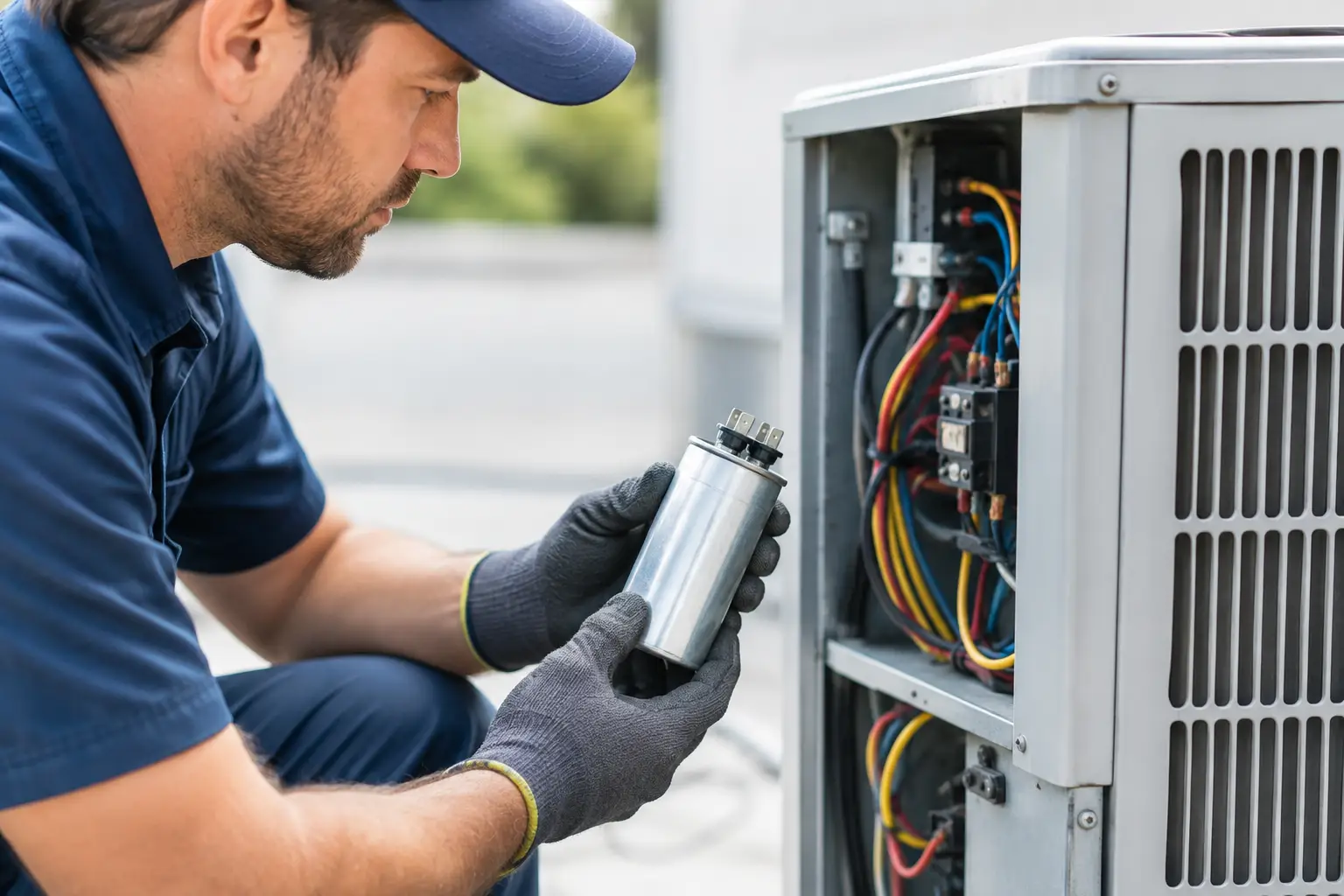
A capacitor is not something most people see or think about during normal operation. It sits inside the outdoor AC or heat pump unit and helps provide the electrical boost needed to start and run major components, including the compressor and condenser fan motor. When it weakens, your system may struggle, run inefficiently, or stop working altogether.
What a Capacitor Does in an HVAC System
Your air conditioner relies on several electrical parts working in the right sequence. The capacitor stores and releases energy to help the compressor and fan motor start and continue operating at the correct speed. Many outdoor units use a dual-run capacitor, which supports both the compressor and fan motor from one component.
Capacitors naturally wear over time. Heat, frequent cooling cycles, electrical fluctuations, and age all take a toll. North Carolina summers can be especially demanding because an AC system may run for long stretches during periods of high heat and humidity.
A weak capacitor does not always cause an immediate shutdown. Sometimes the warning signs start subtly, which is why unusual system behavior deserves attention rather than a wait-and-see approach.
Top Signs of a Failing Capacitor
The AC makes a humming sound but will not start
A humming or buzzing outdoor unit is one of the most recognizable warning signs. The system may be receiving power, but the compressor or fan motor may not have enough electrical support to start properly.
You may hear the hum when the thermostat calls for cooling, yet no air movement begins outside. Turn the thermostat off and arrange professional service. Leaving a humming unit energized can put added strain on the compressor or motor, turning a relatively straightforward repair into a more expensive problem.
The outdoor fan is not spinning
If the outdoor unit is running but its fan is not turning, a failing capacitor may be involved. The fan motor needs the capacitor to start and maintain proper operation. Without the fan moving heat away from the outdoor coil, the system can overheat quickly.
Do not try to start the fan by pushing the blades with a stick or tool. Even if the fan begins moving, that does not solve the underlying electrical issue, and the unit contains components that can be dangerous to handle. Shut the system down and have a qualified technician inspect it.
Your system starts, then shuts off unexpectedly
A weak capacitor can cause hard starting, where the equipment struggles to come on. The system may click, hum, start briefly, and then shut down. It may also cycle on and off more often than normal.
Short cycling has other possible causes, including thermostat problems, refrigerant issues, airflow restrictions, or an oversized system. That is why a professional diagnosis matters. The symptom may point to a capacitor, but the repair should address the actual source of the problem.
Cooling is weaker or less consistent
A capacitor problem can affect either the compressor, the outdoor fan, or both. As a result, your home or business may feel warmer than expected even though the thermostat is set correctly. You might notice certain rooms becoming uncomfortable, longer cooling cycles, or air that does not feel as cool from the supply vents.
Weak cooling is not exclusive to capacitor failure. A dirty filter, clogged coil, ductwork issue, refrigerant leak, or failing blower motor can create similar comfort problems. Still, if weaker cooling appears alongside humming, slow startup, or a non-spinning outdoor fan, the capacitor becomes a likely suspect.
Energy bills rise without a clear reason
An AC unit that struggles to start or run efficiently can use more electricity. The change may not be dramatic overnight, but a pattern of higher summer utility bills can be an early clue that something in the system is working harder than it should.
For commercial facilities, the impact can be more noticeable. An inefficient system may run longer to maintain temperatures in offices, retail areas, server rooms, or customer spaces. The cost is not only higher energy use. Poor comfort can also affect employees, customers, equipment, and daily operations.
The unit is older and has needed frequent repairs
Most capacitors last several years, but their lifespan depends on the unit’s operating conditions and electrical demand. If your AC or heat pump is older, runs heavily every summer, or has had prior electrical repairs, a failing capacitor becomes more likely.
Age alone does not mean a capacitor has failed. It does mean recurring performance issues should be checked promptly. Replacing the right worn component at the right time can help protect more costly parts, particularly the compressor.
What Causes an HVAC Capacitor to Fail?
Heat is one of the biggest contributors. Because the capacitor is typically located in the outdoor unit, it operates in an already warm environment. Long cooling cycles, direct sun exposure, restricted airflow around the condenser, and high outdoor temperatures can accelerate wear.
Electrical issues also matter. Power surges, voltage fluctuations, loose connections, and worn contactors can damage a capacitor or shorten its life. A failing fan motor or compressor can create excess strain as well. In other words, a bad capacitor may be the main problem, or it may be a symptom of another component that needs attention.
Routine HVAC maintenance helps technicians spot weak electrical parts, loose wiring, dirty coils, and airflow concerns before they lead to an unexpected breakdown. It cannot prevent every repair, but it gives your system a better chance of getting through peak heating and cooling seasons reliably.
Why Capacitor Replacement Is a Professional Repair
Capacitors may be small, but they hold an electrical charge even after power to the system is turned off. Handling one without the right training and safety procedures can result in serious injury. The replacement also needs to match the manufacturer’s specifications for capacitance and voltage rating.
Installing the wrong part can damage the motor, compressor, or other electrical components. A technician should confirm the capacitor’s condition with proper testing, inspect the contactor and wiring, and check whether the motor or compressor is drawing abnormal amperage. That complete diagnosis is the difference between replacing a part and solving the problem.
For homeowners, the safest step is simple: turn the system off at the thermostat if it is making unusual sounds or failing to start, then call for service. For commercial property operators, addressing the issue quickly can help avoid an outage during business hours or a larger equipment failure that disrupts operations.
When to Call for HVAC Service
Call for professional help as soon as you notice a humming outdoor unit, repeated startup failures, a fan that will not spin, burning smells, tripped breakers, or a sudden loss of cooling. A burning odor or repeated electrical tripping should be treated with extra urgency. Turn the system off and avoid resetting the breaker multiple times.
If the AC is still cooling but acting differently than usual, do not assume it can wait until the next heat wave. Early service may protect the compressor and fan motor while restoring efficient operation sooner. PR Mechanical provides clear, dependable HVAC diagnosis for homes and businesses throughout the Monroe and greater Charlotte area.
A capacitor failure can arrive without much warning, but your system usually gives clues first. Paying attention to unfamiliar sounds, slow starts, and changes in comfort gives you the best opportunity to schedule service before a small electrical component interrupts the comfort you count on.