A puddle beside an indoor air handler can turn a hot Monroe afternoon into a stressful service call fast. Water can stain ceilings, damage flooring, encourage mold growth, and interrupt cooling when a safety switch shuts the system down. The best ways to prevent AC leaks start with knowing what is actually leaking – because water around the unit and refrigerant loss are very different problems.
Most visible AC leaks are water created during normal cooling. Your air conditioner pulls humidity from indoor air, and that moisture should move safely through a condensate drain line to the outside. When that path is blocked, damaged, or poorly maintained, water backs up where it does not belong. Refrigerant leaks are less visible but equally serious, affecting comfort, energy use, and the life of the equipment.
Start With the Condensate Drain System
During a North Carolina summer, an air conditioner can remove a surprising amount of moisture from the air. The condensate pan and drain line handle that water every day. Algae, mildew, dust, and small debris can collect in the line over time, eventually creating a clog.
A clogged condensate line is one of the most common causes of an indoor AC water leak. Watch for water near the air handler, a musty smell around the unit, an overflow pan that stays wet, or an AC that stops running even though the thermostat is calling for cooling. Some systems have a float switch that turns the equipment off before an overflow causes major damage. That protection is helpful, but it is a warning that needs attention.
Have the drain line cleaned as part of seasonal maintenance. A technician can clear the line, inspect the trap and fittings, verify proper drainage, and make sure the safety switch works. For homeowners, keeping the area around the indoor unit clean and accessible also makes it easier to spot trouble early. Avoid pouring harsh chemicals into the drain line unless a qualified technician recommends a specific method for your system.
Change Filters Before Airflow Becomes a Problem
A dirty air filter does more than make your home dusty. It restricts airflow across the indoor evaporator coil. When not enough warm air moves across that coil, the coil can become too cold and freeze. Once the ice melts, more water than the drain system can handle may collect in the pan, resulting in an overflow.
Check your filter monthly during periods of heavy use and replace it according to the manufacturer’s recommendation. Many homes need a replacement every one to three months, but the right timing depends on the filter type, pets, occupancy, renovation dust, and indoor air quality needs. A filter that looks gray or visibly loaded with debris should not stay in service just because it has not reached a calendar date.
Commercial properties need the same discipline, often with a documented filter schedule. Restaurants, offices, retail spaces, and facilities with frequent foot traffic may accumulate airborne particles faster than expected. Clean filters support drainage, cooling performance, and healthier indoor air for employees and guests.
Keep the Indoor Coil Clean
The evaporator coil sits inside the indoor portion of the AC system, where it absorbs heat and humidity. Dust buildup on this coil restricts heat transfer and airflow. Like a clogged filter, that restriction can contribute to freezing, excess condensation, and water leaks.
Coil cleaning is best left to an HVAC professional. The coil is delicate, difficult to access on many systems, and surrounded by electrical components and insulation. A technician can clean it appropriately while checking for signs of corrosion, biological growth, damaged insulation, or poor airflow from the blower.
This is one reason annual AC maintenance is not just a nice extra. A system can still produce cool air while developing the conditions that lead to a leak. Finding a dirty coil before it freezes is easier and less expensive than addressing water damage after an overflow.
Make Sure the Unit Is Level and the Pan Is Sound
An air handler, furnace cabinet, or attic unit needs to be installed level enough for condensate to flow toward the drain opening. If the equipment shifts, the platform settles, or the installation was not properly supported, water may collect on the wrong side of the pan and spill over.
The primary condensate pan can also crack or rust with age. In attic installations, a secondary drain pan beneath the equipment provides another layer of protection. Look for rust, standing water, staining, or signs that the secondary pan has been draining outside. Water coming from a visible emergency drain pipe is not something to ignore – it usually means the primary drain path has a problem.
Do not attempt to reposition heavy HVAC equipment yourself. Improper adjustments can damage refrigerant lines, electrical connections, ductwork, or the cabinet. A professional can determine whether the issue is the pan, the drain slope, the equipment support, or a combination of factors.
Protect Refrigerant Lines and Watch for Performance Changes
Not every AC leak leaves water on the floor. Refrigerant travels through sealed copper lines and components. A leak can develop at a connection, through corrosion, or from physical damage. Unlike condensation, refrigerant loss cannot be solved by topping off the system and moving on. The leak must be located and repaired before the correct refrigerant charge is restored.
Warning signs can include longer cooling cycles, warm air from supply vents, ice on the refrigerant line or indoor coil, hissing sounds, and rising electric bills. These symptoms can also point to airflow or mechanical problems, which is why accurate diagnosis matters.
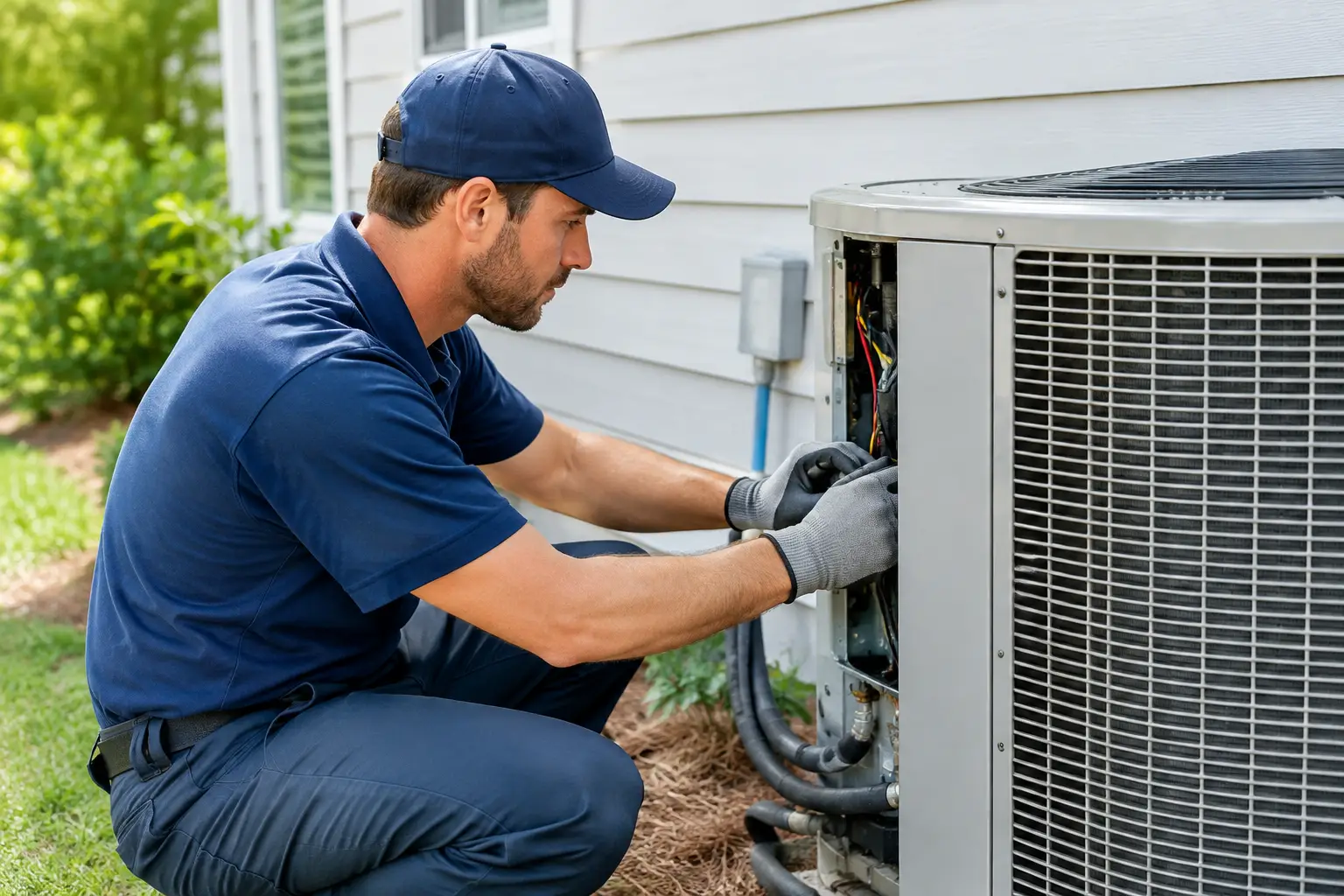
Keep outdoor equipment clear of lawn tools, stored materials, and shrubs that crowd the cabinet. Trim vegetation back to allow airflow and avoid placing anything against the refrigerant lines. If you notice damaged insulation around the larger copper line, ask a technician to inspect it. Missing insulation can lead to excess sweating and reduced efficiency, though it does not necessarily mean the refrigerant line itself is leaking.
Refrigerant work requires trained, properly equipped professionals. It is not a homeowner repair and should never be treated as a routine do-it-yourself task.
Schedule Maintenance Before Peak Cooling Season
The most effective prevention happens before your AC is running day and night. A professional tune-up gives a technician time to inspect the condensate system, filter condition, evaporator coil, refrigerant performance, electrical connections, blower operation, and outdoor unit condition.
For most homes, annual cooling maintenance is a practical baseline. Older systems, properties with high humidity, homes with attic air handlers, and commercial buildings with long operating hours may benefit from more frequent attention. It depends on the equipment, its age, how hard it works, and whether previous drainage or refrigerant issues have occurred.
Maintenance also creates a useful record of how the system is performing over time. That helps identify a declining component before it causes an unexpected shutdown during a heat wave.
Respond Quickly When You See Water
If you find water around your indoor unit, turn the thermostat to off to prevent additional overflow. If water is near electrical equipment, avoid touching the unit or attempting to open panels. Protect nearby belongings, and check whether the ceiling, wall, or flooring has become wet.
Then arrange for service promptly. Waiting to see whether the leak disappears can allow moisture damage and mold concerns to grow. A technician can identify whether the problem is a clogged drain, frozen coil, cracked pan, failed condensate pump, installation issue, or another system fault.
For business owners and facility managers, a written response plan is worthwhile. Staff should know who to contact, where the indoor units are located, and how to recognize an overflow warning. Quick action can prevent damage to inventory, workspaces, ceilings, and sensitive equipment.
When Prevention Means Planning for Replacement
Repeated leaks on an aging system can signal that repair decisions deserve a closer look. A cracked pan may be repairable, but a severely corroded coil, recurring refrigerant leak, or equipment that repeatedly freezes may make replacement the more dependable long-term choice. The right answer depends on repair cost, system efficiency, equipment age, and the condition of the rest of the comfort system, including ductwork and controls.
A clear assessment should explain the cause, the repair options, and what each option means for reliability. PR Mechanical approaches that conversation with practical recommendations and honest pricing, so homeowners and commercial operators can make decisions without unnecessary pressure.
A dry, well-maintained AC system does more than protect the space around it. It keeps your cooling dependable when North Carolina heat and humidity put every part of the system to work. If you notice water, ice, weak airflow, or a sudden change in comfort, addressing it early gives you the best chance to prevent a small issue from becoming a disruptive repair.