A second-floor bedroom that stays warm, a sunroom no one uses in July, or rising cooling bills can turn ductless versus central air from a technical question into an urgent household decision. Both options can deliver dependable cooling in Monroe and the Charlotte area, but they distribute comfort differently. The better choice depends on your home’s layout, existing equipment, problem areas, and plans for the property.
Central air is often the right fit for a whole-home replacement. A ductless system can be an excellent answer for additions, converted spaces, and rooms that never seem to match the thermostat. Knowing where each system works best helps you invest in comfort that lasts.
How Central Air and Ductless Systems Work
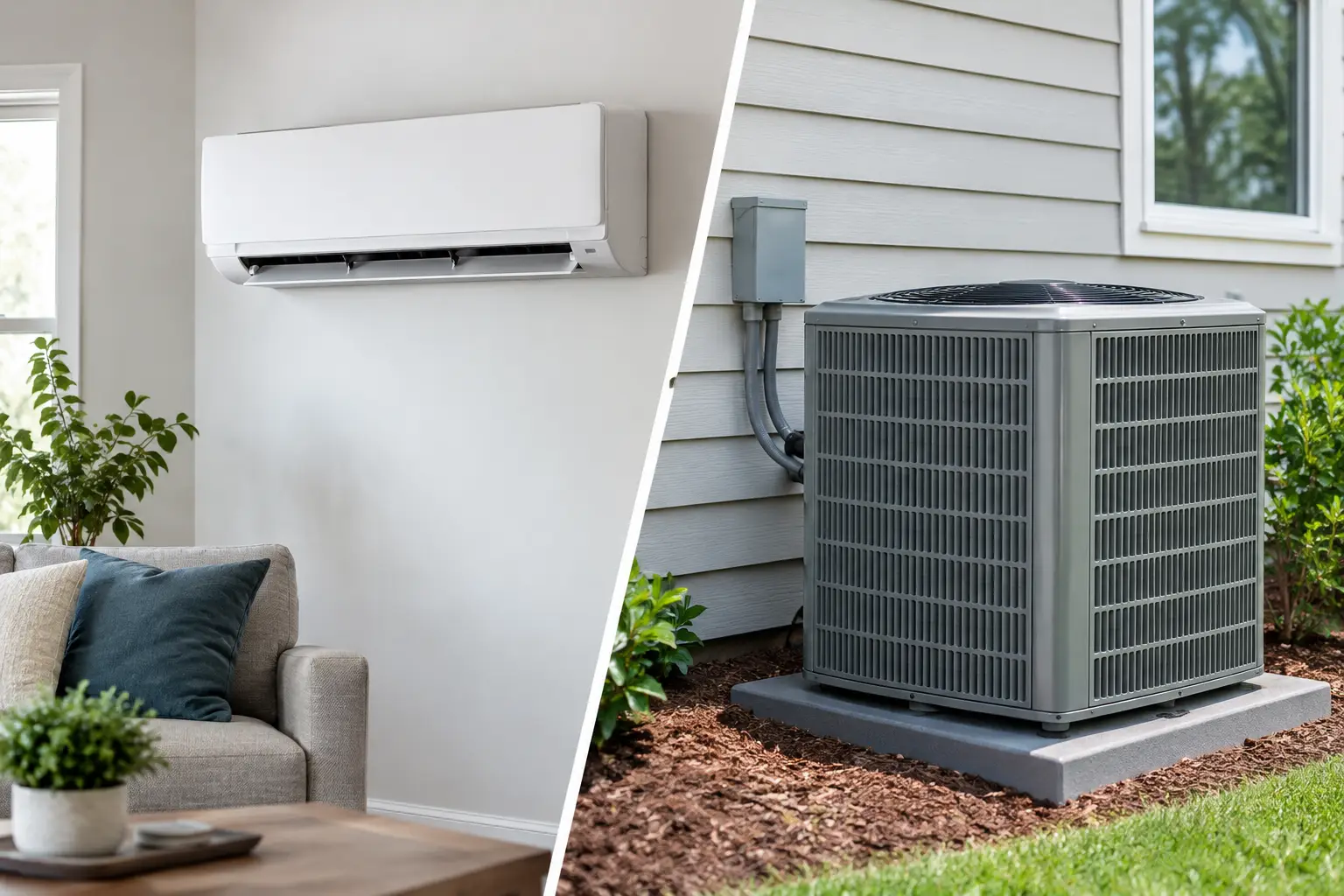
A central air conditioner cools air at an indoor unit and moves it through a network of supply ducts. One thermostat typically controls the system, although zoning equipment can create more than one temperature area. The conditioned air reaches bedrooms, living areas, kitchens, and other rooms through registers, then returns through return-air grilles to be cooled again.
Ductless mini-split systems use an outdoor unit connected to one or more indoor air handlers by small refrigerant lines and electrical wiring. Each indoor unit is installed in a specific room or zone and has its own temperature control. Instead of pushing cooled air through long runs of ductwork, it delivers comfort directly where it is needed.
Neither approach is automatically better. A properly sized central system with well-designed ductwork can cool an entire home evenly and quietly. A carefully planned ductless system can give individual rooms more control while avoiding the expense and disruption of adding ducts.
Ductless Versus Central Air: Comfort Differences
The biggest practical difference is how each system handles temperature control. Central air is designed to condition the full home as one connected system. For families who want consistent cooling throughout an existing house, that can be simple and effective. A single thermostat also means fewer settings to manage.
Ductless systems offer room-by-room control. If one person prefers a cooler bedroom while another rarely uses a guest room, separate indoor units can reduce arguments over the thermostat and avoid cooling unused areas. This is particularly useful in finished attics, garages converted into offices, bonus rooms, sunrooms, and additions that were never connected to the home’s original duct system.
That flexibility comes with a consideration: indoor air handlers are visible. Modern units are compact, but they are usually mounted high on a wall, recessed into a ceiling, or placed near the floor. Central air keeps most equipment out of sight, with only registers and grilles visible. Homeowners who strongly prefer a hidden appearance may favor central air when ducts are already available.
Comfort also depends on system design, not just system type. An oversized unit may cycle on and off too quickly, leaving humidity behind. An undersized unit may run constantly during a North Carolina heat wave. Proper load calculations, airflow planning, and professional installation matter whether you choose ducts or ductless equipment.
Energy Efficiency and Humidity Control
Ductless systems are often very efficient because they avoid duct losses. In a typical central system, leaks, poor insulation, disconnected sections, or undersized return ducts can waste conditioned air before it reaches the room. If a home has aging or damaged ductwork, correcting those issues can make central air perform much better.
Mini-splits also use variable-speed technology in many models. Rather than simply turning on at full output and shutting off, the system can adjust its output to maintain a steadier temperature. This can reduce energy use in spaces with changing loads, such as a home office that gets afternoon sun.
Central air has efficiency advantages of its own. High-efficiency central systems can provide excellent results when paired with sealed, insulated, correctly sized ducts. For a home that already has sound ductwork, replacing an aging central unit may be more practical than installing several ductless heads.
Humidity deserves special attention in our climate. Cooling equipment should remove moisture as it cools. A properly selected central system can manage whole-home humidity well, especially when airflow is balanced. Ductless equipment can provide strong humidity control in the zones it serves, but it does not automatically address moisture concerns throughout rooms without indoor units. If the house feels clammy even when it is cool, the cause may involve equipment sizing, duct leakage, insulation, ventilation, or drainage issues.
Installation Cost: Look Beyond the Equipment Price
The upfront cost comparison is rarely as simple as asking which unit costs less. A single-zone ductless system for one problem room can be a cost-effective alternative to extending ductwork or replacing a working whole-home system. It may be especially valuable when an addition is far from the existing air handler or when there is no practical route for new ducts.
A multi-zone ductless installation can cost more as additional indoor units, line sets, electrical work, and controls are added. It can still be a smart long-term investment, but the price should be evaluated against the comfort problem it solves.
Central air can be more economical when a home already has usable ducts and needs a complete system replacement. However, older ducts may require repair, sealing, redesign, or replacement to support the new equipment. Skipping that work to reduce the initial price can lead to hot rooms, noisy operation, and higher utility costs later.
For either option, ask for a clear scope of work. It should address equipment capacity, electrical requirements, thermostat or control options, drainage, permits when needed, and any duct repairs or modifications. Honest pricing means understanding what is included before installation begins, not discovering necessary work after the project is underway.
When Ductless Is the Better Fit
Ductless air conditioning often makes the most sense when the challenge is limited to one or several spaces rather than the entire building. It is a strong option for homes without existing ducts, historic homes where major renovation is undesirable, additions, workshops, and detached buildings.
It also works well as a supplement. A homeowner does not always need to replace a central system just because one upstairs room runs hot. A dedicated ductless unit can relieve that room while allowing the central equipment to serve the rest of the home more effectively.
Commercial property operators may also use ductless systems for server rooms, small offices, tenant build-outs, or areas with unique operating hours. Independent zone control can protect sensitive equipment and keep employees comfortable without running the entire building’s HVAC system after hours.
When Central Air Is the Better Fit
Central air is generally the better choice for homes with a functional duct system that need uniform comfort across many rooms. It can also pair easily with whole-home filtration, humidification or dehumidification equipment, and other indoor air quality improvements. For larger commercial spaces, ducted systems are often necessary to distribute conditioned air across open areas and multiple rooms.
If your home has uneven temperatures, central air should not be ruled out immediately. The issue may be a blocked return, an undersized duct branch, inadequate attic insulation, a failing blower, or a thermostat located in the wrong place. A thorough evaluation can identify whether duct improvements, zoning, or equipment replacement will address the real problem.
Central systems also tend to be familiar to buyers, contractors, and future service providers. That does not make them the only sensible option, but it can be a meaningful factor for homeowners planning to sell in the near future.
Maintenance Matters for Both Options
Both system types need routine care to protect efficiency and reliability. Central air benefits from regular filter changes, coil cleaning, drain inspections, refrigerant checks, and ductwork assessments. Ductless systems need their filters cleaned more frequently because each indoor head has its own filter. Their coils, blowers, drain lines, and outdoor units also require professional maintenance.
A neglected ductless head can lose airflow and develop odors. Neglected ductwork can circulate dust, waste cooled air, and make a central system work harder than necessary. Maintenance is not an add-on to system performance – it is part of keeping comfort dependable through the hottest months.
The right choice becomes clearer when the decision starts with your actual space rather than a one-size-fits-all recommendation. PR Mechanical can assess your home’s layout, existing ducts, comfort concerns, and efficiency goals, then explain practical options in plain language so you can move forward with confidence.