A room that never seems to cool down, dust collecting faster than expected, or an HVAC system that runs for long stretches can all point to the same hidden problem: leaky ductwork. An air duct sealing service addresses the pathways that carry heated and cooled air through your property, helping more of that conditioned air reach the rooms where it belongs.
For homeowners and business operators in Monroe and the greater Charlotte area, duct leaks are easy to overlook because much of the duct system is behind ceilings, walls, or in attics and crawl spaces. Yet those small gaps, loose connections, and deteriorated joints can have a real effect on comfort, energy use, and equipment performance.
What Leaky Ductwork Does to Your HVAC System
Your heating and cooling equipment may be producing the right amount of conditioned air, but the duct system has to deliver it efficiently. When ducts leak, air can escape into unconditioned spaces before reaching living areas, offices, retail floors, or other occupied rooms. At the same time, leaks can pull hot, humid, dusty, or unfiltered air into the system.
That combination puts added strain on the HVAC system. Your thermostat senses that the desired temperature has not been reached, so the equipment continues operating. Longer run times can mean higher utility costs and more wear on components that are already working hard during North Carolina’s hot summers and occasional cold spells.
Duct leakage can also create uneven temperatures. One bedroom may feel stuffy while another gets too cold. In a commercial setting, an office near the thermostat may be comfortable while employees or customers farther away deal with inconsistent conditions. Turning the thermostat lower or higher rarely solves the actual issue. It can simply make the comfortable areas less comfortable while increasing energy use.
Signs You May Need an Air Duct Sealing Service
Some duct problems are visible, such as disconnected flexible duct sections or damaged insulation around attic ductwork. More often, the warning signs show up in everyday comfort and system behavior.
You may benefit from a professional evaluation if certain rooms are consistently warmer or cooler than the rest of the property, air coming from vents feels weak, or your heating and cooling bills have risen without a clear explanation. Excessive dust, musty odors when the system starts, and frequent filter buildup can also be worth investigating.
For commercial properties, pay attention to comfort complaints from specific zones, changes in utility costs, and HVAC equipment that seems to run constantly during normal operating hours. A duct issue can affect employee productivity, customer experience, and temperature-sensitive equipment, even when the rooftop unit or indoor equipment appears to be functioning.
These symptoms do not automatically mean duct leaks are the only problem. Dirty filters, incorrect thermostat settings, undersized equipment, blocked returns, refrigerant issues, and failing components can produce similar results. That is why a proper inspection matters. A dependable HVAC professional should identify the source of the problem rather than recommend a one-size-fits-all repair.
How Professional Duct Sealing Works
An air duct sealing service starts with an assessment of the system and the areas it serves. A technician checks accessible duct runs, supply and return connections, registers, grilles, insulation, and equipment connections. The goal is to find where conditioned air is escaping or where unconditioned air may be entering the duct system.
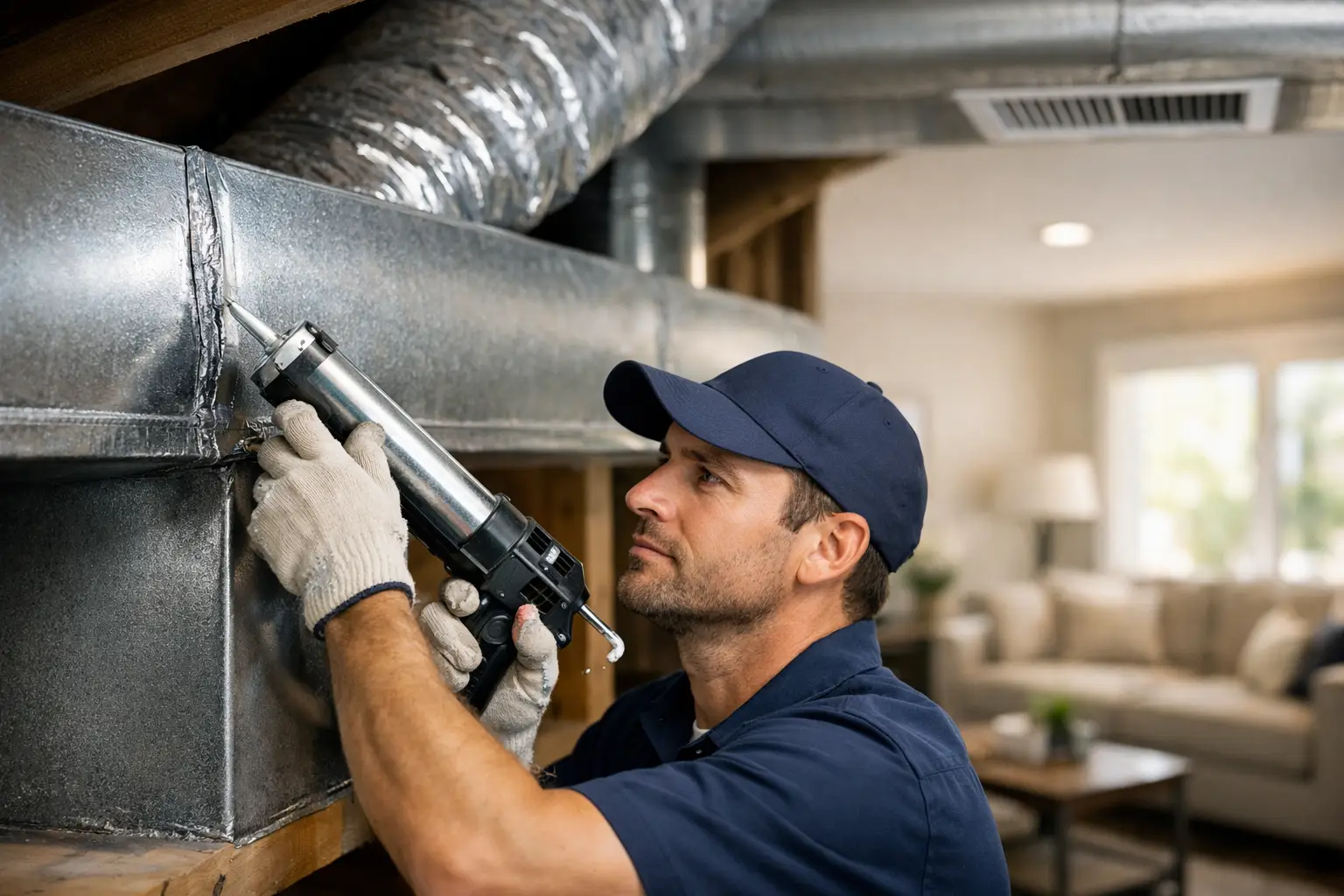
Once the problem areas are identified, the technician seals gaps and joints with materials designed for HVAC use. Depending on the duct type and location, this may include professional-grade mastic sealant, approved foil tape, mechanical fasteners, insulation repair, or reconnecting separated sections. Ordinary cloth-backed duct tape is not a long-term solution. Despite its name, it can dry out and fail under attic temperatures and normal system vibration.
The work should also consider airflow, not just visible holes. A return duct leak can draw in attic air, crawl space air, insulation fibers, or dust. A supply leak wastes conditioned air before it reaches a room. Both sides of the system deserve attention because they affect comfort in different ways.
After repairs are complete, the technician should verify that connections are secure and discuss any related concerns found during the visit. If ductwork is severely damaged, poorly designed, undersized, or beyond practical repair, partial replacement or duct modification may be the better long-term recommendation. Honest advice matters here. Sealing is highly effective for many systems, but it cannot correct every duct design issue.
Comfort, Efficiency, and Indoor Air Quality Benefits
The most noticeable benefit of duct sealing is often more consistent comfort. Rooms that struggled to stay cool or warm may receive stronger, more dependable airflow. This is especially valuable for second floors, additions, bonus rooms, and areas served by long duct runs.
Energy efficiency can improve because the system does not have to run as long to maintain the set temperature. The amount of savings varies based on the condition of the ducts, the location of leaks, insulation levels, system age, and daily thermostat habits. It is reasonable to expect improvement when meaningful leaks are corrected, but no reputable contractor should promise the same utility reduction for every property.
Better duct integrity may also support cleaner indoor air. Sealing return-side leaks reduces the chance of drawing contaminants from unconditioned spaces into the airflow. This does not replace routine filter changes, duct cleaning when appropriate, humidity control, or other indoor air quality solutions. It is one important part of keeping the air delivery system working as intended.
For businesses, the value can extend beyond energy use. More stable temperatures can reduce comfort complaints, support productive workspaces, and create a better experience for customers and visitors. In spaces with multiple zones or complex duct layouts, a careful evaluation can help prioritize the areas causing the greatest operational concerns.
When Duct Sealing Makes the Most Sense
Duct sealing is often a smart choice when a system is otherwise in good condition but comfort remains uneven or airflow is poor. It can also be useful before installing new HVAC equipment. Replacing heating or cooling equipment without addressing major duct leaks may leave the new system working harder than necessary from day one.
It is also worth considering during a renovation, after pest damage, when duct insulation has deteriorated, or when an inspection reveals loose connections in an attic or crawl space. Older homes can be strong candidates, but newer homes are not immune. Construction gaps, shifting materials, and poorly connected runs can affect properties of any age.
There are times when sealing alone is not enough. Ductwork that is crushed, undersized, improperly routed, contaminated, or extensively deteriorated may need repair or replacement. A qualified technician can explain the difference clearly, show you the concern when accessible, and provide options that match your budget and property needs.
Choosing a Contractor You Can Trust
Ductwork is not a place for guesswork. The quality of the inspection and repair affects the performance of the entire comfort system. Look for a local HVAC contractor that evaluates the full picture: equipment operation, airflow, duct condition, thermostat settings, filtration, and the needs of the people using the space.
Clear communication is just as important as technical skill. You should understand what was found, why it matters, what repair is recommended, and what the pricing includes before work begins. For larger improvements, ask whether the work can be coordinated with maintenance, equipment replacement, insulation improvements, or indoor air quality upgrades.
PR Mechanical helps homeowners and commercial property operators identify ductwork concerns without unnecessary complexity. The focus is on practical repairs, honest recommendations, and comfort you can count on through every season.
If certain rooms never feel right or your HVAC system seems to be working harder than it should, do not assume a thermostat adjustment is the answer. A professional duct inspection can reveal whether the air you are paying to heat and cool is actually reaching the spaces that need it.