A failed rooftop unit is more than an uncomfortable afternoon. For a restaurant, office, retail store, medical practice, warehouse, or multifamily property, it can disrupt staff, frustrate customers, threaten sensitive equipment, and interrupt normal business. A commercial HVAC maintenance plan helps prevent those surprises by finding small performance issues before they become urgent repairs.
In the Monroe and greater Charlotte area, commercial equipment works hard through long, humid cooling seasons and occasional winter cold snaps. Planned service gives business owners and facility managers a clearer picture of system condition, energy use, and upcoming needs. It also creates a reliable path to service when a problem cannot wait.
Why Planned HVAC Service Protects Daily Operations
Commercial HVAC systems are built for demanding workloads, but they are not maintenance-free. Filters load up, drain lines collect debris, belts wear, electrical connections loosen, and refrigerant problems can slowly reduce cooling capacity. These issues often begin quietly. By the time occupants notice hot or cold areas, unusual noise, or poor humidity control, the equipment may already be under avoidable strain.
Routine maintenance changes the conversation from “the system stopped working” to “we found a part that should be addressed before peak season.” That distinction matters when tenant comfort, employee productivity, inventory protection, or customer experience is on the line.
Maintenance also supports more predictable budgeting. No plan can eliminate every repair, especially on older equipment, but regular inspections make it easier to identify developing concerns and prioritize them. A facility manager may choose to replace a weakening capacitor or worn belt during a scheduled visit rather than pay for an after-hours failure later.
What a Commercial HVAC Maintenance Plan Should Include
The right plan should be based on the equipment serving your building, its age, operating hours, occupancy, and the work happening inside. A small professional office has different needs than a busy restaurant kitchen, daycare, server room, or retail space with doors opening all day.
Still, a thorough commercial HVAC maintenance plan generally includes scheduled inspections, cleaning, performance testing, and a written record of findings. The goal is not simply to check a box. It is to confirm that the system is operating safely, efficiently, and consistently.
Seasonal inspections and tune-ups
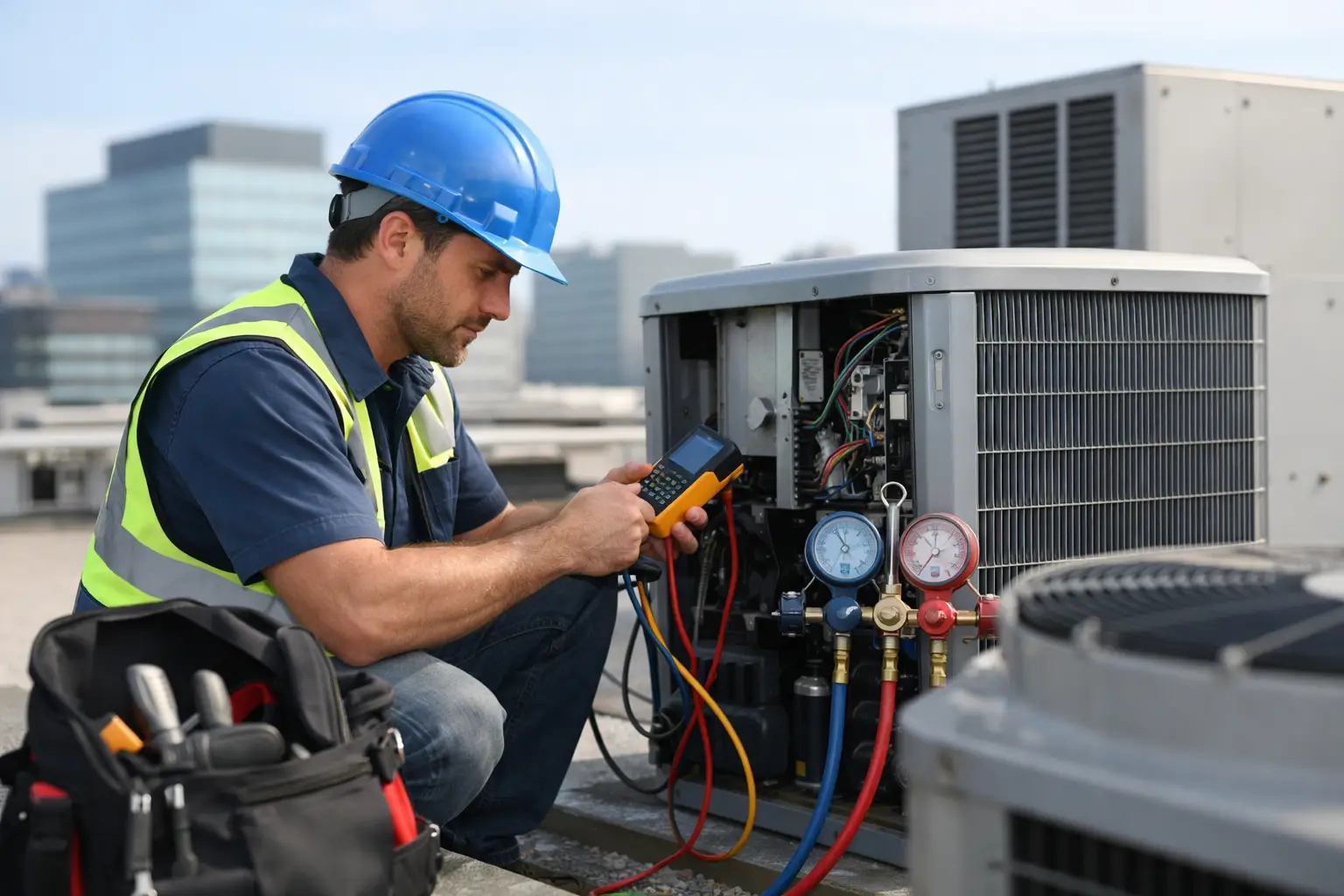
Most commercial systems benefit from service before the heavy cooling season and again before heating demand increases. During these visits, a technician can inspect the equipment for visible wear, test operation, and verify that heating and cooling components are responding correctly.
For air conditioning equipment, this commonly includes checking refrigerant performance, cleaning coils as needed, inspecting condensate drainage, testing capacitors and contactors, and confirming that fans and motors are operating properly. For heating equipment, service may include inspecting burners or heat exchangers, checking ignition and safety controls, and verifying safe venting where applicable.
The exact work depends on whether your property uses split systems, package units, heat pumps, rooftop units, boilers, furnaces, makeup air equipment, or other specialized equipment. A good service provider explains what applies to your system and why.
Airflow, filtration, and ductwork checks
Comfort complaints are not always caused by the main HVAC unit. Restricted filters, dirty coils, leaking ductwork, blocked registers, failing blower components, or poor airflow balance can make one area feel much different from another.
Filter replacement is one of the simplest but most valuable maintenance tasks. However, the correct schedule depends on the type of filter, building use, occupancy, pets or dust exposure, and indoor air quality needs. Changing filters too infrequently can restrict airflow and raise energy use. Changing them unnecessarily often can increase operating costs without solving an underlying issue.
A maintenance visit is also a practical time to inspect accessible ductwork and identify signs of leakage, damage, or insulation problems. In larger facilities, airflow and zoning concerns may call for a more detailed evaluation rather than a quick adjustment.
Electrical, thermostat, and control testing
Modern commercial comfort depends on more than heating and cooling equipment. Thermostats, sensors, relays, disconnects, control boards, and building schedules all affect how the system performs.
Technicians should inspect electrical connections, measure appropriate operating readings, and look for components showing signs of overheating or wear. They can also check thermostat calibration and programming. An incorrect schedule can cause a system to run when the building is empty or fail to reach a comfortable temperature before employees and customers arrive.
For properties with multiple zones, controls deserve special attention. A single malfunctioning thermostat or damper can create repeated comfort complaints even when the central equipment is working as designed.
Drainage, humidity, and indoor air quality
North Carolina humidity places added pressure on cooling systems. When condensate drains are blocked or improperly pitched, water can back up into equipment or ceilings, create odors, and contribute to indoor air quality concerns. Cleaning and testing drain lines is a small preventive step with meaningful value.
Humidity control should also be discussed when occupants report a sticky feeling, musty smells, condensation, or inconsistent comfort. Cooling capacity, ventilation, duct conditions, and building use can all play a role. The right solution may be a repair, an adjustment, improved ventilation, or equipment changes. It depends on the cause, not just the symptom.
How Often Should Commercial HVAC Be Maintained?
For many businesses, twice-yearly preventive maintenance is a sensible starting point: once ahead of cooling season and once before heating season. Equipment with long operating hours, heavy occupancy, kitchen exposure, dust, manufacturing activity, or critical temperature requirements may need more frequent attention.
A restaurant, for example, may need closer monitoring because grease, heat, and frequent door traffic increase the load on comfort equipment. A medical office or server room may prioritize consistent temperature and air quality. A warehouse may have fewer occupant-comfort demands but still need dependable heating, ventilation, and equipment protection.
Age matters, too. Newer equipment still needs maintenance to protect performance and preserve manufacturer requirements. Older units may require more frequent observation because parts are nearing the end of their service life. Regular visits provide the information needed to decide when continued repair makes sense and when replacement planning is the more responsible financial choice.
What to Expect From Your HVAC Service Partner
A maintenance agreement should make service easier, not more confusing. Look for clear scheduling, straightforward communication, and documentation that identifies what was inspected, what was completed, and what may need attention next. If repairs are recommended, you should understand the issue, the urgency, and the available options before approving the work.
Fast response matters as well. Even well-maintained equipment can fail unexpectedly because of storms, power events, component defects, or conditions no inspection could predict. A local provider that knows your building and equipment can respond with better context when an urgent issue occurs.
PR Mechanical approaches commercial maintenance as part of a larger comfort strategy. That can include HVAC service, thermostat concerns, ductwork performance, indoor air quality, repairs, and replacement planning. For business operators, having one dependable team helps reduce the time spent coordinating multiple contractors when comfort problems overlap.
Signs Your Plan May Need More Attention
If your business already has maintenance visits but still deals with recurring issues, the plan may need to be adjusted. Repeated hot and cold spots, rising utility bills, frequent tripped breakers, water around equipment, unusual sounds, poor humidity control, or ongoing tenant complaints are all reasons to take a closer look.
It may be that the equipment needs more frequent service. It may also point to a problem outside the unit itself, such as controls, duct leakage, ventilation, building pressure, insulation, or an incorrectly sized system. Treating every symptom as a simple repair can waste money. A careful assessment helps identify the actual source of the problem.
A well-managed HVAC system is easier to budget for, easier to operate, and far less likely to create a comfort crisis during a busy workday. Scheduling preventive service before the next peak season gives your business time to address concerns on your terms, with honest information and fewer last-minute decisions.