A new furnace is not a purchase most homeowners make on a whim. If your current system is failing during a North Carolina cold snap, making unusual noises, or driving up utility bills, this furnace installation guide can help you understand what should happen before, during, and after a replacement. The goal is not simply to get heat back on. It is to install a system that is safe, properly sized, efficient, and dependable for years.
For homes and businesses in Monroe and the greater Charlotte area, furnace installation is a job for qualified HVAC professionals. Gas lines, combustion venting, electrical connections, drainage, ductwork, and local code requirements all affect the outcome. Good workmanship protects your comfort, your equipment, and your peace of mind.
Start With the Right Reason to Replace
Age alone does not always mean a furnace needs replacement. Many well-maintained systems can operate for 15 to 20 years, although performance and repair costs often become less favorable as equipment gets older. A technician should help you weigh the condition of the furnace against the cost and reliability of continued repairs.
Replacement often makes sense when repair costs are mounting, the heat exchanger has a serious issue, rooms heat unevenly, or the furnace can no longer maintain a comfortable temperature. Rising gas or electric bills can also point to declining efficiency, especially when usage habits have not changed.
For commercial properties, the decision may also involve operational risk. A furnace failure can make a workspace uncomfortable, affect customers, create frozen-pipe concerns, or interrupt normal business hours. Planned replacement gives property operators more control than waiting for an emergency outage.
Furnace Installation Guide: Sizing Comes First
The most common installation mistake is choosing a furnace based only on the size of the old one. That older unit may have been oversized from the beginning, or your home may have changed since it was installed. New windows, added insulation, renovations, duct changes, and even occupancy patterns can affect heating needs.
A professional should evaluate the building rather than relying on a quick rule of thumb. This assessment considers square footage, ceiling height, insulation levels, window exposure, air leakage, duct design, and local winter temperatures. For a commercial space, the calculation also considers layout, occupancy, equipment heat, operating hours, and ventilation needs.
An oversized furnace may heat the space quickly but cycle on and off too often. Short cycling can reduce comfort, increase wear on components, and limit efficiency. An undersized furnace may run for long periods and still struggle to maintain the thermostat setting. Proper sizing supports steady, even warmth without unnecessary strain.
Efficiency Is More Than a Number
Furnace efficiency is commonly expressed as AFUE, or Annual Fuel Utilization Efficiency. A higher AFUE rating means more of the fuel used is converted into heat for the building. Higher-efficiency equipment can reduce operating costs, but the best choice depends on your budget, fuel type, building needs, and expected length of ownership.
High-efficiency gas furnaces generally require different venting and condensate drainage than standard-efficiency models. That is one reason a replacement is not always a simple equipment swap. Your installer should explain whether changes to vent pipes, drains, electrical service, or the equipment location are needed before work begins.
What a Professional Installation Should Include
A clear proposal should identify the furnace being installed, its efficiency rating, major installation work, warranty information, and the expected cost. Honest pricing does not mean every project costs the same. It means you understand what is included and why a recommended change is necessary.
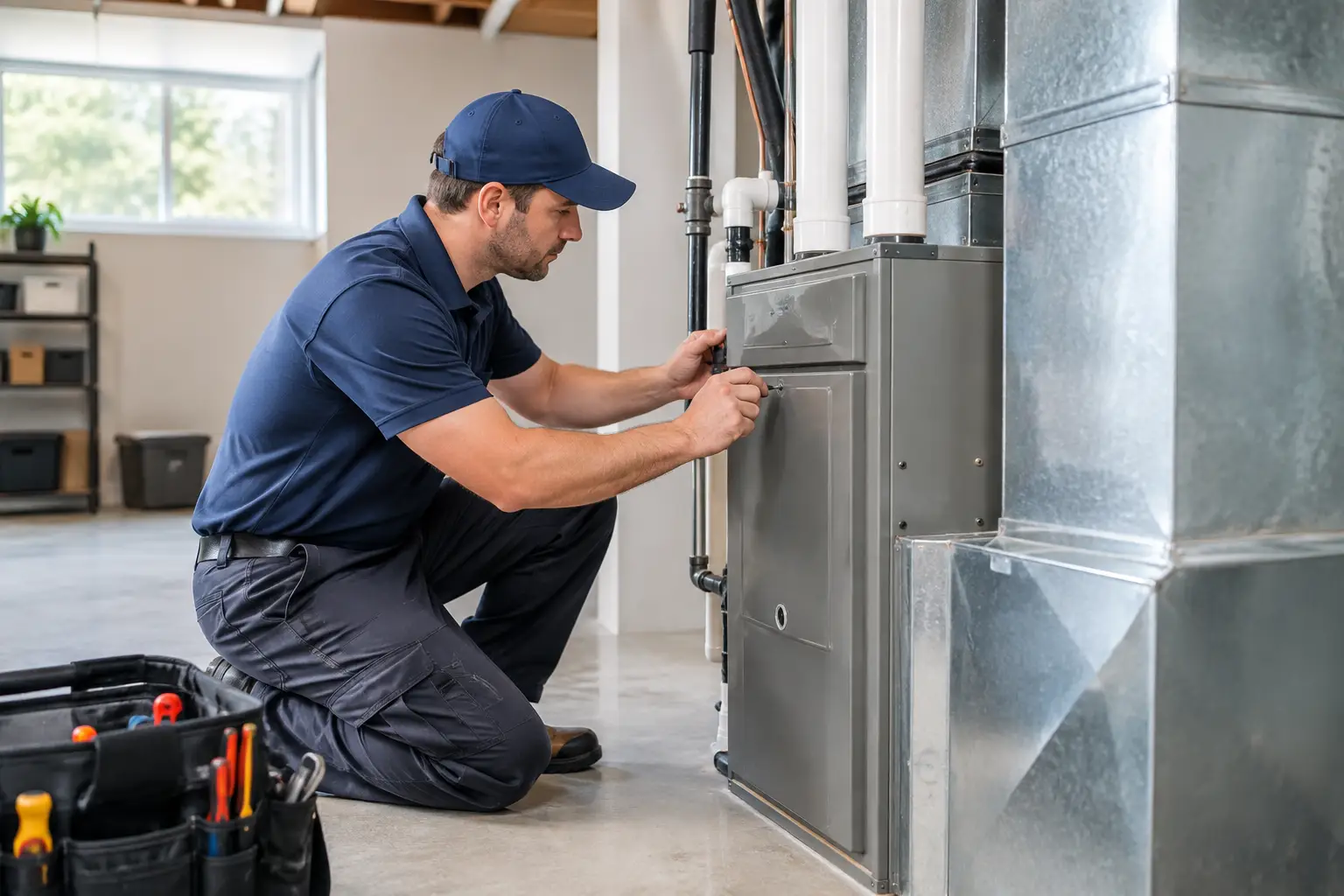
On installation day, technicians should protect the work area, safely disconnect and remove the old equipment, and inspect the surrounding connections. The new furnace must be placed securely and connected correctly to the duct system, fuel source, electrical supply, thermostat, drain system, and venting components.
If the furnace is gas-fired, safe combustion is especially critical. Technicians should check for proper gas pressure, secure connections, correct venting, and safe operation of the ignition and safety controls. Carbon monoxide risks are not something to guess about or postpone.
The job should also include startup and testing. A furnace can turn on and still be installed incorrectly. Proper commissioning confirms airflow, temperature rise, thermostat operation, safety shutoffs, venting performance, and drain function where applicable. The technician should review basic operation with you before leaving.
Ductwork and Thermostats Matter Too
A new furnace cannot fully solve comfort problems caused by poor ductwork. Leaky, undersized, disconnected, or poorly balanced ducts can waste heated air and leave some rooms uncomfortable. Before installation, ask whether the existing duct system can support the airflow requirements of the new equipment.
In some homes, targeted duct repairs or added returns can make a noticeable difference in comfort. In others, a complete ductwork update may be worth considering during a major HVAC replacement. The right answer depends on the condition and layout of the system, not on a one-size-fits-all recommendation.
The thermostat deserves attention as well. A compatible programmable or smart thermostat can make temperature control easier and help avoid heating an empty building more than necessary. However, advanced controls must be installed and configured correctly. Compatibility matters, particularly with variable-speed or multi-stage furnaces.
Permits, Inspections, and Safety Requirements
Furnace replacements may require permits and inspections depending on the location and scope of work. These requirements exist to verify that fuel, electrical, venting, and mechanical work meet applicable safety standards. A professional contractor can explain what applies to your project and handle the required process.
Do not overlook carbon monoxide protection. Homes with fuel-burning appliances should have working carbon monoxide alarms in appropriate locations, along with smoke alarms that are tested regularly. If you are replacing a furnace, it is a good time to check batteries, expiration dates, and alarm placement.
Clear access around the equipment is another practical safety issue. Storage boxes, cleaning supplies, and combustible materials should not crowd the furnace area. Your installer can tell you what clearance is appropriate for your specific system.
Preparing for Installation Day
Most furnace replacements can be completed in a day, but complex duct, venting, electrical, or access issues can extend the timeline. Before the appointment, clear a path from the entry point to the equipment area and remove belongings near the furnace. If the unit is in an attic, crawl space, closet, or commercial mechanical room, make access as safe and open as possible.
Plan for a temporary interruption in heat while the old equipment is removed and the new system is installed. During colder weather, close doors to unused rooms, use safe supplemental heat only as directed, and keep pets and children away from the work area. For businesses, scheduling installation during low-traffic hours can reduce disruption.
It also helps to write down questions ahead of time. Ask about the expected timeline, filter size, maintenance needs, warranty registration, thermostat settings, and whom to call if you notice an issue after installation. Clear communication is part of quality service.
Protect Your Investment After Installation
A new furnace needs regular care to deliver the comfort and efficiency you paid for. Replace or clean filters on the schedule recommended for your home or business. A clogged filter restricts airflow and can contribute to overheating, uneven temperatures, and avoidable wear.
Schedule professional heating maintenance before the colder season whenever possible. A seasonal visit gives a technician the opportunity to inspect burners, electrical components, airflow, venting, controls, and safety systems before an unexpected breakdown. Maintenance can also help preserve manufacturer warranty requirements.
Pay attention to changes after installation. New rattling, frequent cycling, weak airflow, unusual odors that persist beyond initial startup, or inconsistent temperatures deserve a call to your HVAC contractor. Addressing a small concern early is usually easier than waiting for a no-heat situation.
A furnace installation should leave you with more than new equipment. It should give you dependable heat, a clear understanding of your system, and confidence that your home or business is ready when colder weather arrives. For Monroe-area property owners, PR Mechanical can help make that process straightforward with skilled workmanship, honest communication, and comfort you can count on.