A furnace filter is easy to overlook until a room feels stuffy, your heating system runs longer than usual, or a thick layer of dust shows up right after cleaning. Yet furnace filters do more than catch visible debris. They protect the equipment that moves conditioned air through your home or business, support steady airflow, and can make a real difference in indoor air quality.
For homeowners and property managers in Monroe and the greater Charlotte area, the right filter is not necessarily the most expensive one on the shelf. It is the one that fits correctly, matches the needs of the space, and is changed before it begins restricting airflow. A simple filter habit can help prevent avoidable service calls and keep your HVAC system working as it should.
How Furnace Filters Protect Your System
Despite the name, a furnace filter usually works whenever the HVAC blower is running. That means it may be filtering air during heating and cooling seasons alike. Before air passes across critical components such as the blower motor, evaporator coil, or heat exchanger area, it moves through the filter first.
The filter captures airborne particles such as dust, lint, pet dander, pollen, and fibers. Without it, debris can collect inside the system and ductwork. Over time, buildup may reduce efficiency, contribute to uneven comfort, and place extra strain on parts that are costly to repair or replace.
A clean filter also supports proper airflow. HVAC equipment is designed to move a specific amount of air. When a filter is clogged, the blower has to work harder to pull air through it. You may notice weaker airflow at vents, rooms that take longer to warm up, rising utility bills, or a system that seems to run continuously during a cold spell.
Filters improve air quality, but they are not a complete indoor air quality solution on their own. If your home has persistent dust, allergy concerns, humidity problems, noticeable odors, or recurring mold growth, the answer may involve ductwork, ventilation, filtration upgrades, humidity control, or a professional system evaluation.
Choosing the Right Furnace Filter
The best starting point is your system manufacturer’s recommendation and the size printed on the existing filter or filter cabinet. Do not assume that a filter with the same general dimensions is an exact fit. A nominal 16 x 25 x 1 filter, for example, may have slightly different actual measurements depending on the manufacturer.
Filter ratings also matter. Most residential filters use a MERV rating, short for Minimum Efficiency Reporting Value. In general, a higher MERV rating captures smaller particles. That can be helpful for homes with pets, allergies, or high dust levels, but higher filtration is not always better for every system.
A basic fiberglass filter is inexpensive and allows plenty of airflow, but it provides limited particle capture. Pleated filters offer more surface area and are often a practical choice for many homes. Higher-MERV filters can capture finer particles, but if a system is not designed for that level of resistance, they may restrict airflow too much.
For many residential systems, a quality pleated filter in the MERV 8 to MERV 11 range is a sensible balance between filtration and airflow. Homes with significant allergy concerns may benefit from a higher rating, but it is wise to confirm that the HVAC system can handle it. A technician can help determine whether a better filter, a deeper media cabinet, or another air-quality improvement is the right next step.
Commercial properties need the same balance on a larger scale. A medical office, retail store, restaurant, or office building may have different air-quality demands, occupancy levels, and equipment specifications. Using a filter that is too restrictive can affect comfort across the building and increase operating costs. Using one that is too basic can allow more debris to reach valuable equipment.
Check the Fit Before You Buy
An improperly sized filter can leave gaps around the frame, allowing unfiltered air to bypass it. It can also bend, collapse, or make replacement difficult. Before purchasing replacements, check these four details:
- The nominal size printed on the filter frame
- The actual length, width, and depth of the filter slot
- The airflow arrow printed on the frame
- The filter type and MERV recommendation for your equipment
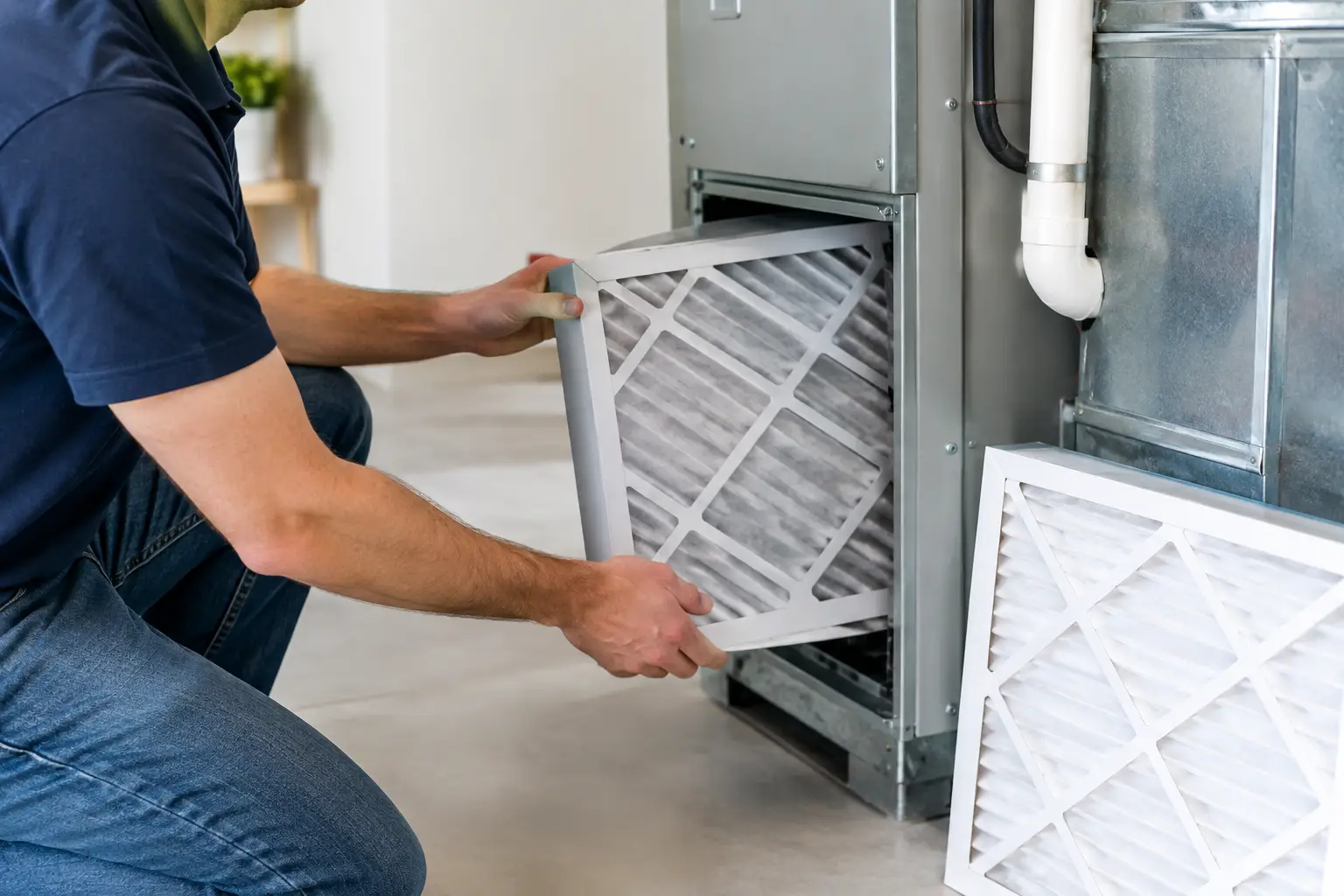
The arrow should point in the direction of airflow, toward the furnace or air handler. This is one of the most common installation mistakes, especially when filters are located in a return grille rather than directly beside the equipment.
If a filter does not slide in easily, do not force it. It may be the wrong depth, the wrong actual size, or the filter rack may be damaged. A loose or poorly seated filter is not doing its full job.
When Should You Replace a Filter?
A one-inch filter often needs replacement every one to three months. Thicker media filters can sometimes last six months or longer. Still, the calendar is only a guideline. Your actual replacement schedule depends on how much air moves through the system and what is in that air.
You may need more frequent changes if you have shedding pets, smokers, ongoing remodeling work, frequent open windows, a large household, or high seasonal pollen levels. North Carolina’s pollen seasons can be especially hard on filters, and summer cooling demand means the system may run for long stretches even when the furnace itself is not producing heat.
The most reliable habit is to inspect the filter monthly. Hold it up to a light source. If light barely passes through, or the surface looks coated with gray dust and debris, it is time for a replacement. A filter does not need to look completely black to be too dirty for efficient airflow.
Set a recurring phone reminder, write the replacement date on the filter frame, or keep several correct filters on hand. For commercial facilities, include filter checks in the maintenance calendar so the task does not get missed when operations get busy.
Signs a Dirty Filter May Be Causing Trouble
A dirty filter can create symptoms that look like larger HVAC problems. That does not mean the filter is always the cause, but it is an easy item to check before assuming the system needs a major repair.
Watch for reduced airflow from vents, unusually high energy bills, rooms with uneven temperatures, excessive dust, or longer heating and cooling cycles. In cooling mode, restricted airflow can also contribute to a frozen evaporator coil. If you see ice on refrigerant lines or the indoor coil area, turn the system off and contact an HVAC professional rather than continuing to run it.
A burning smell, repeated system shutdowns, loud blower noises, water around the indoor unit, or a furnace that will not start are not filter-change situations alone. Those signs call for professional diagnosis. Replacing a filter is good maintenance, but it should not be used to delay attention to a safety or equipment issue.
Avoid Common Filter Mistakes
Buying the highest available MERV rating without checking compatibility is a common mistake. So is stacking two filters together in an attempt to capture more dust. Doubling filters can significantly restrict airflow and create problems for the system.
Another mistake is running the HVAC system with no filter installed, even for a short period. Construction dust, pet hair, and household debris can enter the equipment quickly. If you are waiting for the right replacement, it is better to obtain the correct filter before operating the system extensively.
Washable filters deserve a careful look as well. They can be reused, but only if they are cleaned thoroughly and allowed to dry completely before reinstallation. A damp filter can introduce moisture where it does not belong. Disposable pleated filters are often the simpler, more consistent option for households and businesses that want reliable maintenance with less guesswork.
When filter changes do not improve airflow or comfort, the issue may be deeper in the system. Dirty coils, leaky or undersized ductwork, blower problems, thermostat settings, refrigerant concerns, or an aging system can all affect performance. PR Mechanical can identify the cause and explain the practical repair or improvement options clearly.
A fresh filter is a small part of HVAC care, but it supports every season of comfort. Check yours before the next stretch of heavy heating or cooling, and let the system breathe the way it was designed to.