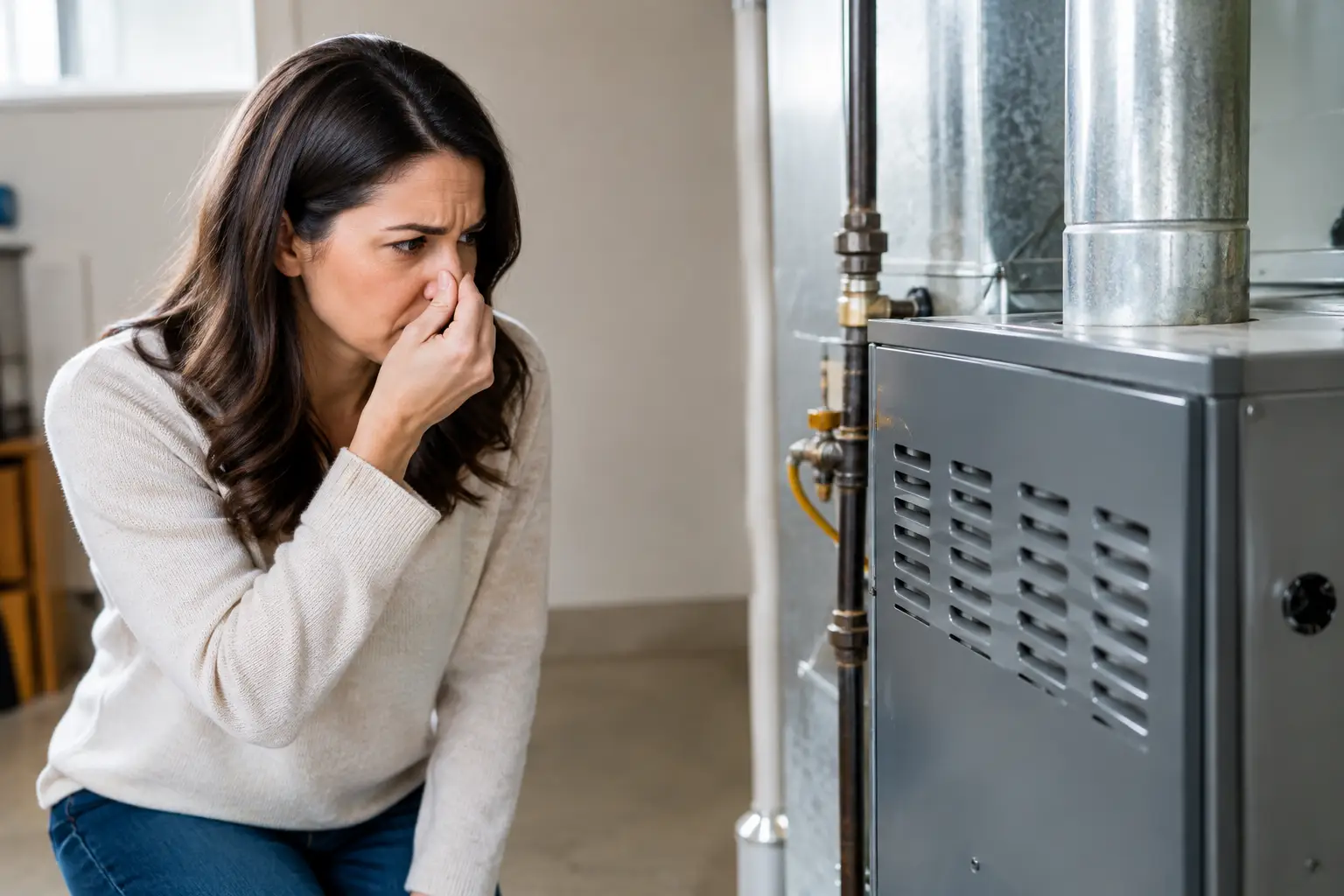
Does furnace smell burning when you turn on the heat for the first time? A brief dusty odor can be normal, especially after a long North Carolina cooling season. But a strong, persistent, or chemical-like burning smell deserves attention. Knowing the difference can protect your comfort, your equipment, and, in some cases, your home or business.
A furnace should not fill the building with a burning odor every time it runs. If the smell does not fade quickly, gets stronger, or comes with smoke, unusual noises, or poor heating performance, turn the system off and arrange for professional service.
When a Burning Furnace Smell Is Normal
The most common harmless cause is dust burning off the furnace’s heat exchanger or electric heating elements. During spring, summer, and early fall, dust can settle inside the system and on vents. When the furnace first heats up, that dust burns away and may create a dry, slightly smoky smell.
This odor should be mild and should usually disappear within 15 to 30 minutes of operation. Opening a window briefly, if weather permits, can help clear the air. Replacing a dirty air filter is also a smart first step because restricted airflow allows more dust to circulate and can make the system work harder.
A new furnace, recently completed ductwork, or a system that has had repair work may also give off a temporary odor as manufacturing oils, paint, or construction dust heat up. Again, the key is that the smell should fade rather than linger or intensify.
Does Furnace Smell Burning? Warning Signs to Take Seriously
Not every burning smell is dust. The character of the odor, how long it lasts, and what the furnace is doing at the time all matter. Avoid trying to diagnose electrical or combustion components yourself. Shut the system down if you notice any of these conditions:
- A strong burning-plastic, rubber, or electrical smell
- Smoke coming from supply vents, the furnace cabinet, or electrical panel
- A smell that continues after 30 minutes or returns every heating cycle
- Tripped breakers, flickering lights, buzzing, rattling, or repeated shutdowns
- A gas odor, rotten-egg smell, or physical symptoms such as headache, nausea, or dizziness
For an electrical burning smell or visible smoke, switch the furnace off at the thermostat. If it is safe to do so, turn off power to the furnace at the breaker. Do not restart it to see whether the smell returns. Electrical overheating can involve damaged wiring, a failing blower motor, a capacitor, or a control board, and continued operation can make the repair more serious.
If you smell natural gas or a rotten-egg odor, leave the building immediately. Do not operate light switches, use a phone inside, light a match, or attempt to relight anything. Once you are safely away from the building, contact your gas utility or emergency services, then arrange for qualified HVAC service. Carbon monoxide itself has no smell, so working carbon monoxide detectors remain essential wherever fuel-burning equipment is used.
Common Causes of a Burning Odor
Dirty filter or restricted airflow
A clogged filter does more than reduce air quality. It limits airflow across the furnace, which can cause the system to overheat. Many furnaces have a high-limit safety switch that shuts down the burners or heating elements when temperatures become unsafe, but repeated overheating puts extra stress on components.
Check the filter monthly during heavy heating use and replace it according to the filter type and the manufacturer’s guidance. Homes with pets, renovations, or higher dust levels may need more frequent changes. For commercial properties, filter schedules should match occupancy, operating hours, and the building’s indoor air quality needs.
Overheated electrical components
Electric furnaces and air handlers use heating elements, relays, wiring, and blower components that can produce a sharp electrical odor when they overheat. Gas furnaces also rely on electrical parts to operate safely. A failing blower motor can be particularly concerning because it may reduce airflow while generating heat of its own.
A technician can safely inspect electrical connections, motor amperage, capacitors, controls, and airflow. This is not a repair to put off, even if the furnace still produces heat.
Foreign objects near vents or the furnace
A plastic toy, stored box, laundry item, or other object too close to a floor register can warm up and smell as heat moves through the duct. In utility rooms, stored belongings placed against the furnace cabinet or flue area can create both odor and safety concerns.
Keep the area around heating equipment clear. Do not block supply or return vents with furniture, rugs, or inventory. A blocked return can restrict airflow and contribute to overheating, while blocked supply vents can create uneven comfort throughout the property.
Dirty burners or a combustion problem
Gas furnaces need clean, properly operating burners and a safe venting path. Soot, a smoky odor, yellow or wavering flames, delayed ignition, or frequent cycling can point to a combustion or venting issue. These symptoms require professional attention because they affect both furnace reliability and indoor safety.
A furnace’s flame should generally appear mostly blue when operating. Do not remove access panels or try to adjust burners yourself. A trained HVAC professional can inspect the combustion process, heat exchanger, venting, gas pressure, and safety controls using the right equipment.
What You Can Check Before Calling for Service
If the odor is mild, lasts only briefly, and there is no smoke or gas smell, start with a few safe observations. Confirm that the thermostat is set to heat and that the filter is clean and installed correctly. Look around accessible vents and the furnace area for items that may be too close to heat sources.
Then pay attention to the pattern. Does the smell happen only at first startup? Does it disappear after a few minutes? Is the furnace heating evenly, or are some rooms cold while others are too warm? Are breakers tripping or is the system turning on and off repeatedly? These details help a technician identify the likely cause faster.
Do not spray air freshener near the furnace or use scented products to cover the odor. Masking the smell can delay a needed repair and may add chemicals to the air your household, employees, or customers breathe.
Prevent Burning Smells With Seasonal Furnace Care
The best time to find a loose wire, failing motor, dirty burner, or airflow issue is before the first cold snap. A seasonal heating tune-up gives a technician the opportunity to inspect critical safety controls, electrical components, burners, airflow, filters, and thermostat operation.
Maintenance does not guarantee that a component will never fail, but it reduces surprises and helps a furnace run more efficiently. For commercial facilities, planned service is especially valuable because an unexpected heating failure can disrupt staff, tenants, customers, and daily operations.
Homeowners should also test smoke and carbon monoxide detectors regularly, keep vents clear, and avoid storing flammable materials near the furnace. These simple habits support safer heating and provide earlier warning if something changes.
When to Schedule Furnace Repair
Schedule service promptly when a burning smell is recurring, strong, or paired with performance problems. You should also call if the furnace blows cool air, cycles frequently, makes new noises, trips a breaker, or leaves parts of the building uncomfortable.
PR Mechanical helps homeowners and commercial property operators in Monroe and the greater Charlotte area identify furnace problems clearly and address them with dependable workmanship and honest communication. When heat should feel reassuring but instead smells wrong, it is worth having the system checked before the next cold night puts more demand on it.