A furnace usually gives homeowners little warning before a cold night exposes a problem. A burning smell, a breaker that trips, or a carbon monoxide alarm can turn a comfort issue into a safety concern quickly. This home furnace safety checklist helps Monroe-area homeowners spot preventable hazards, protect indoor air quality, and recognize when a trained HVAC technician should take over.
Start With the Safety Devices That Protect Your Household
Every home with a gas, oil, or wood-burning heating appliance should have working carbon monoxide detectors. Carbon monoxide has no color or smell, and furnace-related exposure can cause headaches, dizziness, nausea, confusion, and, in severe cases, loss of consciousness. Install detectors on every level of the home and near sleeping areas, following the manufacturer’s placement instructions.
Test carbon monoxide and smoke alarms monthly. Replace batteries as needed, and replace the alarm itself when it reaches the end of its listed service life. Do not assume a detector is working because its indicator light is on. The test button confirms the alarm can sound.
If a carbon monoxide alarm activates, get everyone outside into fresh air immediately. Call 911 or your local emergency services from outside, then contact a qualified HVAC professional. Do not reenter the home or restart the furnace until emergency responders say it is safe.
Your Home Furnace Safety Checklist Before Heating Season
A fall check gives you time to address small issues before a North Carolina cold snap puts your system under steady demand. Some tasks are appropriate for homeowners. Others require professional equipment, training, and combustion testing.
- Clear the area around the furnace. Keep at least several feet of open space around the unit. Remove cardboard boxes, paint, gasoline, cleaning chemicals, laundry, and other stored items. Furnaces need airflow for safe operation, and flammable materials do not belong near burners, electrical components, or vent connections.
- Replace or inspect the air filter. A clogged filter restricts airflow, which can overheat furnace components, raise energy use, and shorten equipment life. Check the filter monthly during heavy heating use. The right replacement schedule depends on filter type, pets, dust levels, and indoor air quality needs, but a visibly dirty filter should not wait.
- Check supply and return vents. Open supply registers and make sure furniture, rugs, drapes, or boxes are not blocking them. Return grilles need even more attention because restricted return airflow can cause the system to run hotter and less efficiently. Closing too many vents to save energy can also create performance problems.
- Look at the vent pipe and outdoor termination. For a gas furnace, inspect visible venting for loose joints, corrosion, staining, or obvious damage. Outside, make sure leaves, nests, mulch, snow, and landscaping are not blocking the intake or exhaust pipes. Never cover furnace vent pipes, even during severe weather.
- Test the thermostat. Set the thermostat a few degrees above the current room temperature and listen for the heating cycle to begin. Check that warm air reaches the registers after a short delay. If the system starts and stops repeatedly, blows cool air, or does not respond, turn it off and arrange service rather than repeatedly resetting it.
- Inspect the furnace cabinet without taking it apart. Check for water around the unit, unusual rattling, soot marks, damaged wiring, or a persistent odor. A brief dusty smell during the first use of the season can be normal. A strong burning odor, electrical smell, or smell of gas is not.
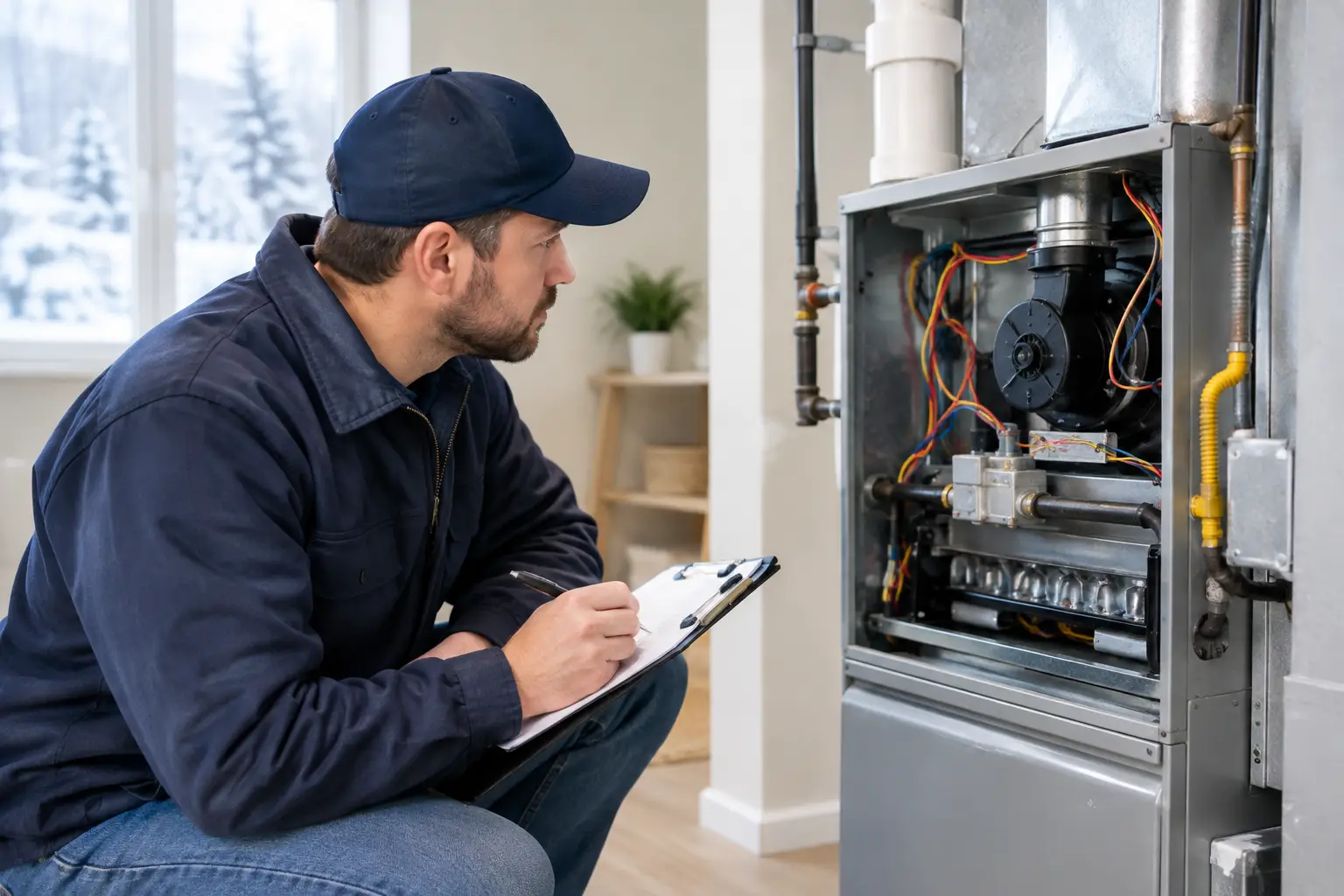
- Schedule professional maintenance. A qualified technician can inspect burners, the heat exchanger, ignition system, electrical connections, condensate drainage, safety switches, gas pressure, airflow, and venting. This service is more than a tune-up for efficiency. It is an opportunity to find conditions that are not safe or visible during a quick homeowner inspection.
Pay Attention to Fuel and Combustion Warning Signs
A gas furnace should burn cleanly and operate without noticeable gas odors inside the home. If you smell natural gas, leave the building immediately. Do not turn lights or appliances on or off, use a phone inside, light a match, or start a vehicle nearby. Once you are at a safe distance, call 911 and your gas utility’s emergency number.
Soot around furnace components, rust on vent connections, moisture near the furnace, or yellow flames can point to a combustion or venting problem. Homeowners should not attempt to adjust burners or gas valves. What looks like a minor flame issue may involve gas pressure, a dirty burner, a cracked heat exchanger, or inadequate combustion air.
High-efficiency furnaces produce condensate, so they often have a drain line or pump. A backed-up drain can shut the furnace down or create water damage. If you see water pooling around the unit, shut the system off if it is safe to do so and request service. Avoid pouring chemicals into the drain unless your equipment manufacturer and HVAC professional specifically recommend it.
Know Which Furnace Sounds and Smells Need Fast Service
Furnaces make ordinary operating sounds: a low blower hum, a click at startup, and expanding ductwork as warm air moves through it. Sudden or severe noises are different. Banging at ignition, screeching, grinding, repeated clicking, or a loud boom should be evaluated promptly.
A brief dusty odor after months without heat is often caused by dust burning off internal surfaces. It should fade quickly. Shut the system down and call for help if you notice a persistent burning smell, electrical odor, exhaust smell, or any odor that makes you feel unwell.
Frequent breaker trips are another reason to stop using the furnace until it is inspected. Resetting a breaker once may restore power after an isolated event, but repeated trips can indicate an electrical fault, a failing blower motor, or another issue that should not be ignored.
Protect Airflow, Ductwork, and Indoor Air Quality
Safe heating depends on more than the furnace cabinet. Leaky, disconnected, or poorly insulated ductwork can waste heated air and pull dust or contaminants into the system. If some rooms remain cold while others overheat, if you hear whistling from ducts, or if utility costs jump without a clear reason, an airflow evaluation may be worthwhile.
Keep return-air pathways clear throughout the house. Bedrooms with closed doors and no return path can become stuffy or uncomfortable, especially in tightly built homes. The right solution depends on the duct design and the home’s layout. It may involve register adjustments, duct improvements, or a professional review rather than simply closing vents in unused rooms.
Humidifiers, air cleaners, and upgraded filters can improve comfort for some households, but they must be selected and maintained correctly. A filter that is too restrictive for the system can reduce airflow. A whole-home humidifier that is not cleaned can create its own air quality concerns. Match indoor air quality equipment to the home and the HVAC system instead of choosing based on a package label alone.
Keep the Furnace Area Safe Every Day
Do not use the furnace room as general storage. This is especially relevant in garages, utility rooms, and crawlspace installations where boxes tend to accumulate. Keep the access panel secured and discourage children from playing around HVAC equipment.
Make sure every adult in the household knows where the thermostat is, what a carbon monoxide alarm sounds like, and when to leave the home. If your furnace is in an attic or crawlspace, use caution when checking around it. Wet surfaces, limited lighting, exposed wiring, and unstable walkways are reasons to call a professional instead of investigating further.
Portable space heaters can help in a limited area, but they are not a substitute for a furnace repair. If you use one temporarily, plug it directly into a wall outlet, keep it away from bedding and furniture, and turn it off when leaving the room or going to sleep. An unreliable central heating system deserves a diagnosis before the next cold night.
When to Call a Furnace Professional
Call for prompt service when your furnace will not start, shuts down repeatedly, blows cool air, makes unusual noises, leaks water, trips a breaker, or produces a persistent odor. Treat a gas smell or carbon monoxide alarm as an emergency first, not a routine repair request.
Annual maintenance is the most practical way to catch wear before it affects safety or comfort. For older equipment, a technician can also explain whether repair remains the sensible choice or whether replacement could improve reliability, operating costs, and peace of mind. The answer depends on the furnace’s condition, repair history, efficiency, and the needs of your household.
When the temperature drops, dependable heat should not come with guesswork. PR Mechanical can help homeowners in Monroe and the greater Charlotte area keep their furnace operating safely, clearly explain any concerns found, and recommend the next right step for lasting comfort.