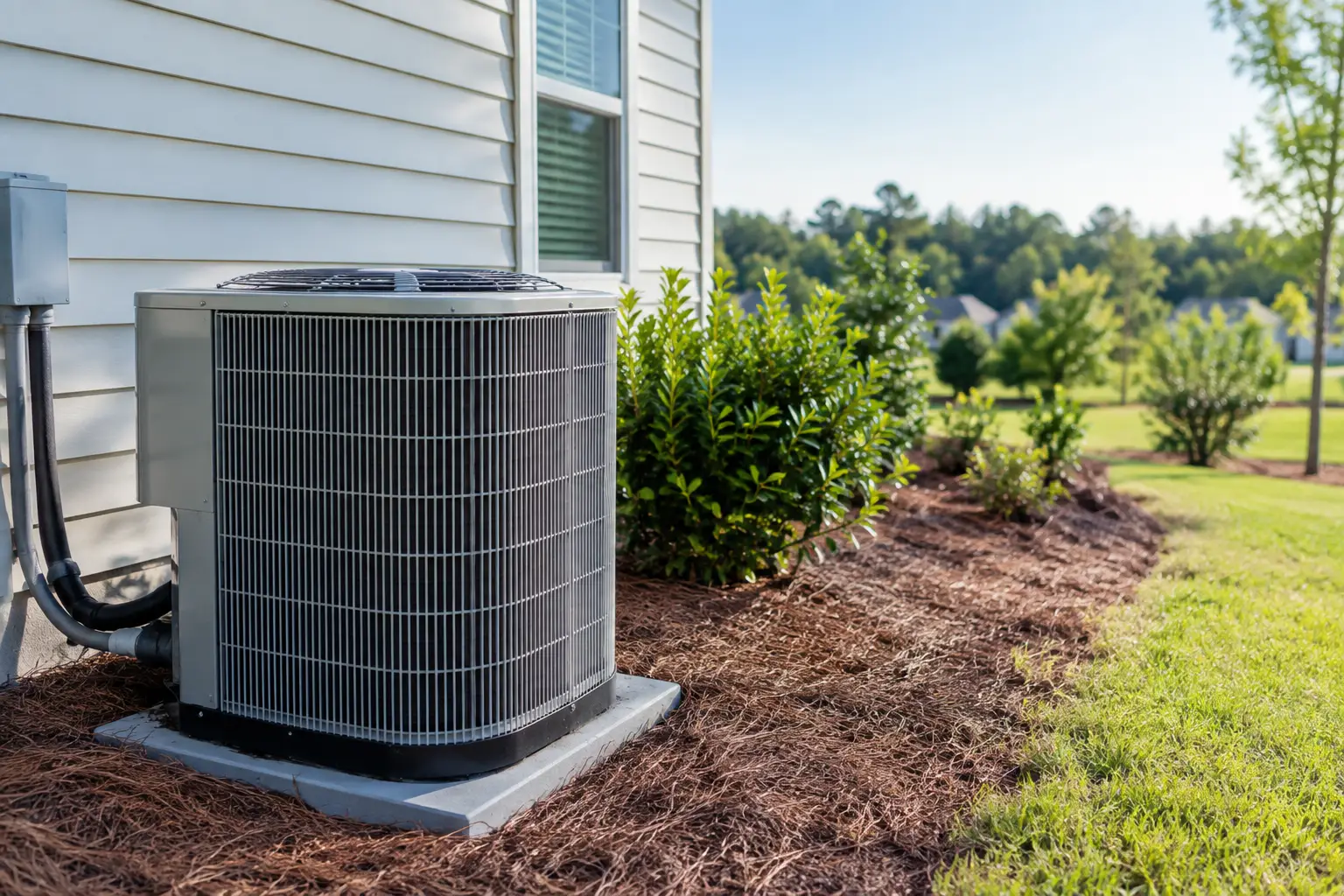
A North Carolina summer puts an air conditioner to work. When temperatures and humidity climb, your system may run for hours at a time just to keep your home or business comfortable. That leads many property owners to ask how long AC lasts and whether a repair is still the smart choice.
Most central air conditioning systems last 12 to 15 years with proper installation and regular professional maintenance. Some well-cared-for systems can reach 18 years or more. Others may struggle much sooner because of heavy use, neglected maintenance, installation problems, ductwork issues, or repeated repairs that were never fully addressed.
The age of the equipment matters, but it is only part of the decision. A system that is 10 years old and cooling evenly may have years of useful service left. A seven-year-old system that runs constantly, breaks down often, and cannot manage indoor humidity needs a closer look.
How Long Does an AC Unit Last?
For most homes in Monroe and the greater Charlotte area, a central AC unit has an expected service life of 12 to 15 years. Heat pumps often fall within a similar range, although they work through more of the year because they provide both heating and cooling. Commercial HVAC equipment can have a different life expectancy depending on its size, operating schedule, building load, and maintenance plan.
There is also a difference between the life of the overall system and the life of individual parts. A capacitor, contactor, thermostat, blower motor, or drain component may need replacement long before the outdoor unit reaches the end of its useful life. Replacing a reasonable, isolated part is often a practical repair. Replacing major components repeatedly can signal that replacement planning is becoming the better investment.
Older systems can continue to run, but that does not always mean they are operating efficiently or reliably. As equipment ages, it can lose capacity, need more frequent service, and use more electricity to deliver the same level of cooling.
What Affects How Long AC Lasts?
No two systems age exactly alike. The conditions around the equipment, the quality of the installation, and how the building uses conditioned air all affect its lifespan.
North Carolina heat and humidity
Long cooling seasons put more operating hours on an AC system than mild climates do. High humidity adds another demand: your air conditioner must remove moisture as well as lower the temperature. If the system is oversized, undersized, or improperly set up, it may cycle incorrectly and leave the space feeling damp even when the thermostat shows the desired temperature.
Humidity-related drain problems can also create trouble. A blocked condensate drain, neglected drain pan, or moisture issue near the indoor unit can lead to water damage, shutdowns, or indoor air quality concerns if left unattended.
Installation quality and system sizing
A new unit is only as good as the system supporting it. Proper sizing requires more than matching the capacity of the old equipment. Your HVAC professional should consider square footage, insulation, windows, sun exposure, occupancy, ductwork condition, and the building’s cooling needs.
An oversized AC may cool quickly but short-cycle, meaning it turns on and off too often. That can increase wear and reduce dehumidification. An undersized system may run nearly nonstop during hot weather, creating unnecessary strain while still failing to maintain comfort.
Ductwork deserves attention, too. Leaky, undersized, poorly designed, or disconnected ducts make the air conditioner work harder. Before assuming an aging unit is the only problem, it is worth checking whether conditioned air is actually reaching the rooms that need it.
Maintenance and airflow
Routine maintenance is one of the clearest ways to protect an AC system. Dirty filters restrict airflow. Dirty coils reduce heat transfer. Low refrigerant levels, worn electrical connections, and drainage issues can all turn manageable service needs into bigger repairs when ignored.
A seasonal tune-up gives a technician a chance to inspect the equipment before peak summer demand. For commercial properties, planned maintenance can also help avoid a comfort problem that interrupts employees, customers, equipment, or daily operations.
Signs Your AC May Be Near Replacement
Age alone should not force replacement, but several warning signs together often point toward a system nearing the end of its dependable service life.
If your AC needs frequent repairs, takes longer to cool, leaves hot rooms throughout the building, or causes unusually high utility bills, it may be losing performance. Loud new sounds, such as grinding, squealing, rattling, or repeated hard starting, should also be evaluated promptly.
Pay attention to comfort changes. An air conditioner may still produce cool air while failing to control humidity, maintain steady temperatures, or move enough airflow through the home. Musty odors, water around the indoor unit, frozen refrigerant lines, and short cycling are not issues to wait out.
For an older system, the type and cost of a repair matter. A small electrical repair may make good financial sense. A major compressor failure, repeated refrigerant leaks, or an expensive coil repair on a unit nearing 15 years old may make replacement a more responsible long-term choice. A professional inspection can put those options into clear terms without pressure.
Repair or Replace: How to Make the Call
The best decision usually comes down to reliability, repair cost, efficiency, and your plans for the property. If the system has been dependable and needs one straightforward repair, restoring it may be the right move. If breakdowns are becoming routine, replacement can reduce uncertainty and improve operating costs.
Consider replacement more seriously when the AC is near or beyond its expected lifespan, has a major component failure, uses an outdated refrigerant, or no longer provides consistent comfort. A newer high-efficiency system may also offer quieter operation, stronger humidity control, and better compatibility with modern thermostats.
Homeowners should not feel they need to decide immediately when the unit is still operating. Planning ahead gives you time to compare equipment options, discuss financing if needed, and schedule installation before a complete failure during a heat wave. Commercial property operators benefit from the same approach, especially where downtime can affect tenants, customers, inventory, or equipment.
How to Help Your AC Last Longer
You cannot stop normal wear, but consistent care can help your system reach its expected lifespan and perform better along the way. Start with the basics: use the correct filter and replace it on schedule, keep supply vents and return grilles clear, and keep plants, leaves, and debris away from the outdoor unit.
Set the thermostat to a reasonable temperature rather than forcing the system to chase extreme settings. During very hot weather, closing blinds on sun-facing windows and sealing obvious air leaks can reduce the cooling load. If you notice uneven temperatures, do not rely on repeatedly lowering the thermostat. That can mask an airflow, duct, insulation, or equipment problem while increasing wear.
Professional maintenance remains the most valuable step. During service, a technician can check refrigerant performance, electrical components, coil condition, drainage, airflow, safety controls, and thermostat operation. Small corrections made early can prevent a midsummer breakdown and help preserve efficiency.
When to Schedule Service
Call for service promptly if your AC is blowing warm air, cycling on and off repeatedly, leaking water, tripping breakers, making unusual noises, or failing to keep up with normal cooling needs. Waiting can turn a minor issue into compressor damage, water damage, or a complete loss of cooling.
If your system is older but still running, schedule an evaluation before summer reaches its peak. PR Mechanical can assess the condition of your equipment, explain repair and replacement options clearly, and help you choose a path that supports dependable comfort for your home or business. A well-timed inspection is often the simplest way to protect your comfort before the next hot, humid day puts your AC to the test.