
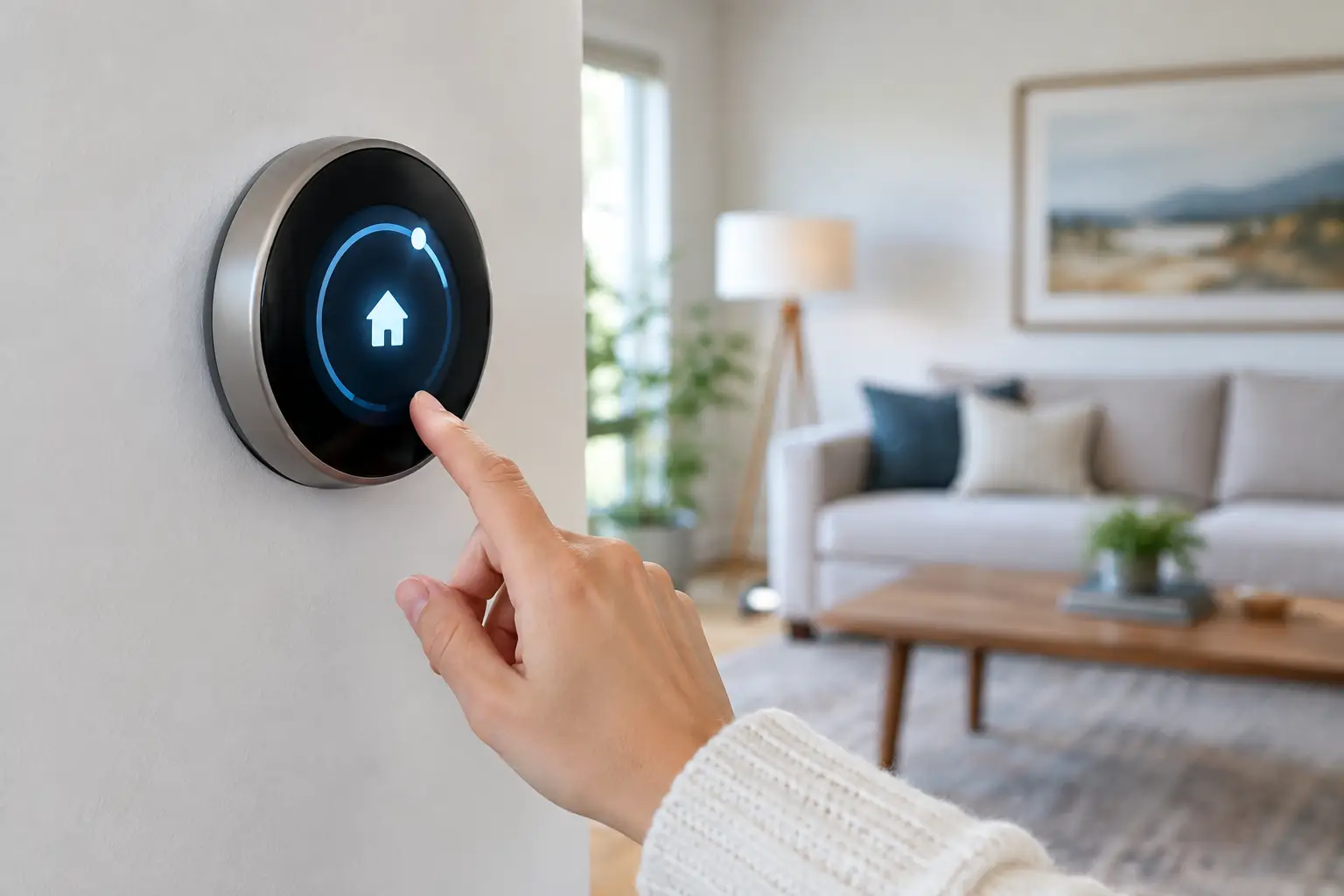
A thermostat has one job that affects nearly every room in your building: tell the HVAC system when to run and when to rest. Smart thermostats add scheduling, remote access, and useful system data to that basic job. For homeowners and commercial property operators in the Monroe and Charlotte area, they can be a practical comfort upgrade – but only when the thermostat fits the HVAC equipment and the way the space is actually used.
What Smart Thermostats Actually Do
A traditional programmable thermostat follows a schedule you enter manually. A smart thermostat can do that too, but it also connects to Wi-Fi and gives you control through an app. You can adjust the temperature from work, while traveling, or from another part of the building without walking to the thermostat.
Many models can learn occupancy patterns, use local weather information, send maintenance reminders, and show how long your heating or cooling system runs each day. Some can work with room sensors to better account for temperatures in areas that tend to run warmer or cooler than the rest of the home.
That does not mean every feature will be useful for every customer. A busy household may value the ability to turn down the AC after everyone leaves for the day. A small office may benefit more from a dependable weekday schedule and alerts when temperatures move outside a set range. The right choice depends on your equipment, your routines, and the comfort problems you are trying to solve.
Where Smart Thermostats Can Make a Difference
The clearest benefit is better control. North Carolina weather can shift quickly, especially during spring and fall. If a cool morning turns into a warm afternoon, remote access lets you make a reasonable adjustment without leaving the system running harder than necessary all day.
Scheduling can also reduce unnecessary runtime. For example, a home does not need to be cooled to the same temperature when it is empty as when the family is home and active. A business may not need full heating or cooling in every area after closing. Small temperature adjustments during unoccupied hours can add up over a season.
Smart thermostat reports can be helpful as well. If you notice your system is running far longer than usual to hold the same temperature, that information can point to a developing issue. It may be a dirty filter, airflow restriction, ductwork concern, refrigerant problem, or equipment that needs service. The thermostat cannot diagnose every HVAC problem, but it can make an unusual pattern easier to spot.
For larger homes, multi-story spaces, and buildings with uneven temperatures, remote room sensors may help identify where comfort is falling short. A sensor can tell the thermostat that the upstairs bedroom is still too warm, rather than relying only on the temperature at the hallway thermostat. This can improve comfort in targeted situations, though it cannot fully overcome undersized equipment, poor insulation, leaking ducts, or major airflow problems.
The Savings Question: What to Expect
Smart thermostats can support lower energy use, but they are not a guaranteed fix for high utility bills. Savings come from avoiding heating and cooling when a space does not need it, not from the thermostat somehow making an inefficient system efficient.
If your current thermostat is always set to one temperature, a smart schedule may reduce waste. If you already use a well-planned programmable schedule and rarely make changes, the financial difference may be modest. Homes that are occupied all day, or households with people who prefer a very steady temperature, may see more comfort and convenience than dramatic savings.
The condition of the HVAC system matters even more. An air conditioner with a clogged filter, frozen coil, low refrigerant, or failing component may run continuously regardless of how advanced the thermostat is. The same is true for a furnace or heat pump with airflow or maintenance issues. A smart control should complement regular HVAC maintenance, not replace it.
Compatibility Comes Before Features
Before selecting a thermostat, confirm that it works with your system. Many smart thermostats are compatible with standard central heating and air conditioning equipment, but there are important exceptions. Heat pumps, dual-fuel systems, multi-stage equipment, zoning systems, humidifiers, dehumidifiers, and commercial controls may require specific thermostat capabilities and wiring.
One common concern is the C-wire, also called a common wire. Many smart thermostats need this wire for continuous power. Some models offer adapters or alternative installation options, but those solutions are not right for every system. Improper wiring can cause the thermostat to lose power, short-cycle the HVAC equipment, or fail to control heating and cooling correctly.
Older homes can present additional challenges. The wiring behind the existing thermostat may not support the new model, even if the system itself is otherwise in good condition. In commercial settings, the existing thermostat may be tied into equipment or building controls that need a more detailed evaluation.
Professional installation is often the sensible choice when there is any question about wiring, system type, or thermostat settings. PR Mechanical can help make sure the control is properly matched to the equipment and configured for dependable operation.
A Smart Thermostat Cannot Correct Every Comfort Problem
It is easy to blame the thermostat when certain rooms are too hot, too cold, or slow to reach the set temperature. Sometimes the thermostat location is part of the issue. A thermostat placed near a sunny window, exterior door, kitchen, or supply vent may not accurately represent conditions throughout the space.
Still, many comfort issues start elsewhere. Leaky ducts can lose conditioned air before it reaches distant rooms. A dirty filter can limit airflow. An aging system may struggle during peak summer heat or a winter cold snap. Insulation, window exposure, equipment sizing, and return-air design can all affect comfort.
A better thermostat can provide clearer information and more control, but it should not be sold as a cure for an underlying HVAC problem. If the system is not keeping up, runs constantly, makes unusual noises, or creates large temperature differences between rooms, a professional inspection is the better next step.
Choosing Features That Fit Your Routine
Focus first on features you will actually use. Reliable scheduling and easy temperature adjustments matter more than a long list of app options. A clear display is especially valuable for households where more than one person will operate the thermostat.
Remote access is useful for people with changing work schedules, vacation homes, rental properties, or businesses that need to manage comfort outside normal hours. Maintenance alerts can also be valuable, particularly if they remind you to replace filters or bring attention to unusual runtime.
For homes with hot upstairs rooms or frequently used rooms far from the thermostat, room sensors may be worth considering. Keep in mind that sensors help the system prioritize certain areas at certain times. They do not create separate temperature zones unless the HVAC system is designed with zoning equipment.
Privacy is another consideration. Because smart thermostats connect to Wi-Fi, use a strong network password and keep the device software updated. Review app permissions and choose a manufacturer whose controls and support are easy for you to understand.
Getting Better Results After Installation
Once a smart thermostat is installed, give it a little time before changing every setting. Start with comfortable temperatures for occupied and unoccupied periods, then watch how the home or building responds. Extreme setbacks are not always the best strategy, especially during very hot or cold weather, because the system may have to work harder to recover quickly.
Keep filters clean, make sure supply and return vents are open and unobstructed, and schedule routine maintenance. If the thermostat shows unusually long runtime or repeated temperature swings, do not ignore it. Those patterns can provide an early reason to check the system before a small problem becomes a no-cooling or no-heat call.
A smart thermostat is most valuable when it makes comfort easier to manage without adding confusion. Choose one that fits your equipment, use sensible schedules, and let real system performance guide the next step when your home or business does not feel the way it should.