
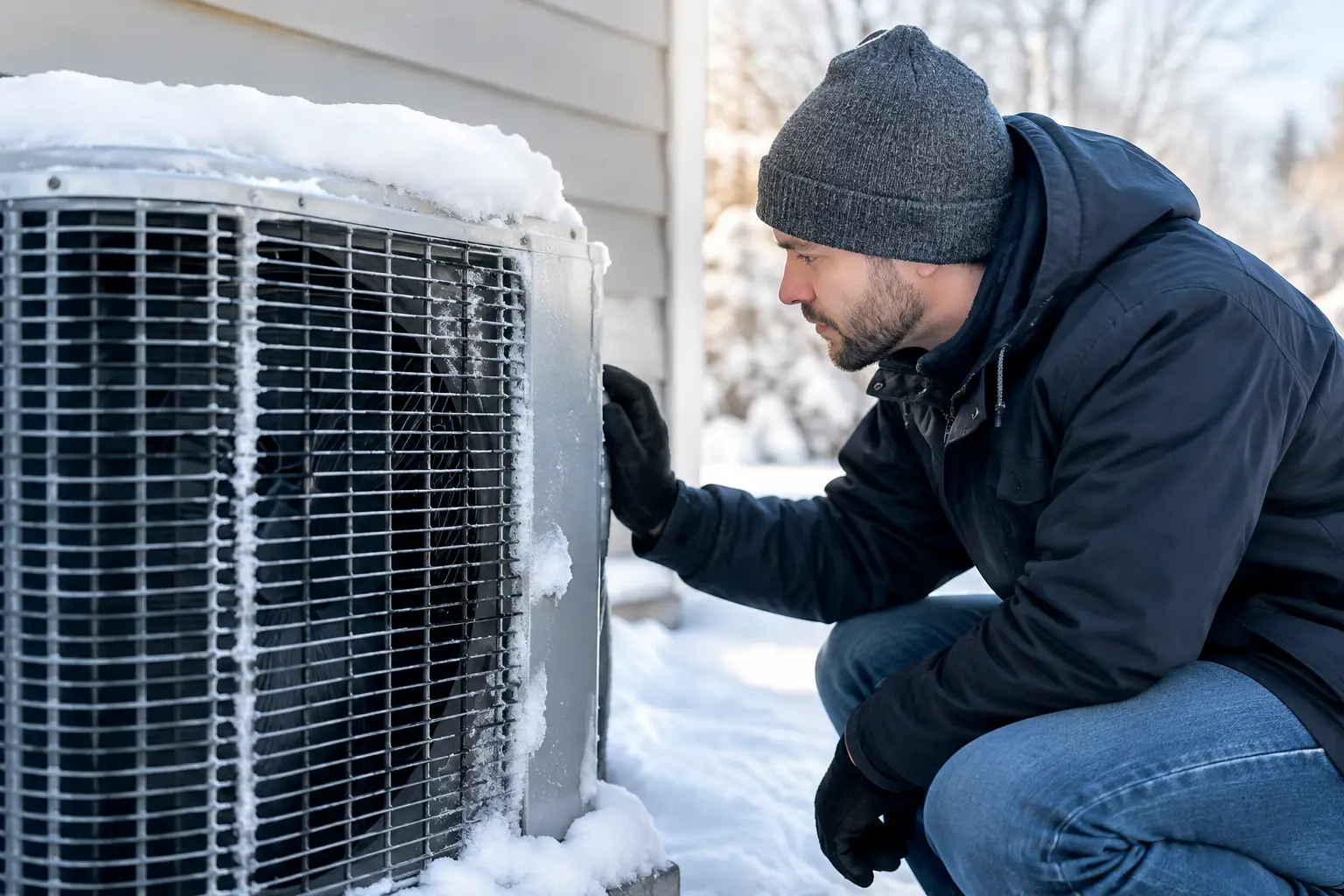
A heat pump can look alarming on a cold, damp Monroe morning. You may see frost coating the outdoor unit, hear a change in operation, or notice a brief cloud of steam rising from it. In many cases, that is exactly what it is designed to do. This heat pump defrost guide explains what is normal, what is not, and when it is time to call for service.
Unlike a furnace, a heat pump moves heat rather than creating it through combustion. Even when outdoor air feels cold, it contains heat that the system can collect and bring indoors. During heating mode, the outdoor coil becomes very cold, and moisture in the air can freeze on it. North Carolina’s chilly, humid winter weather can make this especially common.
What a Heat Pump Defrost Cycle Does
A light coating of frost on the outdoor coil is normal during cold weather. To keep that frost from restricting airflow, the heat pump periodically starts a defrost cycle. The system temporarily changes direction, sending warm refrigerant through the outdoor coil to melt accumulated frost.
During this process, several things can seem unusual but are often normal. The outdoor fan may stop running, the sound of the unit may change, and you may see steam as the ice melts. You may also hear the indoor system switch to auxiliary heat for a few minutes. This backup heat helps maintain indoor comfort while the heat pump is focused on clearing the outdoor coil.
A typical defrost cycle is brief. When it ends, the unit should return to normal heating operation and the coil should be mostly clear. Water may drain beneath the outdoor unit afterward, which is also expected. That water can refreeze during a hard freeze, so keep an eye out for slippery conditions near walkways.
Frost Is Normal, but Solid Ice Is Not
The key distinction is between a thin, temporary layer of frost and a unit that remains encased in ice. Frost typically looks white and feathery across the coil surface. It should disappear after the unit completes a defrost cycle.
A heat pump needs attention when thick ice covers the coil, fan guard, refrigerant lines, or base of the outdoor unit. Ice that stays in place can block airflow, strain the compressor, reduce heating capacity, and increase energy use. If your thermostat seems to call for heat constantly, but the house is not warming up, an iced-over unit may be part of the problem.
Do not assume all ice points to the same issue. A single icy morning after freezing rain can be weather-related. Repeated icing, especially when temperatures are above freezing or after several defrost cycles, is more likely to signal a system problem.
Signs your heat pump may not be defrosting correctly
Pay attention if the outdoor unit is heavily iced over for hours, the fan is hitting ice, or the system never appears to enter defrost mode. Other warning signs include cool air from supply vents, unusually high utility bills, frequent auxiliary heat operation, or a thermostat that cannot reach its set temperature.
Commercial property operators may notice the same issue through comfort complaints, cold zones, or a system that runs continuously during business hours. In a retail space, office, or other occupied facility, delayed service can affect more than comfort. It can disrupt employees, customers, and daily operations.
Why a Heat Pump Can Freeze Up
Ice buildup is not always caused by a major equipment failure. Sometimes the cause is limited airflow or poor drainage around the unit. Other times, a trained technician needs to test electrical and refrigeration components to find the source.
Common causes include a dirty outdoor coil, leaves or debris restricting airflow, a clogged indoor air filter, and snow or vegetation packed around the unit. A blocked drain path beneath the heat pump can also allow melted water to refreeze around the base and coil.
Mechanical and control issues can create similar symptoms. A malfunctioning defrost control board, sensor, reversing valve, or outdoor fan motor may prevent the system from completing its cycle properly. Low refrigerant can also affect heating performance and coil temperatures, although refrigerant should only be evaluated by a qualified HVAC professional. It is not a DIY adjustment.
Because several issues can look alike from the outside, guessing can lead to unnecessary repairs or damage. A professional diagnosis identifies whether the problem is airflow, drainage, electrical controls, or a component that needs repair.
What You Can Safely Check Before Calling
Start with the simple checks that do not require opening panels or handling electrical components. Make sure the thermostat is set to Heat and at a temperature above the current room temperature. If the thermostat has an Emergency Heat setting, do not switch it on just because you see frost. Emergency Heat is intended for a heat pump outage or specific service situation, and it generally costs more to operate.
Next, inspect the air filter. A clogged filter can reduce airflow across the indoor coil and contribute to poor system performance. Replace a disposable filter if it is visibly dirty, using the correct size and airflow rating for your equipment.
Walk outside and check that the unit has room to breathe. Remove leaves, loose branches, lawn furniture, or other debris near the cabinet. Avoid piling mulch against it, and keep shrubs trimmed back. In winter, gently clear loose snow from around the unit without bending coil fins or pushing anything through the fan guard.
If the coil is covered in solid ice, turn the system off at the thermostat and call for service. Do not chip at the ice with a screwdriver, knife, shovel, or other sharp tool. The aluminum coil fins and refrigerant tubing are easy to damage. Do not pour hot water over the unit either. The sudden temperature change can cause problems, and the runoff can quickly refreeze.
When to Request Heat Pump Repair
A heat pump that briefly frosts and clears itself is doing its job. A heat pump that repeatedly freezes, loses heating capacity, trips a breaker, makes grinding sounds, or displays an error code needs prompt attention.
Call sooner rather than later if your home is becoming uncomfortable, the outdoor fan is not operating normally, or ice is spreading beyond the coil. If you smell burning, see damaged wiring, or experience a breaker that repeatedly trips, stop using the system and request professional service. Electrical symptoms should never be ignored.
For businesses, arrange service quickly when a heat pump issue affects occupied areas, temperature-sensitive equipment, or operating hours. A temporary comfort problem can become a larger operational problem if the system is forced to run under strain.
Prevent Defrost Problems With Seasonal Maintenance
The best time to address defrost reliability is before the coldest stretch of winter. A heating maintenance visit gives a technician the opportunity to inspect the outdoor coil, verify airflow, test the defrost controls, check electrical connections, and confirm that the system transitions properly between heating and defrost modes.
Regular maintenance also helps catch issues that are easy to miss during normal operation, such as a weak capacitor, worn contactor, dirty coil, or drainage concern. For homeowners, it supports more consistent comfort and can reduce the chance of an inconvenient no-heat call. For commercial facilities, planned maintenance helps protect uptime and makes budgeting for needed repairs more predictable.
Keep the area around the outdoor unit clear year-round, change filters on schedule, and pay attention to changes in sound, runtime, or heating performance. These small habits give your heat pump the airflow it needs and give you an earlier warning when something is wrong.
When winter weather brings frost to your outdoor unit, a calm check is usually better than a quick fix. If the ice does not clear or comfort starts slipping, PR Mechanical can help identify the cause and restore dependable heat with clear communication and honest recommendations.