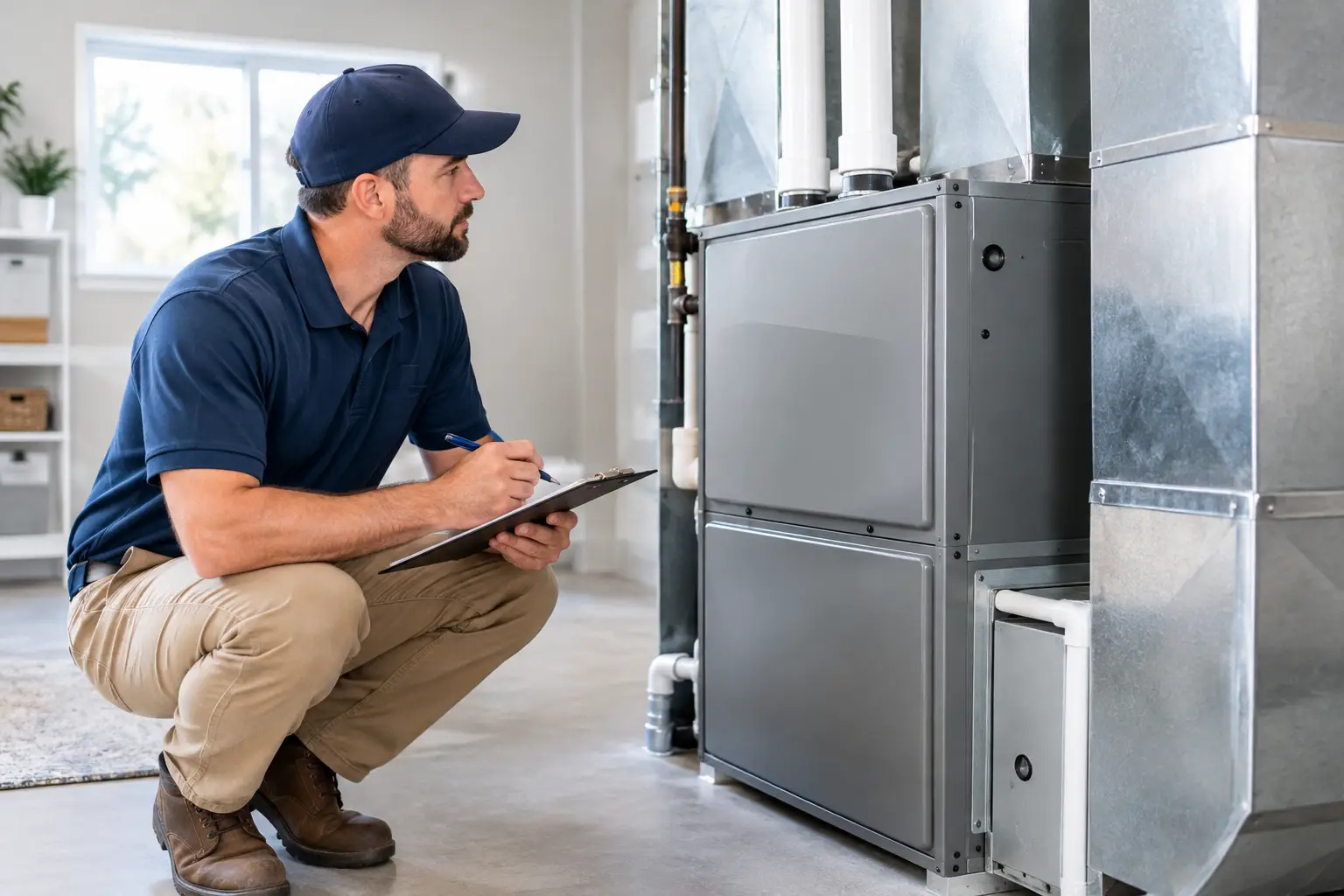
A furnace that runs constantly on a cold Monroe morning is frustrating. A furnace that blasts heat, then shuts off minutes later can be just as uncomfortable. Knowing how to choose furnace size helps you avoid both problems and gives your home a better chance of staying comfortable without wasting energy.
Furnace size is not about buying the biggest unit your budget allows. It is about matching the furnace’s heating output to the amount of heat your home actually loses during cold weather. That calculation depends on much more than square footage, which is why a professional evaluation matters before replacing a heating system.
What Furnace Size Actually Means
Furnaces are sized in BTUs, short for British thermal units. A BTU measures heat energy. The higher the furnace’s BTU rating, the more heat it can produce in an hour.
When comparing equipment, pay attention to both input and output. A furnace may have an input rating of 80,000 BTUs, but not all of that fuel becomes usable heat. Its efficiency rating, known as AFUE, determines the output. For example, an 80,000-BTU furnace with 95% AFUE provides about 76,000 BTUs of heat to the home.
That distinction matters when replacing an older unit. Two furnaces with the same input number can deliver different amounts of usable heat if their efficiency ratings are different. A qualified HVAC professional will size the new system by required output, then select equipment that meets that need efficiently.
Why Bigger Is Not Better
An oversized furnace may heat your home quickly, but quick heat is not the same as even comfort. When a furnace is too large, it often short cycles. It turns on, reaches the thermostat setting rapidly, turns off, and starts again soon afterward.
Frequent short cycling can create warm and cool spots between rooms, make temperatures feel less consistent, and place extra wear on components. It can also make airflow issues more noticeable, especially in homes with undersized, leaking, or poorly balanced ductwork.
An undersized furnace has the opposite problem. It may run for long periods and still struggle to reach the thermostat setting during the coldest weather. While longer run times are not automatically a concern, a system that cannot maintain safe, comfortable indoor temperatures needs attention.
The goal is a furnace that runs long enough to distribute heat evenly, maintains comfort through normal winter conditions, and has enough capacity for the coldest days expected in the Monroe and Charlotte area.
Square Footage Is Only a Starting Point
Homeowners often see general furnace-sizing charts that assign a certain number of BTUs per square foot. These estimates can be useful for a rough first conversation, but they should not be used to select equipment.
Two homes with identical square footage can need very different furnace sizes. A newer, tightly sealed home in Waxhaw with quality insulation may need substantially less heating capacity than an older home of the same size in Charlotte with drafty windows, attic air leaks, and little wall insulation.
A reliable sizing decision accounts for the whole home, including:
- Square footage, ceiling height, and the number of stories
- Insulation levels in the attic, walls, floors, and crawl space
- Window size, window quality, and the direction the home faces
- Air leakage around doors, windows, ducts, and other openings
- Local winter design temperatures and the home’s exposure to wind
- The condition, layout, and capacity of the duct system
Finished bonus rooms, sunrooms, additions, and rooms above garages deserve special attention. These areas often have different insulation, window exposure, or duct runs than the rest of the house. If they have always felt colder than the main living area, simply installing a larger furnace may not solve the real issue.
Use a Manual J Load Calculation
The most dependable way to choose furnace size is with a Manual J load calculation. This industry-standard process estimates how much heat your home loses under local winter design conditions. It uses measurements and details specific to your property rather than relying on a broad rule of thumb.
During a proper evaluation, an HVAC professional considers your home’s construction, insulation, windows, orientation, infiltration, and conditioned spaces. The result is a heating load expressed in BTUs per hour. That number guides furnace selection.
A Manual J calculation also helps prevent a common replacement mistake: installing the same furnace size that was already there. Existing equipment may have been oversized from day one, or the home’s needs may have changed after new windows, insulation upgrades, an addition, or ductwork modifications.
For commercial buildings, the process is similarly detailed. Occupancy, operating hours, exterior doors, glass exposure, equipment heat, ventilation requirements, and separate zones can all affect the heating load. A business should not rely on residential-style square-foot estimates when employee comfort, customer experience, and daily operations are on the line.
Match the Furnace to Your Ductwork
A correctly sized furnace still needs a duct system that can move heated air effectively. If ducts are too small, poorly sealed, restricted, or unbalanced, a new furnace may not deliver the comfort you expect.
Airflow is especially important with high-efficiency and variable-speed equipment. These systems can provide excellent comfort, but they need proper duct design and installation to perform as intended. A contractor should inspect accessible ducts, check return-air capacity, and identify leaks or restrictions before finalizing equipment recommendations.
This is also a good time to address rooms with persistent comfort complaints. A cold upstairs bedroom may point to insufficient return air, a damper problem, duct leakage, poor insulation, or a thermostat placement issue. The answer is not automatically more furnace capacity.
Consider Efficiency and Furnace Features
Once the right capacity is established, you can compare efficiency and comfort features. In North Carolina, a higher-AFUE furnace can reduce fuel waste, particularly in a home that uses natural gas or propane for heat. The upfront cost may be higher, so the best option depends on your budget, expected time in the home, fuel costs, and overall comfort goals.
Single-stage furnaces operate at full capacity whenever they run. They can be a practical choice for some homes. Two-stage furnaces can run at a lower output during milder weather and increase capacity when temperatures drop, often improving temperature consistency.
Variable-speed blower motors can further improve airflow control and may reduce operating noise. They can also support better circulation when paired with the right thermostat and duct system. These features do not replace proper sizing, but they can make a well-sized system feel more comfortable throughout the season.
Signs Your Current Furnace May Be the Wrong Size
Capacity is only one possible cause of heating trouble, but certain patterns are worth discussing during a service visit. Your furnace may be oversized if it turns on and off repeatedly, produces noticeable temperature swings, or leaves some rooms overly warm soon after a heating cycle starts.
It may be undersized if it runs continuously during typical cold spells without reaching the thermostat setting. However, the same symptom can come from a dirty filter, failing equipment, thermostat problems, duct leaks, insulation gaps, or inadequate maintenance. A professional diagnosis separates a sizing issue from a repair issue.
High utility bills are another reason to take a closer look. They do not prove that your furnace is the wrong size, but they can reveal efficiency losses from aging equipment, duct problems, air leaks, or poor system controls.
Get a Clear Recommendation Before You Replace
When requesting estimates, ask how the contractor determined the recommended furnace size. A clear answer should involve more than the capacity of your old furnace or a quick glance at your home’s square footage. You should understand the expected heating load, the proposed furnace output, the efficiency rating, and whether your ductwork can support the new equipment.
It is also reasonable to ask what changes might improve comfort without increasing furnace size. Air sealing, insulation improvements, duct repairs, zoning, and thermostat updates can sometimes make a meaningful difference. Honest recommendations should focus on the full comfort system, not just the equipment cabinet.
PR Mechanical helps homeowners and commercial property operators make heating decisions with clear communication, skilled workmanship, and practical recommendations. The right furnace should fit your building, your comfort needs, and your long-term operating budget.
A well-sized furnace is quiet proof that the details were handled correctly: steady warmth in the rooms you use, fewer surprises when temperatures drop, and confidence that your heating system is ready when you need it most.