A furnace that starts, runs for a few minutes, shuts off, then starts again is doing more than being annoying. The top causes furnace short cycling issues often point to restricted airflow, a thermostat problem, overheating, or a safety control doing its job. During a North Carolina cold spell, those frequent starts can leave rooms unevenly heated, raise utility costs, and put extra wear on equipment.
A normal heating cycle can vary with outdoor temperature, insulation, and furnace size. But if your system repeatedly runs for only two to five minutes without bringing the home to the thermostat setting, it is worth investigating. For a business, short cycling can also disrupt employee comfort, customer experience, and daily operations.
Why furnace short cycling deserves attention
Every heating cycle requires components to start, operate, and shut down in sequence. When that sequence happens too often, the furnace uses more energy during startup and places additional strain on the blower motor, igniter, gas valve, and other parts. The system may still produce warm air, which can make the issue easy to postpone. Unfortunately, a small airflow or control problem can become a more expensive repair when ignored.
Short cycling is also different from a furnace that runs continuously. A furnace that runs for long periods may be undersized, facing extreme weather, or losing heat through the building. A short-cycling furnace turns off too soon. The reason it stops is the key to a correct repair.
Top causes of furnace short cycling
A dirty or overly restrictive air filter
A clogged filter is one of the most common and easiest issues to address. Your furnace needs a steady flow of return air across its heat exchanger. When a filter is packed with dust, pet hair, or construction debris, airflow drops. The furnace can overheat, causing its high-limit safety switch to shut the burners down before the thermostat is satisfied.
Check the filter monthly during heavy heating use and replace it according to the filter type and household conditions. Homes with pets, smokers, or high indoor dust may need more frequent changes. One trade-off to remember: a very high-efficiency filter can be helpful for indoor air quality, but the wrong filter for the system can restrict airflow. Use the size and rating recommended for your equipment, especially if airflow has been a concern.
Closed vents, blocked returns, or ductwork restrictions
Closing supply vents in unused rooms may seem like a sensible way to save energy, but it can create problems for a forced-air system. Furnaces are designed around a specific amount of airflow. Too many closed vents, furniture blocking return grilles, or a crushed and disconnected duct can reduce that airflow enough to trigger overheating.
Walk through the building and make sure supply registers are open and return grilles are clear. Do not place rugs, shelving, or furniture directly over returns. If some rooms are consistently too hot or too cold, the answer may be ductwork repair, balancing, insulation improvements, or thermostat adjustments rather than closing vents throughout the home.
Thermostat location or settings problems
A thermostat can cause short cycling when it senses heat too quickly or receives inaccurate temperature readings. A thermostat located near a supply vent, sunny window, kitchen appliance, fireplace, or exterior door may think the room has reached the set temperature before the rest of the home is comfortable. Loose wiring, failing batteries on certain models, and incompatible thermostat settings can also interfere with normal operation.
First, confirm that the thermostat is in heat mode, the fan is set to Auto, and the temperature setting is reasonable. Replace batteries if the model uses them. If the thermostat screen is blank, readings jump around, or the furnace behavior changed after a thermostat installation, professional testing is the safer next step. Thermostat problems can look similar to equipment failures, so guessing can lead to an unnecessary repair.
An overheating furnace and a tripped limit switch
The high-limit switch is a safety device that shuts off the burners if the furnace gets too hot. A dirty filter is a frequent cause, but not the only one. A dirty blower wheel, failing blower motor, weak capacitor, dirty evaporator coil on a combined heating and cooling system, or undersized ductwork can all prevent heat from moving away from the furnace properly.
You may hear the blower continue running after the burners shut off. That is often the furnace trying to cool down. Do not repeatedly reset the system or bypass any safety control. If changing the filter and opening vents does not correct the problem, schedule service. A technician can measure temperature rise, inspect airflow, and identify whether the limit switch is responding to real overheating or has itself failed.
A dirty flame sensor or burner issue
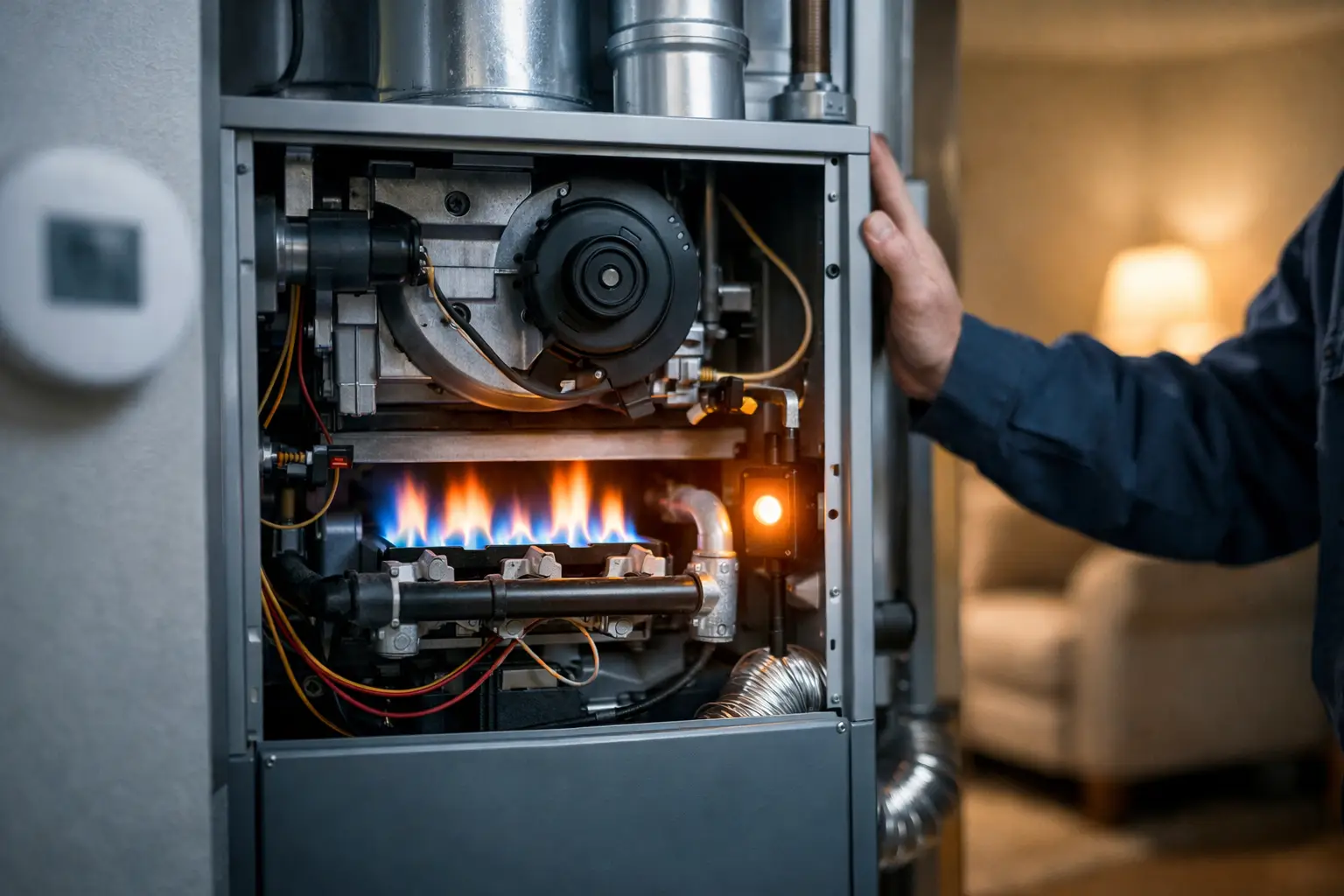
Gas furnaces use a flame sensor to verify that burners have ignited safely. If the sensor is dirty or weak, it may fail to detect the flame and shut the gas valve off within seconds. The furnace may try again several times, creating a short-cycling pattern.
Burner contamination, ignition problems, or gas supply issues can cause similar symptoms. Because these components involve combustion and fuel safety, they are not a homeowner maintenance project. If you notice a gas odor, shut off the system if it is safe to do so, leave the area, and follow your gas utility’s emergency instructions. For repeated ignition failures without an active gas smell, arrange prompt furnace service.
An oversized furnace
A furnace that is too large for a home or commercial space can heat the thermostat area very quickly and shut off before heat circulates evenly. The result is short cycles, temperature swings, and less efficient comfort. This is especially common after a replacement where equipment was selected by matching the old furnace size instead of calculating the building’s actual heating load.
Oversizing is not corrected by a simple adjustment. A qualified HVAC professional should evaluate insulation, windows, duct capacity, building layout, and equipment performance. In some cases, thermostat placement or airflow improvements can reduce the symptoms. In others, replacement planning is the most dependable long-term answer.
Venting, pressure switch, or condensate problems
High-efficiency furnaces rely on intake and exhaust piping, pressure switches, and condensate drainage to operate safely. A blocked exterior vent, ice or debris at a termination, a sagging condensate line, or a drainage backup can interrupt the startup sequence and cause the furnace to shut down.
From outside, you can visually check that intake and exhaust openings are not covered by leaves, mulch, snow, or stored items. Do not insert tools into vent pipes or dismantle furnace panels. Pressure-switch and condensate faults require diagnosis because the same error pattern can have several causes.
What to check before calling for heating repair
A few safe observations can help narrow down the issue. Replace a visibly dirty filter, confirm vents and returns are open, check thermostat settings, and note how long the furnace runs before it stops. Listen for whether the blower stays on after the burners stop, and look for any diagnostic light code through the furnace viewing window without removing panels.
Avoid repeatedly turning the system off and on at the thermostat. That can add stress without fixing the cause. Never tape down a switch, bypass a safety control, or attempt repairs around gas lines, electrical components, or the heat exchanger.
When short cycling needs prompt professional service
Call for service sooner rather than later if the furnace blows cool air, trips a breaker, makes banging or screeching noises, shows a persistent error code, or leaves parts of the building cold. A yellow or flickering burner flame, soot near the unit, water around the furnace, and any carbon monoxide alarm require immediate attention. Leave the building and contact emergency services or your gas utility if you suspect a carbon monoxide or gas emergency.
For Monroe and greater Charlotte-area homes and businesses, PR Mechanical can diagnose short cycling by looking beyond the symptom. Accurate testing of airflow, controls, combustion, ductwork, and thermostat operation helps prevent repeat breakdowns and supports dependable comfort.
A furnace should provide steady heat without demanding your attention every few minutes. Addressing the pattern early gives you more options, protects the equipment you rely on, and helps keep your space comfortable when the temperature drops.