A breaker that trips once can be frustrating. A breaker that trips again after you reset it is a warning that should not be ignored. If you are wondering why HVAC breaker trips, the system is often drawing more electrical current than the circuit can safely handle – or there may be an electrical fault that needs professional attention.
Your breaker is doing an important job. It shuts off power before overheating wires or damaged equipment can create a larger problem. During a hot Monroe-area summer afternoon or a cold snap when your heat is working hard, losing HVAC power can quickly affect comfort. For a business, it can also disrupt staff, customers, inventory, and daily operations.
What It Means When an HVAC Breaker Trips
An HVAC system uses significant electrical power, particularly the outdoor air conditioning or heat pump unit. When the system draws more amperage than the breaker is designed to carry, the breaker opens and cuts power. This may happen because of a temporary high demand, but repeated tripping usually points to a mechanical or electrical issue.
The cause is not always visible. A clogged air filter can restrict airflow and make components work harder. A failing compressor can pull excessive current. A damaged wire, weak breaker, or worn electrical part can create a more immediate safety concern. That is why the right response depends on when the breaker trips and what the system was doing at the time.
If the breaker trips repeatedly, do not keep resetting it to force the system to run. Repeated resets can damage equipment and may increase the risk of overheating. Turn the thermostat off and arrange for qualified HVAC service.
Common Reasons Your HVAC Breaker Keeps Tripping
Restricted airflow is overworking the system
A severely dirty filter is one of the simplest issues to check. When airflow is restricted, the blower and cooling components may run longer or work harder to move conditioned air. In some situations, that added strain can contribute to an electrical overload.
Check the filter if it has been more than one to three months since replacement, depending on the filter type, pets, occupancy, and system use. Replace it with the proper size and install it in the correct direction. Also make sure supply vents and return grilles are open and not blocked by furniture, boxes, or rugs.
A dirty outdoor condenser coil can create a similar problem for an air conditioner or heat pump. Grass clippings, leaves, cottonwood, and other debris prevent the unit from releasing heat efficiently. The system then has to work harder to cool the building.
The compressor is struggling or failing
The compressor is the heart of an air conditioner or heat pump. It uses a substantial amount of electricity, especially when starting. A compressor that is aging, overheated, mechanically worn, or electrically damaged can draw far more power than normal and trip the breaker.
You may notice the outdoor unit humming without starting, loud buzzing, reduced cooling, or a breaker that trips shortly after the system calls for cooling. Compressor problems need professional diagnosis. The repair may be straightforward in some cases, but compressor replacement is a major decision that should be weighed against the unit’s age, condition, efficiency, and repair history.
A failing capacitor or contactor is affecting startup
Capacitors help HVAC motors start and run, while contactors control the flow of electricity to major components. Both parts wear over time. When a capacitor weakens, a motor may struggle to start. When a contactor is worn or damaged, it may not deliver power correctly or may create electrical arcing.
These are common repair items, but they are not safe do-it-yourself projects. HVAC equipment contains high-voltage electricity, even when the thermostat is off. A technician can test these parts, identify the actual failure, and confirm whether another issue caused the component to fail.
A blower motor or fan motor is overheating
Your indoor blower motor and outdoor fan motor keep air moving through the system. If either motor is failing, its bearings are worn, or its airflow is restricted, it may overheat and pull too much current. A breaker may trip after the system has run for several minutes, rather than immediately at startup.
Warning signs can include weak airflow from vents, squealing or grinding noises, an outdoor fan that runs slowly, or a burning odor. Shut the system down if you smell burning plastic, melting insulation, or smoke. Do not reset the breaker in that situation.
Damaged wiring or an electrical short is present
Chewed wires, loose connections, deteriorated insulation, moisture intrusion, and damaged electrical components can all create a short circuit or ground fault. A breaker may trip as soon as the system turns on, or even as soon as power reaches a specific component.
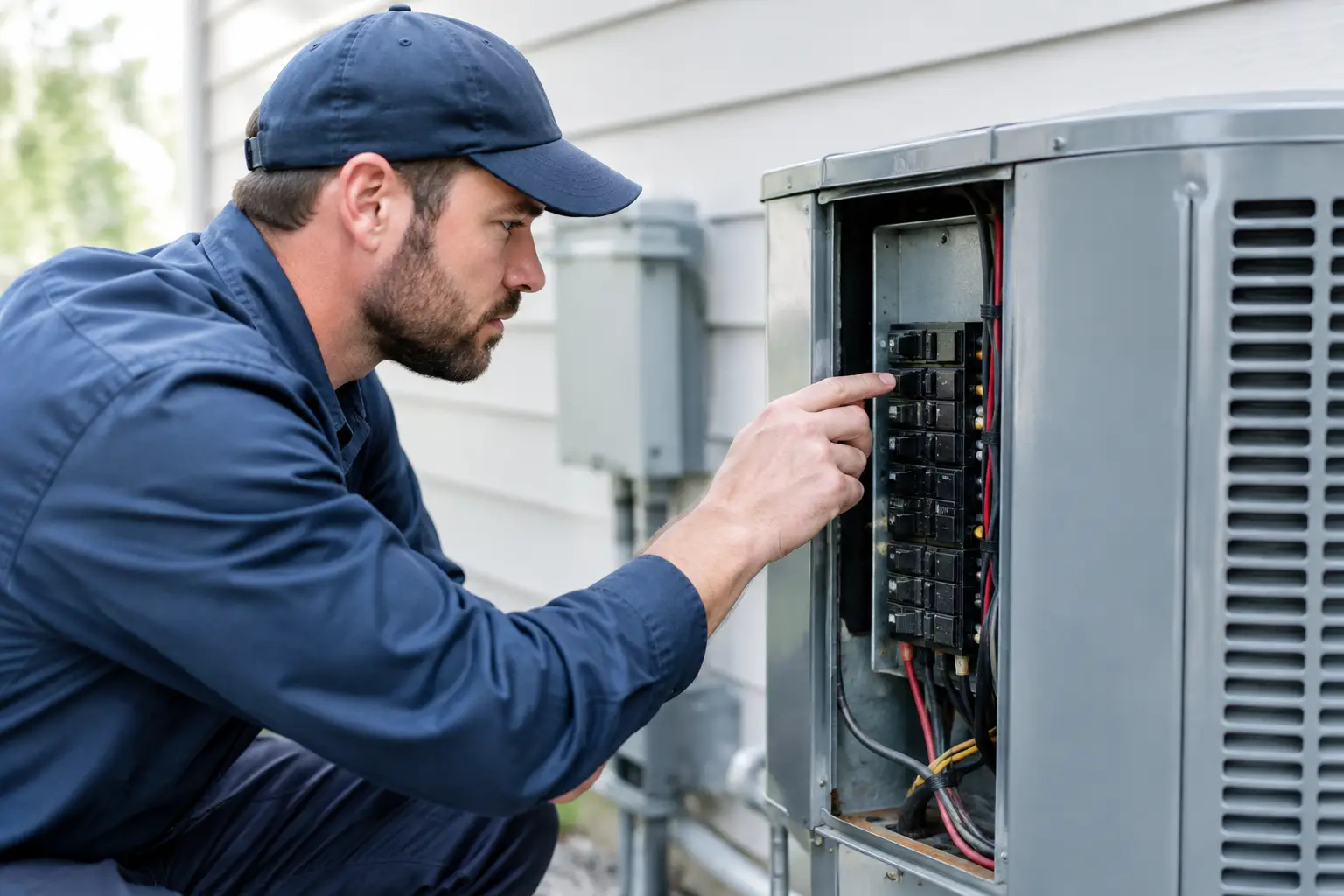
Electrical faults require prompt attention. The outdoor unit, disconnect box, electrical whip, indoor air handler, furnace controls, and thermostat wiring all need to be evaluated correctly. The goal is not simply to get power back on. It is to correct the unsafe condition that caused the breaker to trip.
The breaker itself may be weak or improperly sized
Breakers can wear out, and an improperly sized breaker can create problems. However, replacing a breaker with a larger one is never an appropriate shortcut. The breaker must match the equipment’s electrical requirements and the wiring capacity. An oversized breaker may fail to protect the circuit, while an undersized or weakening breaker may trip when the system is operating normally.
A qualified HVAC professional may work with a licensed electrician when the issue involves panel capacity, circuit wiring, or breaker replacement. This is especially relevant in older homes, renovated commercial spaces, or buildings where electrical loads have changed over time.
Why HVAC Breaker Trips More Often in Certain Conditions
The timing of a trip offers useful clues. If it happens only on very hot days, the outdoor unit may be overheating, the coil may be dirty, or the system may be operating under unusually high demand. If it trips when cooling starts, the compressor, capacitor, contactor, or wiring may be involved.
For heat pumps, a trip during cold weather can sometimes relate to electric auxiliary heat. Heat strips use a large amount of electricity and can expose issues with components, circuits, or electrical capacity. A gas furnace can also trip a breaker, but the electrical issue is more likely tied to the blower motor, control board, inducer motor, or wiring rather than the gas heat itself.
Commercial systems add another layer of complexity. Larger equipment, multiple zones, rooftop units, and longer operating hours can make electrical diagnosis more involved. A quick repair that restores comfort matters, but identifying the underlying cause helps prevent repeat downtime during business hours.
Safe Steps to Take Before Calling for Service
Start by setting the thermostat to Off. At the electrical panel, look for a breaker that has moved to the middle position or appears off. If there is no odor of burning, visible damage, or water near the equipment, you may reset the breaker once by moving it fully off and then back on.
If it trips again, leave it off. Do not repeatedly reset it, tape it in place, or replace it with a larger breaker. Check the air filter and clear loose debris from around the outdoor unit, but do not remove electrical panels or attempt to repair wiring.
Call for service right away if you notice burning smells, smoke, sparking, buzzing from the panel, melted wires, water near electrical equipment, or a breaker that will not stay reset. These symptoms call for professional assessment, and urgent electrical concerns may also require a licensed electrician.
Preventing Repeat Breaker Trips
Regular maintenance helps identify loose connections, weak capacitors, dirty coils, worn motors, and airflow problems before they become a no-cooling or no-heating call. Changing filters on schedule and keeping vegetation at least a couple of feet away from the outdoor unit also supports efficient operation.
For homeowners and facility operators across Monroe and the greater Charlotte area, PR Mechanical can evaluate the full comfort system instead of treating a tripped breaker as an isolated inconvenience. A clear diagnosis helps you understand what failed, what repair is needed, and whether there are practical steps to reduce future risk.
Your HVAC system should protect comfort without asking you to gamble on repeated breaker resets. When the breaker trips more than once, letting a trained technician find the cause is the safer path back to reliable heating and cooling.