
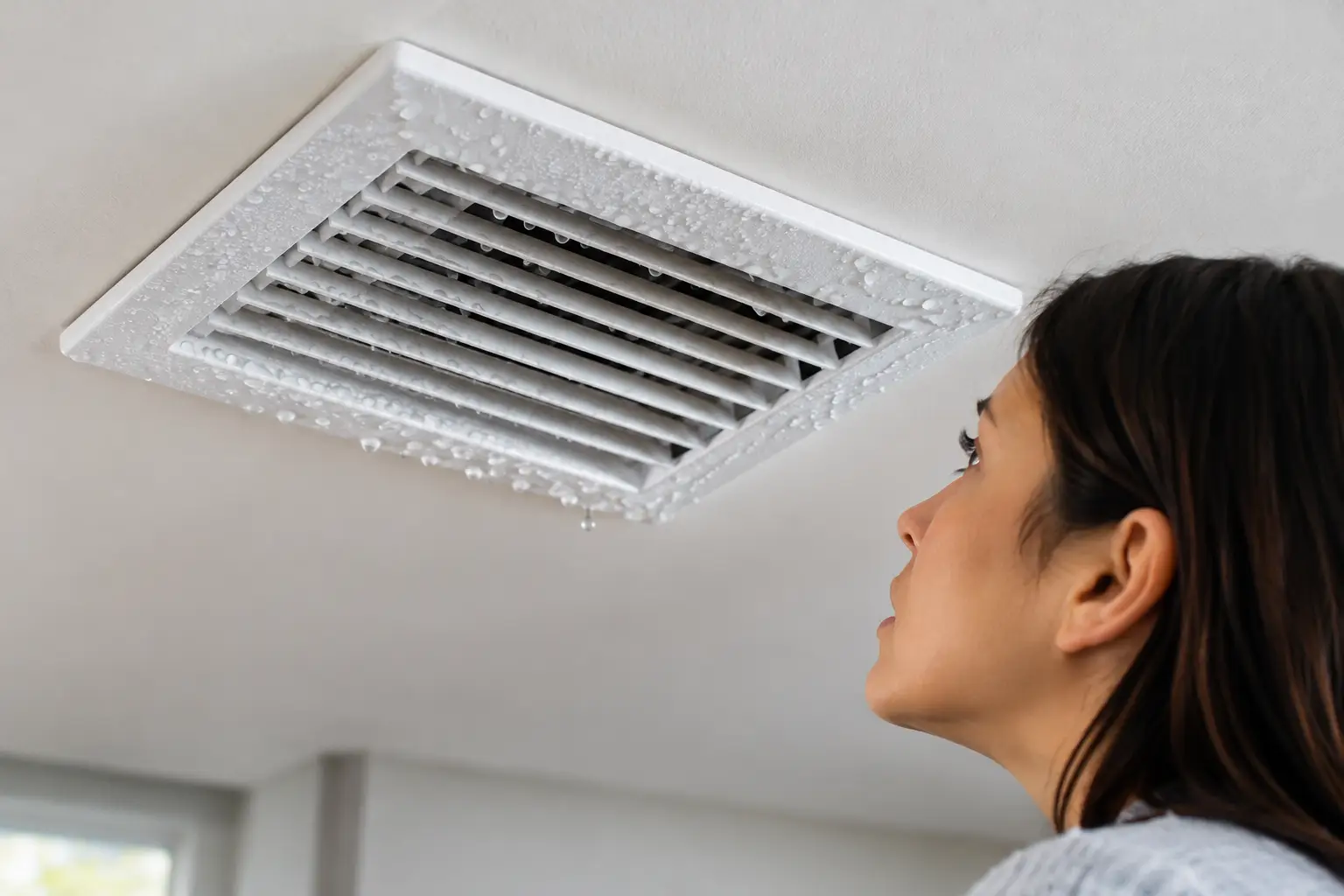
A wet air vent can be easy to dismiss on a hot North Carolina afternoon. But if you are asking why HVAC vents sweat, the moisture is usually telling you something useful about indoor humidity, cold air, ductwork, or system performance. A few drops during exceptionally humid weather may be manageable. Repeated condensation, water stains, or dripping from a ceiling register deserves attention before it affects drywall, insulation, flooring, or indoor air quality.
Why HVAC Vents Sweat
HVAC vent sweating is condensation. It happens when warm, humid air touches a surface that is colder than the air’s dew point. In cooling season, supply vents and the metal ductwork behind them can become cold enough for water vapor in the air to turn into liquid droplets.
Think of a cold glass of iced tea outside in summer. The water on the outside of the glass did not come through the glass. It came from humid air collecting on a cold surface. A sweating vent works much the same way.
This is especially common in the Charlotte-area climate, where long stretches of heat and high humidity place a heavy demand on air conditioning systems. The key question is not simply whether the vent feels cold. It is why the air around it contains enough moisture, or why the vent surface is getting cold enough, for condensation to form.
High indoor humidity
High humidity is the most common reason vents sweat. Your air conditioner removes heat and moisture as it runs, but it can only do so effectively when the equipment, airflow, and run time are appropriate for the building.
Cooking, showers, laundry, frequent door openings, and large numbers of people can all increase indoor moisture. A home or business with poor ventilation, air leaks, or moisture entering from a crawl space can have the same problem. During humid weather, even a well-running system may show minor condensation at a vent near an exterior door or another humid area.
As a general comfort target, indoor relative humidity often works best between 30% and 50%. If it regularly rises above 55% to 60%, condensation, musty odors, and mold risk become more likely.
Duct insulation problems
Ducts running through an attic, crawl space, garage, or other unconditioned area need insulation and a properly sealed vapor barrier. Without enough insulation, the outside of the duct becomes cold while it is surrounded by hot, humid air. Condensation can then form on the duct exterior and eventually wet nearby insulation, framing, or ceilings.
Damaged duct wrap, gaps in the vapor barrier, and loose connections are common causes. In some cases, the visible vent is not the source of the water at all. Moisture may be forming farther back on the duct and traveling to the register opening.
Air leaks around ducts or registers
A small gap between a ceiling register and drywall can pull humid attic air toward a cold metal boot. Leaky duct connections can also allow warm air into the duct system or conditioned air out of it. Either issue can create the temperature and humidity conditions that lead to sweating.
Sealing matters because it protects comfort as well as efficiency. Duct leaks force your system to work harder, make certain rooms harder to cool, and can introduce dusty or humid air where it does not belong.
Low airflow or an equipment issue
An AC system needs proper airflow across its indoor coil. A dirty air filter, blocked return, failing blower component, or poorly sized duct system can reduce airflow. When that happens, parts of the system may get colder than intended, increasing the chance of condensation and, in some cases, coil freezing.
Low refrigerant can also cause a coil to become unusually cold, although refrigerant issues require professional diagnosis. Do not assume a sweating vent automatically means low refrigerant. Humidity and duct conditions are more common explanations, but a technician should evaluate the full system if the issue persists.
An oversized air conditioner
Bigger is not always better in air conditioning. An oversized system can cool a space very quickly and shut off before it has removed enough humidity. The thermostat may show the desired temperature, yet the home or business can still feel clammy.
This is why equipment sizing, duct design, and thermostat settings need to work together. The right answer depends on the building, insulation levels, occupancy, and moisture load. Replacing equipment without addressing duct leakage or humidity sources may leave the sweating problem behind.
When Vent Condensation Needs Prompt Attention
A little moisture on one vent during a brief period of extreme humidity is different from water dripping from multiple registers every day. Persistent sweating should not be ignored. Water can discolor ceilings, soften drywall, damage wood, and create conditions where mold may grow.
Pay closer attention if you notice a musty smell, visible mold around registers, wet insulation, peeling paint, rust on grilles, or a sudden increase in indoor humidity. If the air conditioner is running constantly but the building still feels sticky, that is another reason to schedule an inspection.
For commercial properties, the stakes can be higher. Moisture around ceiling vents can damage finishes, inventory, electronics, or tenant spaces. It can also lead to complaints from employees and customers before the underlying issue is visible to a facility manager.
What You Can Check Safely
Start with the simple items that can affect airflow and moisture control. Check that the thermostat is set to cool and fan mode is set to Auto rather than On. When the fan runs continuously, it can move moisture back into the building after a cooling cycle ends.
Inspect the air filter. If it is visibly dirty or past its replacement interval, replace it with the correct size and type recommended for your system. Make sure supply vents and return grilles are open and not blocked by furniture, boxes, or merchandise.
A basic humidity meter can also provide useful information. If humidity remains high throughout the building, reduce obvious moisture sources where possible. Use bathroom exhaust fans during and after showers, run kitchen ventilation when cooking, and make sure dryer exhaust is venting outdoors.
Do not tape over vents, close numerous supply registers, or add insulation around accessible ductwork without understanding the cause. Restricting airflow can make HVAC problems worse. If water is dripping near electrical fixtures or pooling on a ceiling, turn the system off and arrange service promptly.
How a Professional Solves Sweating Vents
A proper diagnosis looks beyond the wet register. An HVAC technician should assess indoor humidity, supply-air temperatures, airflow, duct insulation, duct leakage, and the condition of the indoor coil and condensate system. That broader approach identifies whether the moisture is coming from the room air, unconditioned spaces around the ducts, or a system performance problem.
The repair may be straightforward, such as replacing damaged duct insulation, sealing a register boot, correcting a duct leak, or restoring airflow with maintenance. Other situations may call for duct modifications, a whole-home dehumidifier, thermostat adjustments, or equipment evaluation. The best solution depends on what is actually creating the condensation, not on a one-size-fits-all repair.
For a business, service may also need to be coordinated around operating hours, customer areas, and equipment that cannot be interrupted. Clear communication matters because moisture control is not only a comfort issue. It protects the building and supports reliable daily operations.
Preventing HVAC Vent Sweating Over Time
Routine maintenance gives small humidity and airflow problems a chance to be caught early. Seasonal service can help keep the coil clean, verify drainage, inspect electrical and blower components, and identify duct concerns before summer humidity exposes them.
It also helps to keep attic and crawl space conditions in mind. These areas can be major sources of heat and moisture around ductwork. Proper insulation, air sealing, and crawl space moisture control can make a meaningful difference in both comfort and energy use.
If your vents are sweating repeatedly, PR Mechanical can help identify the cause and explain the options in plain language. The goal is not just to dry a register today, but to restore the balanced cooling, humidity control, and dependable comfort your property needs.